
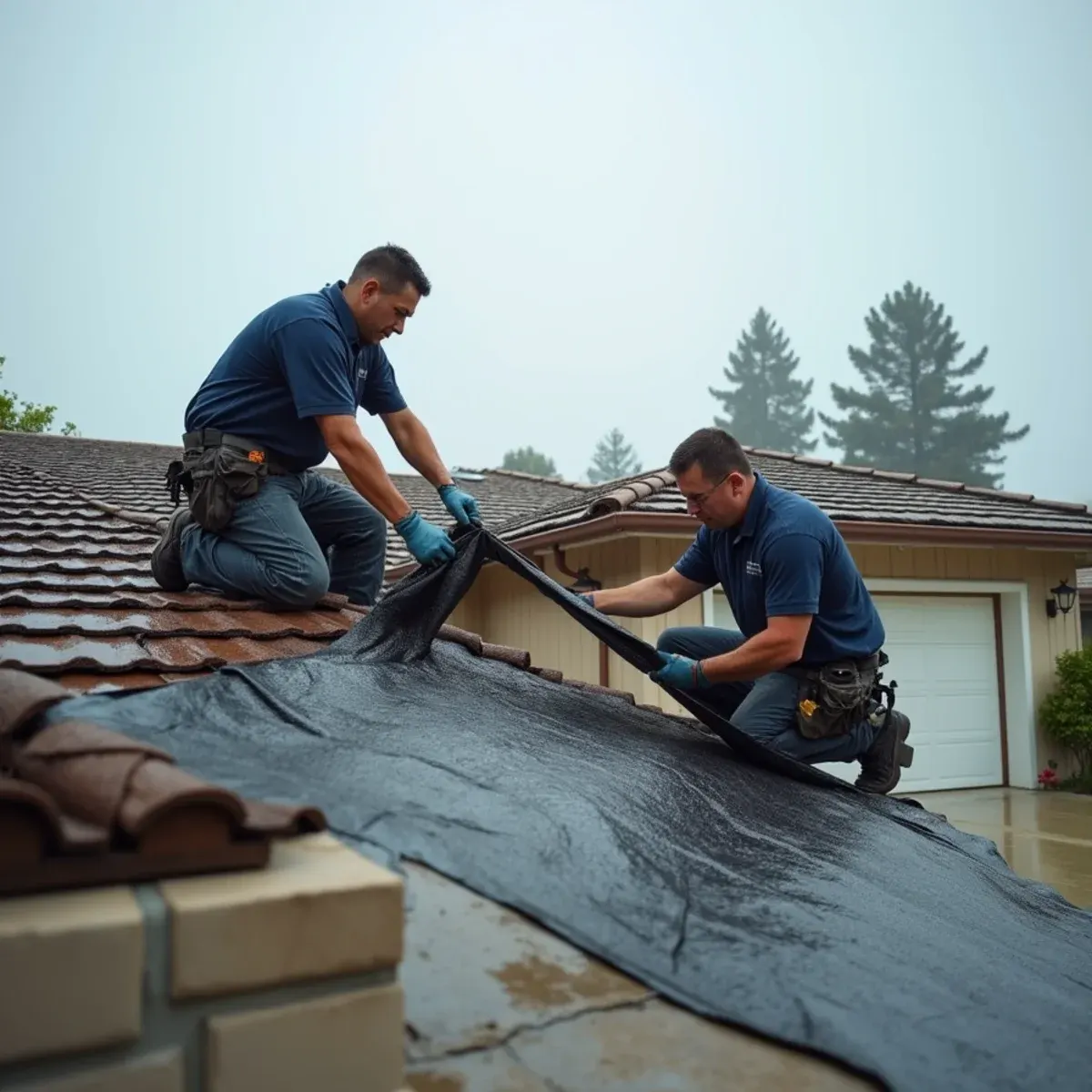
Carbon Canyon collects water from a lot of ground and delivers it through a narrow corridor. That single fact shapes storm work in Brea. Concentrated rain in the hills above doesn't spread out — it channels, picks up speed and debris, and arrives at the developed edge with more energy than a flat-city street ever sees. Homes in Olinda Ranch, Blackstone and along the canyon road live with that every wet season. V-ditches, slope drains and downspout extensions here aren't landscaping details, they're the drainage system.
Downtown is effectively a different city. The small houses near the old oil-town core date to the twenties, with mixed foundations, galvanized supply and roof framing that was never engineered for modern loads. Tarping those roofs is careful work — the sheathing is often board, not plywood, and it doesn't hold a fastener the way a 2001 hillside roof does. Between the two sits ordinary postwar tract. We're about eighteen minutes north of Cypress, and during a regional storm we run in call order and dispatch as fast as conditions allow.
What Brea Changes About Storm Damage
1Canyon debris flow, not just rain
Water off the Carbon Canyon slopes carries sediment, gravel and vegetation. A v-ditch that handles clean runoff fine will pack solid in twenty minutes once debris arrives, and then the ditch stops being a channel and starts being a berm that sends water somewhere nobody intended. After the storm we clear and photograph the ditch, because insurers ask about maintenance on canyon-adjacent claims.
21920s board sheathing under the shingles
Downtown Brea roofs frequently have spaced or board sheathing under whatever has been laid over it since. A tarp batten screwed into that can split the board or find no purchase at all. We use wider bearing, more anchor points, and ballast where wind allows. We also tell you honestly when a roof is too fragile to tarp aggressively in an active wind event.
3Hillside grade behind the newer tracts
The 1990s and 2000s tracts up toward Country Hills and Olinda Ranch have graded slopes behind them with brow ditches at the top. Those exist to keep hillside water off your lot entirely. Homeowners rarely walk up there, and they're commonly full. If you own an uphill-backing lot in Brea, that walk in October is the maintenance that matters most.
How the Work Runs
The method is the same one we use on every storm damage job, documented to the IICRC S500:2025 standard. Here it is in short — the full storm damage restoration process explains each stage in detail.
- Emergency tarping and board-up
- Water diversion and extraction
- Full damage documentation
- Interior mitigation
- Structural drying to standard
- Permanent repairs
The Brea Background Worth Knowing
Brea's hillside tracts were designed to handle rain. Terrace drains catch runoff partway up a slope, v-ditches carry it around the toe, area drains take the flat yard, and everything ties into a system that moves water past the house rather than through it. The design works. What fails is maintenance. Over a dry summer those inlets fill with eucalyptus leaf litter, decomposed granite, and whatever the wind brought down the canyon, and nobody looks at them because they sit on a slope behind a fence. The first hard storm of the season finds every one that is blocked.
There is more on the housing stock, drainage and plumbing history of this city on our water damage restoration in Brea page.
Brea at a glance
- Dominant construction era
- 1920–2005
- Foundation type
- mixed on grade
- Supply piping found here
- galvanized steel, under-slab copper, PEX in newer hillside tracts
- Drain line materials
- cast iron, clay, ABS
- Terrain and water table
- hillside-mixed, deep water table
- Most common local failure
- canyon and hillside runoff overwhelming slope drainage during concentrated storms
- Highest-value local prevention
- keeping Carbon Canyon-side slope drains, v-ditches and downspout extensions genuinely clear
What It Costs in Brea
We do not quote a number over the phone before seeing the property — anyone who does is guessing. The variables that actually move the price on a storm damage job are size of the opening and duration of intrusion, emergency mitigation scope, how many rooms the water reached, and they are broken down in full on the storm damage restoration page. The assessment and the written estimate are free anywhere in Brea, day or night, with no obligation.
Storm Damage Questions from Brea Homeowners
Sometimes, and sometimes not — we'll tell you which on the phone rather than leaving you waiting. When the canyon route closes we come in from the Brea Boulevard side, which adds time but usually works. If access is genuinely cut, we stage nearby and go in as soon as it opens, and we keep you updated instead of going quiet. Water sitting an extra few hours matters less than you'd think; water sitting two days matters a lot.
During. Emergency tarping and board-up happen in the rain — that is the entire point of them. We triage by severity, so active intrusion into occupied living space goes to the front of the queue.
Sudden wind and rain damage is generally covered, including the resulting interior water damage. What gets excluded is damage from a roof that had already failed or from deferred maintenance, and flooding from water that came across the ground, which needs separate flood insurance.
Usually not under a standard homeowners policy. Water that runs across the ground and enters a building is surface water, and that is an excluded cause on nearly every form, whether it came off a Carbon Canyon slope or out of the street. Separate flood coverage handles it. Damage from a covered failure is a different story, so let us document the entry point and cause before anything gets cleaned up.