
Do this once and you may save yourself a claim: during the first real rain of the season, put on a jacket and go outside while it's actually coming down. La Habra is not flat. The ground rolls gently, and after seventy years of added driveways, patio slabs, pool decks and raised planters, the path water takes across a lot today is rarely the path the builder planned in 1962. Ten minutes watching where it truly runs tells you more than any inspection we could sell you.
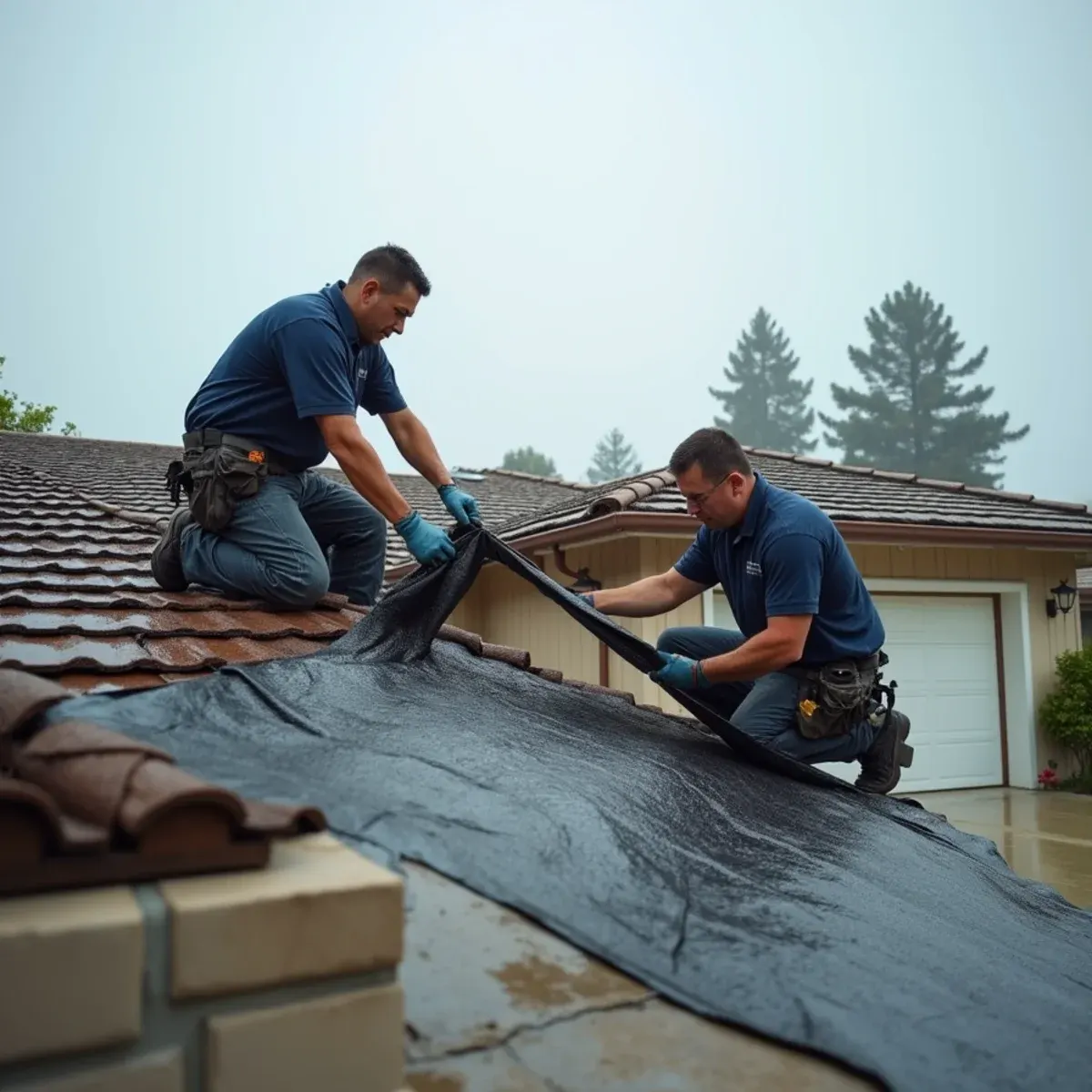
The housing is mostly 1950 to 1980 slab tract, uniform enough that neighboring houses fail similarly, with older stock downtown and apartments along the Whittier Boulevard corridor. The city sits at the head of the Coyote Creek watershed — the same creek that runs past our Cypress base about seventeen minutes south — so the water leaving La Habra yards is headed our direction all night. During an atmospheric river we dispatch as fast as conditions allow, and we'd rather tarp early than extract later.
What La Habra Changes About Storm Damage
1Hardscape that changed the grade
Nearly every La Habra lot we work on has had something added: a wider driveway, a patio slab poured against the house, a raised bed along the foundation. Each one moves water. On rolling ground those changes compound, and the low corner of your lot may no longer be where the builder's drainage assumed. Storm intrusion here is far more often a grading story than a roofing story.
2Multi-family along the corridors
The apartment stock on Whittier Boulevard and near downtown shares roofs, walkways and drains across many units. One blocked roof drain on a flat-roofed building can put water into three apartments on two floors. We coordinate with property managers on access and document unit by unit, and we tell tenants plainly what's drying, how loud it is, and how long the equipment runs.
3Uniform slab tract, uniform weak points
1960s La Habra tracts repeat the same roof-to-wall detail, the same low-slope patio cover tie-in, and the same garage threshold height across whole neighborhoods. That's useful: it means we usually know where to look before we're on your roof. It also means a wet season tends to produce clusters of near-identical calls in Vista Grande and Westridge.
How the Work Runs
The method is the same one we use on every storm damage job, documented to the IICRC S500:2025 standard. Here it is in short — the full storm damage restoration process explains each stage in detail.
- Emergency tarping and board-up
- Water diversion and extraction
- Full damage documentation
- Interior mitigation
- Structural drying to standard
- Permanent repairs
The La Habra Background Worth Knowing
Copper is good pipe. What it is not is immortal, and the way it went in during this era shortened its life. Soft copper tubing was laid in the sand under the slab before the pour, sometimes in direct contact with aggregate, often with tight bends that thinned the wall on the outside of the curve. Add fifty to seventy years of water moving through the inside and soil chemistry working on the outside, and it develops pinholes. The hot line almost always goes first, because heat accelerates every part of that process.
There is more on the housing stock, drainage and plumbing history of this city on our water damage restoration in La Habra page.
La Habra at a glance
- Dominant construction era
- 1950–1980
- Foundation type
- slab on grade
- Supply piping found here
- under-slab copper, galvanized steel
- Drain line materials
- cast iron
- Terrain and water table
- rolling, moderate water table
- Most common local failure
- under-slab copper failures in 1960s tract housing, plus drainage that decades of added hardscape has redirected
- Highest-value local prevention
- watching where water actually runs during the first storm, because the ground here is not flat
What It Costs in La Habra
We do not quote a number over the phone before seeing the property — anyone who does is guessing. The variables that actually move the price on a storm damage job are size of the opening and duration of intrusion, emergency mitigation scope, how many rooms the water reached, and they are broken down in full on the storm damage restoration page. The assessment and the written estimate are free anywhere in La Habra, day or night, with no obligation.
Storm Damage Questions from La Habra Homeowners
It will unless the grade changes. A garage slab in La Habra usually sits an inch or two above the driveway apron, which is fine until an added driveway pour or a settled apron takes that difference away. Once water can reach the threshold it will find it every storm. We dry the garage and the shared wall, then show you the elevation difference so a concrete or drainage fix is aimed at the real problem.
During. Emergency tarping and board-up happen in the rain — that is the entire point of them. We triage by severity, so active intrusion into occupied living space goes to the front of the queue.
Sudden wind and rain damage is generally covered, including the resulting interior water damage. What gets excluded is damage from a roof that had already failed or from deferred maintenance, and flooding from water that came across the ground, which needs separate flood insurance.
Do a meter test. Shut off every fixture and the irrigation, note the leak indicator, and check it again a few hours later with nobody using water. If it moved, something is losing water. In 1960s La Habra tract homes that is most often the hot line under the slab, and the giveaway is a warm patch of floor or the sound of water running behind a closed system.