
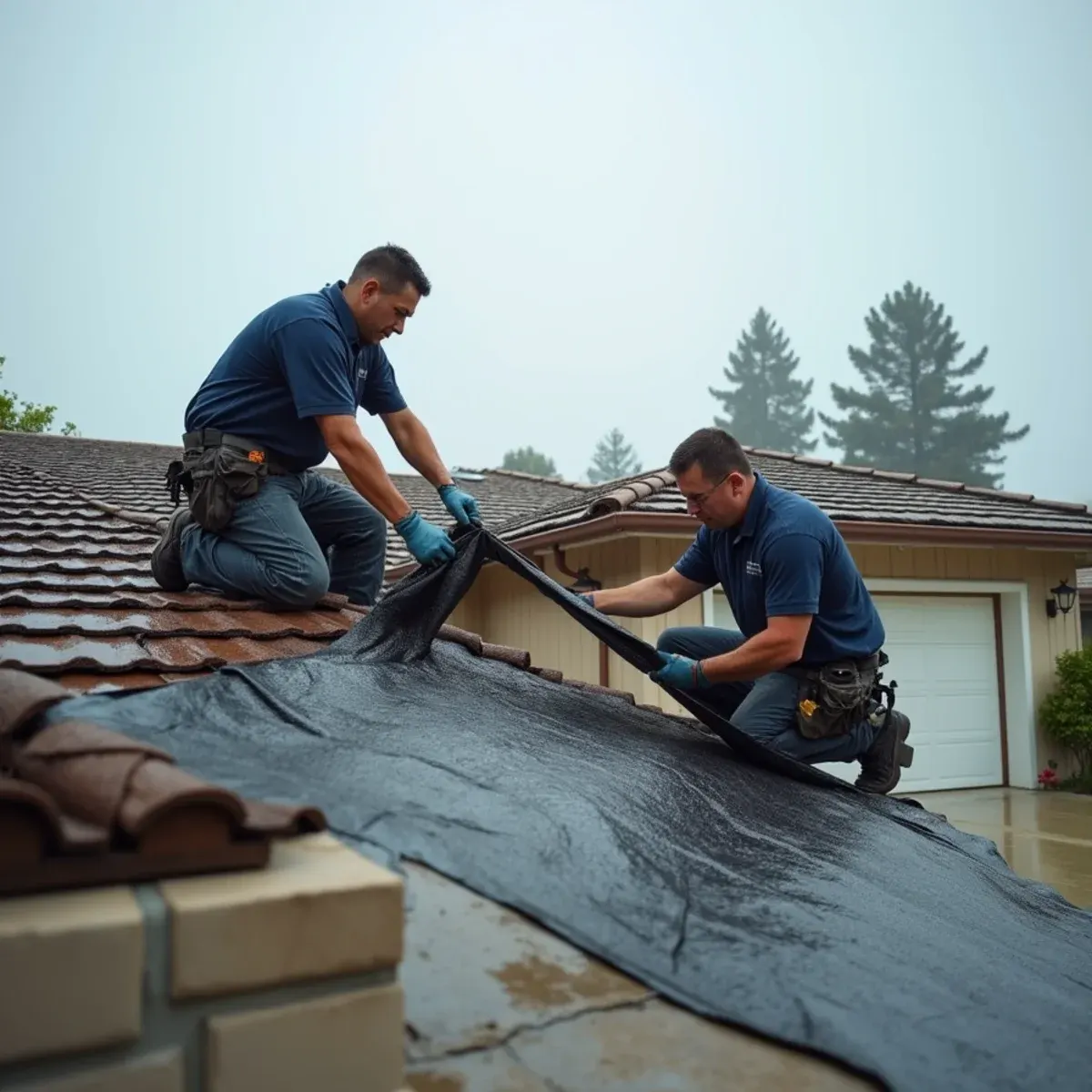
Fullerton's pre-war Craftsman and Spanish Revival homes near downtown sit on raised foundations, and that changes where storm water goes. Instead of pooling on a floor where you'd see it, water that gets in — through a failed roof valley, a wind-driven wall intrusion, or grade sloping back toward the house on the rolling ground near Hillcrest Park — drips into the crawl space. It can sit there for weeks. No stain, no puddle, just a rising humidity level under your feet and old-growth Douglas fir soaking it up.
The upside is access. A crawl space is far easier to work in than a slab: we can get under the floor, dry joists and subfloor directly from below, and inspect framing with our own eyes instead of guessing through concrete. The other half of the city is the rental housing around Cal State Fullerton and Fullerton College, where storm damage tends to be reported late — students report a leak when it becomes their problem, usually several days after it became the building's problem.
What Fullerton Changes About Storm Damage
1Crawl spaces hide storm intrusion
Water under a raised house doesn't announce itself. The first signs are a musty smell in a hallway, unusually cold floors, or doors that suddenly stick. After any significant storm we recommend a look underneath with a light and a meter, particularly around the perimeter and under bathrooms. Standing water on crawl-space soil raises humidity through the whole structure until it's removed.
2Old-growth framing repays fast drying
The Douglas fir framing and thick original flooring in these houses is dense, slow to wet and slow to dry, and genuinely worth saving. Working from below lets us dry subfloor and joists directly and monitor them without opening finished floors above. Left wet, that same density works against you — it holds moisture long enough for decay to start well before anything looks wrong upstairs.
3Student rentals report leaks late
Around the two campuses, a storm leak often gets mentioned days after it started, sometimes after a break. Posting the shutoff location and a 24-hour emergency number inside each unit, and telling tenants plainly that reporting water is never their financial fault, shortens that delay more than anything else. On a raised foundation, those days decide whether we dry joists or replace them.
How the Work Runs
The method is the same one we use on every storm damage job, documented to the IICRC S500:2025 standard. Here it is in short — the full storm damage restoration process explains each stage in detail.
- Emergency tarping and board-up
- Water diversion and extraction
- Full damage documentation
- Interior mitigation
- Structural drying to standard
- Permanent repairs
The Fullerton Background Worth Knowing
The pre-war homes around downtown Fullerton were built with materials that behave completely differently from modern construction. Lath and plaster walls hold several times the water drywall does. Old-growth Douglas fir framing is dense and dries slowly. Original oak and fir flooring is thick, high-quality material that is well worth saving.
There is more on the housing stock, drainage and plumbing history of this city on our water damage restoration in Fullerton page.
Fullerton at a glance
- Dominant construction era
- 1910–1980
- Foundation type
- mixed on grade
- Supply piping found here
- galvanized steel, copper, original pre-war piping
- Drain line materials
- cast iron, clay
- Terrain and water table
- rolling, moderate water table
- Most common local failure
- crawl-space leaks that run undetected for weeks because the water drips away instead of pooling on a floor
- Highest-value local prevention
- posting a shutoff location and emergency contact in every rental, since delayed reporting is the local failure mode
What It Costs in Fullerton
We do not quote a number over the phone before seeing the property — anyone who does is guessing. The variables that actually move the price on a storm damage job are size of the opening and duration of intrusion, emergency mitigation scope, how many rooms the water reached, and they are broken down in full on the storm damage restoration page. The assessment and the written estimate are free anywhere in Fullerton, day or night, with no obligation.
Storm Damage Questions from Fullerton Homeowners
Not usefully. In an enclosed crawl space the water evaporates into a space with almost no ventilation, so the moisture goes straight into your subfloor, joists and insulation instead of leaving. We pump or extract the standing water, remove saturated insulation, dry the framing to a documented moisture content, and address whatever let it in — usually grade, a downspout discharging at the foundation, or a failed vent screen. Then we verify with readings before pulling equipment.
During. Emergency tarping and board-up happen in the rain — that is the entire point of them. We triage by severity, so active intrusion into occupied living space goes to the front of the queue.
Sudden wind and rain damage is generally covered, including the resulting interior water damage. What gets excluded is damage from a roof that had already failed or from deferred maintenance, and flooding from water that came across the ground, which needs separate flood insurance.
Yes, and they need a different approach. Lath and plaster and old-growth framing hold far more water than modern materials and dry much more slowly, so we plan for seven to fourteen days with higher-capacity equipment. The original material is worth that effort — nothing sold today replaces it.