
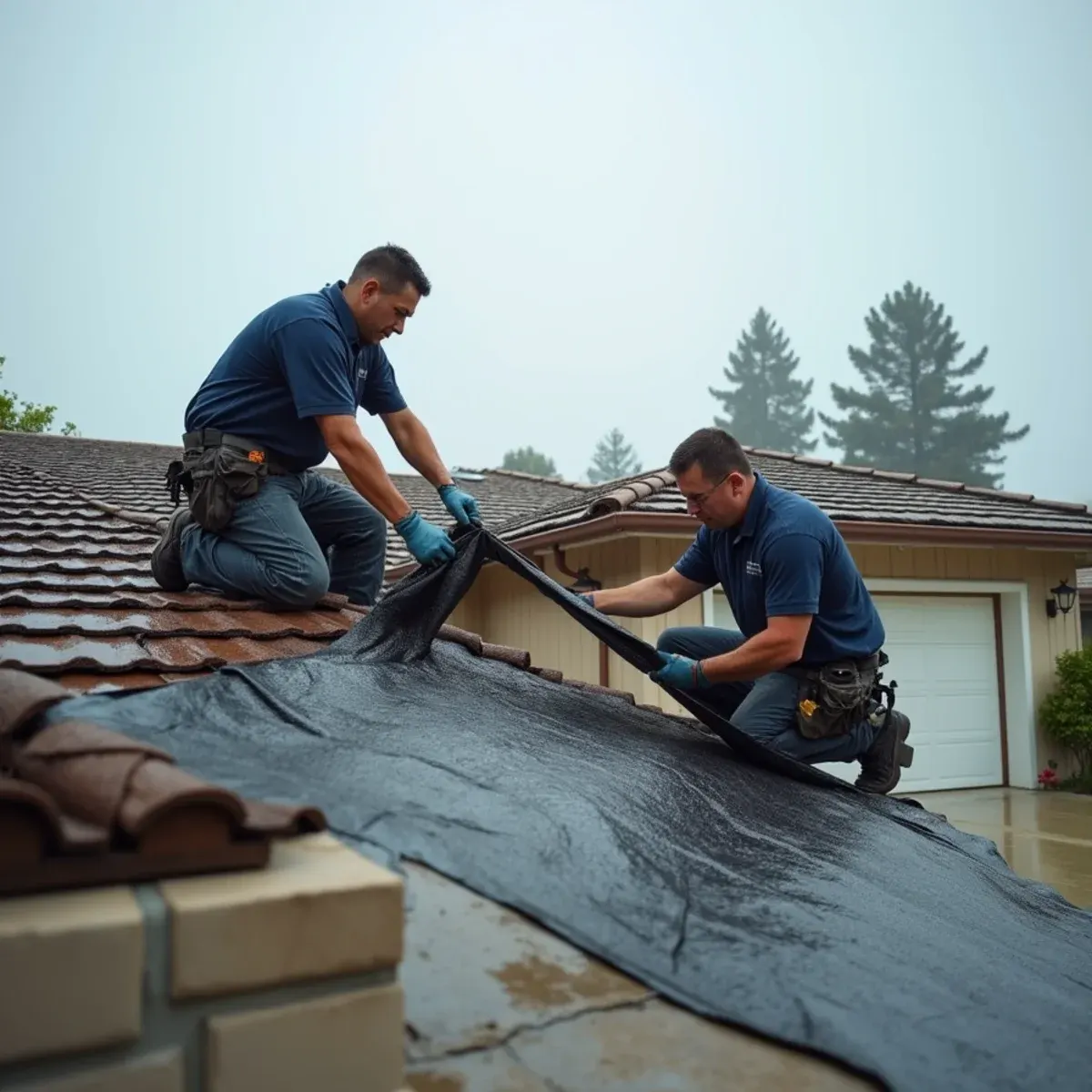
Sloped ground is supposed to be an advantage, and in La Mirada it usually is — storm water moves across these properties instead of ponding the way it does in the flat coastal cities. The trouble is what fifty years of improvements did to the path. A patio poured in 1978, a raised planter added in the 1990s, a retaining wall, a driveway that settled an inch: each one redirected a little water, and the cumulative result is a slope that now aims runoff at the back of the house.
The city was built as a planned community in a tight twelve-year window from the early 1950s, so the houses are consistent — slab-on-grade, similar elevations, similar original drainage assumptions. Add Biola University and the student rentals around it, where leaks get reported late, and you have the two storm patterns we see here. Around La Mirada Regional Park and the older tracts, the fix after a loss is almost always outside the house rather than inside it.
What La Mirada Changes About Storm Damage
1Walk the property during real rain
Not after — during. Twenty minutes outside in a jacket during the first serious storm tells you more than any dry-weather inspection: where water sheets, where it stalls, which downspout dumps against a wall, which planter has quietly become a dam. Photograph it. On rolling terrain that walk is the entire diagnosis, and it costs nothing but a wet jacket.
2Added hardscape blocks the original path
Every patio extension, planter wall and hardscape addition since the 1960s changed how water leaves the lot, and none of them were designed together. On a slope that concentrates flow rather than spreading it, one misplaced curb sends a large volume at a single point in the wall. Fixing the loss without fixing the path guarantees the same claim in the next wet winter.
3Student rentals report water late
Around Biola, storm leaks in rentals often surface days after they start, sometimes after a weekend away. A posted shutoff location, a 24-hour number, and clear instruction that reporting water costs the tenant nothing shortens that delay dramatically. On a slab house, several days of unseen water under flooring turns a straightforward dry-out into flooring replacement.
How the Work Runs
The method is the same one we use on every storm damage job, documented to the IICRC S500:2025 standard. Here it is in short — the full storm damage restoration process explains each stage in detail.
- Emergency tarping and board-up
- Water diversion and extraction
- Full damage documentation
- Interior mitigation
- Structural drying to standard
- Permanent repairs
The La Mirada Background Worth Knowing
La Mirada's gentle slopes mean storm water moves across properties instead of sitting on them, which is generally an advantage — except where fifty years of added patios, raised planters, retaining walls, and settled hardscape have redirected it.
There is more on the housing stock, drainage and plumbing history of this city on our water damage restoration in La Mirada page.
La Mirada at a glance
- Dominant construction era
- 1953–1965
- Foundation type
- slab on grade
- Supply piping found here
- under-slab copper, galvanized steel
- Drain line materials
- cast iron
- Terrain and water table
- rolling, moderate water table
- Most common local failure
- exterior water entering where fifty years of added patios, planters and retaining walls redirected the original drainage back toward the house
- Highest-value local prevention
- walking the property during the first real rain and watching where water actually goes
What It Costs in La Mirada
We do not quote a number over the phone before seeing the property — anyone who does is guessing. The variables that actually move the price on a storm damage job are size of the opening and duration of intrusion, emergency mitigation scope, how many rooms the water reached, and they are broken down in full on the storm damage restoration page. The assessment and the written estimate are free anywhere in La Mirada, day or night, with no obligation.
Storm Damage Questions from La Mirada Homeowners
Something upslope moved the flow. Usually it's cumulative rather than dramatic: a settled driveway edge, a new planter, a neighbor's regraded yard, or a drain line that finally silted up. Water on a slope only needs a small nudge to concentrate at one point instead of spreading out. We dry the garage and the wall base, then walk the slope with you to find where the path changed, because on this terrain the durable fix is outside.
During. Emergency tarping and board-up happen in the rain — that is the entire point of them. We triage by severity, so active intrusion into occupied living space goes to the front of the queue.
Sudden wind and rain damage is generally covered, including the resulting interior water damage. What gets excluded is damage from a roof that had already failed or from deferred maintenance, and flooding from water that came across the ground, which needs separate flood insurance.
Almost always exterior drainage rather than a plumbing leak — a plugged area drain, a patio that has settled toward the house, or a planter holding moisture against the wall. We identify the actual path rather than just drying the wall, because drying without fixing the cause means doing it again next storm.