
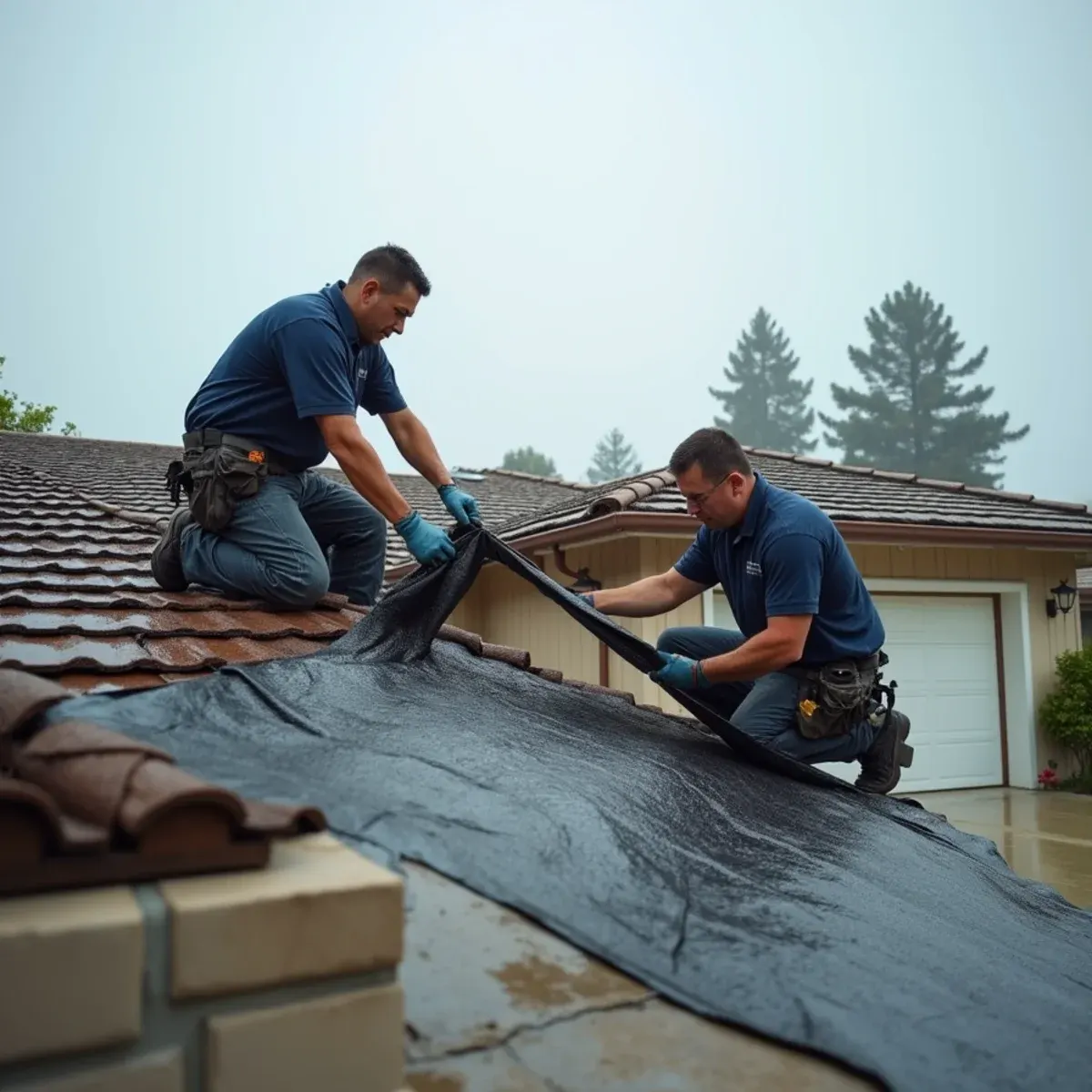
Here's advice that only makes sense in Anaheim: before you decide how urgent your storm leak is, figure out what your walls are made of. A wet drywall wall in a West Anaheim tract house can wait a few hours. A wet lath-and-plaster wall in the Colony Historic District cannot. Plaster holds several times the water drywall does, and as it stays wet the keys that lock it to the wood lath soften and let go — a ceiling that looked fine at midnight comes down at dawn.
Up in Anaheim Hills the failure is different in kind. Those 1970s-onward multi-level homes sit on engineered pads with retaining walls, area drains and swales doing the work, and storm damage usually starts outside: a blocked area drain, a saturated slope, water entering at a lower level cut into the hill. Meanwhile the hotels around the Resort District are dealing with occupied rooms. Three different cities, effectively. We ask which one you're in before we load the truck.
What Anaheim Changes About Storm Damage
1Plaster needs drying within hours
Original lath and plaster in the Colony and the older neighborhoods absorbs far more water than drywall and releases it slowly, so it needs desiccant dehumidification and time. Cutting it out is often avoidable if we start fast, and that matters because the sand-and-lime finish and the original woodwork around it can't be matched at a big-box store. Every hour past the first few makes saving it less likely.
2Hillside drainage is the real roof
In Anaheim Hills, the drainage system on the property does more storm protection than the roof does. Area drains at the base of slopes, the swale behind a retaining wall, and deck drains on a stepped lot all have to be clear before the season. When one plugs, water backs up against a lower-level wall and comes through a slab-to-stem-wall joint that has never leaked in thirty years.
3Multi-level homes hide the path
On a two or three-level hillside house, water entering at the top can appear two floors down after traveling inside a wall cavity or along a beam. We map moisture through every level before opening anything, because guessing here means three unnecessary holes in finished walls and the real wet area still hidden behind the fourth.
How the Work Runs
The method is the same one we use on every storm damage job, documented to the IICRC S500:2025 standard. Here it is in short — the full storm damage restoration process explains each stage in detail.
- Emergency tarping and board-up
- Water diversion and extraction
- Full damage documentation
- Interior mitigation
- Structural drying to standard
- Permanent repairs
The Anaheim Background Worth Knowing
The Anaheim Colony Historic District and the older streets around downtown contain homes built from the early 1900s through the 1930s, and they are constructed differently in ways that matter enormously during a water loss.
There is more on the housing stock, drainage and plumbing history of this city on our water damage restoration in Anaheim page.
Anaheim at a glance
- Dominant construction era
- 1900–2000
- Foundation type
- mixed on grade
- Supply piping found here
- galvanized steel, under-slab copper, original early-century piping in the Colony
- Drain line materials
- cast iron, clay
- Terrain and water table
- hillside-mixed, moderate water table
- Most common local failure
- lath-and-plaster assemblies that hold several times the water drywall does and release it far more slowly
- Highest-value local prevention
- acting immediately on any plaster-wall loss, because wet plaster keys soften and release from the lath
What It Costs in Anaheim
We do not quote a number over the phone before seeing the property — anyone who does is guessing. The variables that actually move the price on a storm damage job are size of the opening and duration of intrusion, emergency mitigation scope, how many rooms the water reached, and they are broken down in full on the storm damage restoration page. The assessment and the written estimate are free anywhere in Anaheim, day or night, with no obligation.
Storm Damage Questions from Anaheim Homeowners
Often, if we start quickly. Plaster is salvageable while the keys behind the lath are still intact and we can pull moisture out with desiccant equipment before they soften. The test is mechanical as much as visual: we check for sag, movement and separation from the lath alongside moisture content. If a section has already let go, that piece comes down, but we remove only the failed area and work within what preservation review requires.
During. Emergency tarping and board-up happen in the rain — that is the entire point of them. We triage by severity, so active intrusion into occupied living space goes to the front of the queue.
Sudden wind and rain damage is generally covered, including the resulting interior water damage. What gets excluded is damage from a roof that had already failed or from deferred maintenance, and flooding from water that came across the ground, which needs separate flood insurance.
Yes, and we approach them differently. Lath and plaster holds much more water than drywall and dries far more slowly, so it needs more equipment and considerably more patience — but it can usually be saved in place, and original plaster is not something a repair can replace.