
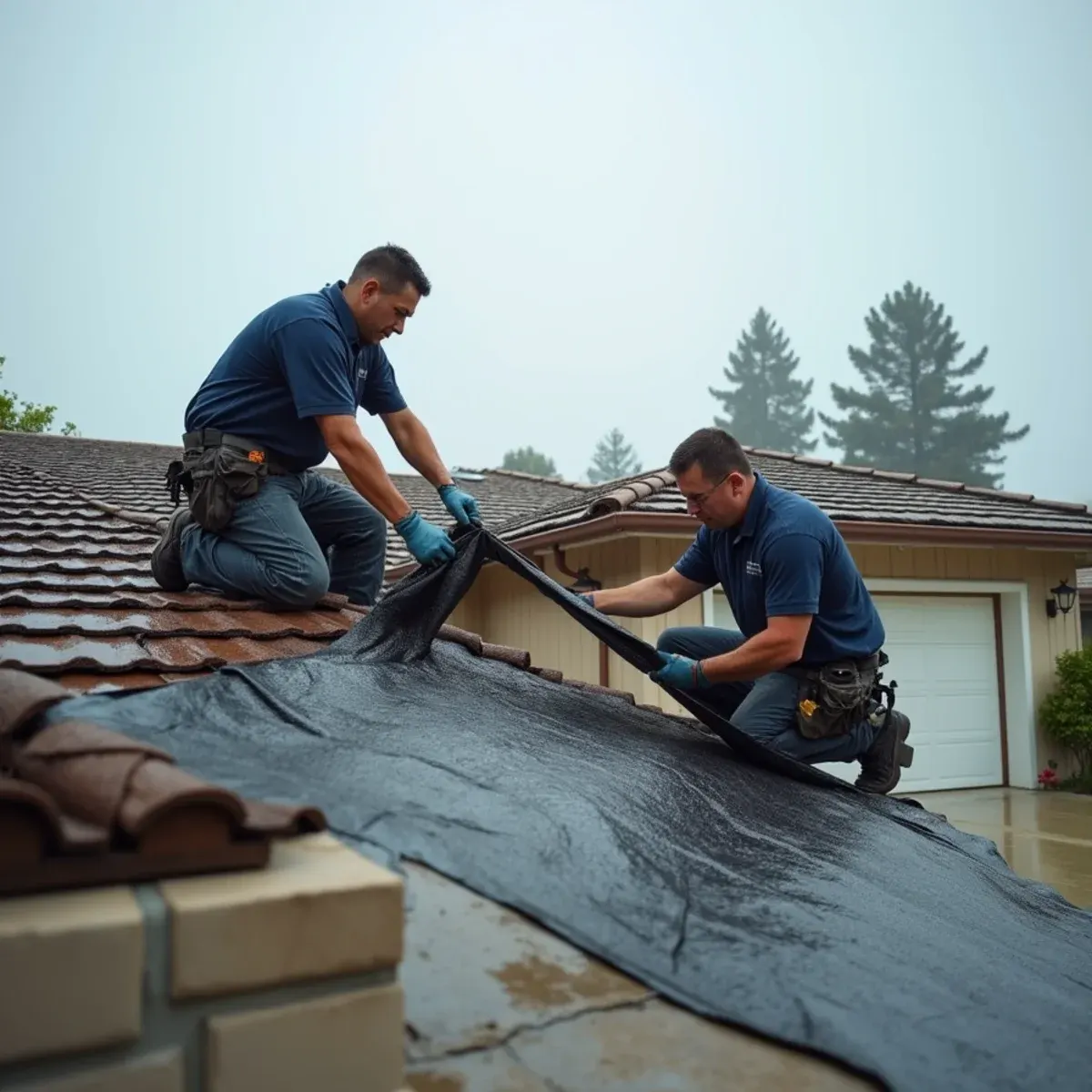
Start with the roof of a manufactured home, because that's where Stanton storm calls usually begin. The coating on a metal or membrane roof chalks and cracks, water gets in at a vent or a seam, and instead of dripping through a ceiling it runs along the top of the ceiling board to the marriage line or an exterior wall. From there it travels down inside the wall and into the floor deck. Particleboard decking over a belly wrap is the worst possible destination.
The rest of the city is older apartments and a mix of houses on both slab and raised foundations — one of the densest housing patterns in this part of the county, with very little open ground to take a week of rain. Around Stanton Central Park and along the Beach Boulevard corridor we see the same February pattern: water that entered days earlier finally showing itself. Plenty of companies won't set foot in a manufactured home. We will, and we'll tell you honestly what can and can't be saved.
What Stanton Changes About Storm Damage
1Belly wrap traps storm water
The vapor barrier under a manufactured home is designed to keep moisture out, which means it also keeps moisture in. Water that reaches the floor cavity from a roof leak or a wind-driven wall intrusion sits on the wrap and cannot evaporate. We open the wrap from below, drain it, dry the cavity directly, then reseal. Skipping that step leaves months of quiet rot in place.
2Soft floors are the only warning
There's no ceiling stain to find in a floor cavity. The first sign is usually a spot near an exterior wall or a doorway that gives slightly underfoot. Check along the perimeter and the marriage line after every big storm, and treat any spongy area as wet until a meter says otherwise. Particleboard decking loses strength quickly once it's saturated.
3Park spacing limits our equipment
Coach-to-coach spacing in Stanton's parks is tight, and getting a truck-mount down a park lane is often not possible. We plan for portable extractors, longer hose runs, and generators where a unit's electrical service can't carry the drying load. Knowing that before we roll saves an hour on a night when the whole county is calling at once.
How the Work Runs
The method is the same one we use on every storm damage job, documented to the IICRC S500:2025 standard. Here it is in short — the full storm damage restoration process explains each stage in detail.
- Emergency tarping and board-up
- Water diversion and extraction
- Full damage documentation
- Interior mitigation
- Structural drying to standard
- Permanent repairs
The Stanton Background Worth Knowing
Mobile and manufactured homes need a genuinely different restoration approach, and the reason is what they are built from. The floor system is typically particleboard or OSB over a wood frame with insulation and a vapor barrier belly wrap underneath — and particleboard exposed to water swells, loses structural integrity, and does not recover. It cannot be dried back to serviceable the way plywood often can.
There is more on the housing stock, drainage and plumbing history of this city on our water damage restoration in Stanton page.
Stanton at a glance
- Dominant construction era
- 1950–1975
- Foundation type
- mixed on grade
- Supply piping found here
- galvanized steel, copper, manufactured-home PEX and poly
- Drain line materials
- cast iron
- Terrain and water table
- flat, moderate water table
- Most common local failure
- underfloor leaks in manufactured homes, sealed inside the belly wrap where they cannot evaporate
- Highest-value local prevention
- checking for soft spots underfoot, because a manufactured-home floor gives no other warning
What It Costs in Stanton
We do not quote a number over the phone before seeing the property — anyone who does is guessing. The variables that actually move the price on a storm damage job are size of the opening and duration of intrusion, emergency mitigation scope, how many rooms the water reached, and they are broken down in full on the storm damage restoration page. The assessment and the written estimate are free anywhere in Stanton, day or night, with no obligation.
Storm Damage Questions from Stanton Homeowners
We work on manufactured homes. The reason others decline is that the construction really is different — belly wrap, particleboard decking, thinner wall cavities, and repairs needing materials most crews don't stock. Drying one properly means opening the underfloor barrier and treating the cavity as its own space, not just running fans inside. We'll also tell you early if the deck is too far gone to dry, because paying to dry a floor that has to be replaced helps nobody.
During. Emergency tarping and board-up happen in the rain — that is the entire point of them. We triage by severity, so active intrusion into occupied living space goes to the front of the queue.
Sudden wind and rain damage is generally covered, including the resulting interior water damage. What gets excluded is damage from a roof that had already failed or from deferred maintenance, and flooding from water that came across the ground, which needs separate flood insurance.
Yes, and we say so explicitly because a lot of companies will not. Manufactured homes need a different approach — opening the belly wrap to dry the floor cavity, removing saturated insulation, and honestly assessing particleboard decking, which usually cannot be dried back to serviceable.