
La Mirada is not flat, and that is the whole story. Storm water moves across these properties instead of standing on them, which is normally a gift — until you find out where it has started moving to. Fifty years of added patios, raised planters, retaining walls and settled hardscape have quietly redirected flow on thousands of lots, and the path now often ends at a wall of the house or at a side door sitting an inch below the new grade. The original grading worked. What people built on top of it did not.
The homes themselves are consistent: a planned community built out in about twelve years from 1953, slab on grade, generally well kept. That helps us scope quickly, but the interior response is the easy half. The harder half is exterior, and it is where flood work in La Mirada actually pays off — tracing where the water entered, what redirected it, and what has to change before the next storm. Around Biola, student rentals add the familiar problem of a loss reported days after it happened.
What La Mirada Changes About Flood Cleanup
1Water arrives from uphill, not the street
On rolling ground, sheet flow from a neighboring property or a slope above can reach your foundation while the street stays clear. That changes the source determination entirely and it changes the fix. We map the flow path with you once the water is out, photograph the entry point and the grade, and put the sequence in writing, because questions between neighbors get resolved on documentation rather than recollection.
2Directional wetting on a slab
When water enters from one side, the slab and walls wet asymmetrically instead of uniformly, and drying has to be aimed rather than spread evenly around the room. We map moisture across the floor, place equipment against the actual gradient, and verify by reading back toward the entry point. Even placement on a directional loss leaves a wet band along the entry wall that shows up months later in the flooring.
3Hardscape that redirects the original design
Raised planters against the foundation, a patio slab poured over the original swale, a retaining wall with plugged weep holes — each is minor, and together they undo the drainage this community was graded for. After the restoration is finished we walk the property with you and point out what is aiming water at the house. Fixing that is usually cheaper than the cleanup you just paid for.
How the Work Runs
The method is the same one we use on every flood cleanup job, documented to the IICRC S500:2025 standard. Here it is in short — the full flood damage cleanup process explains each stage in detail.
- Safety assessment and utility check
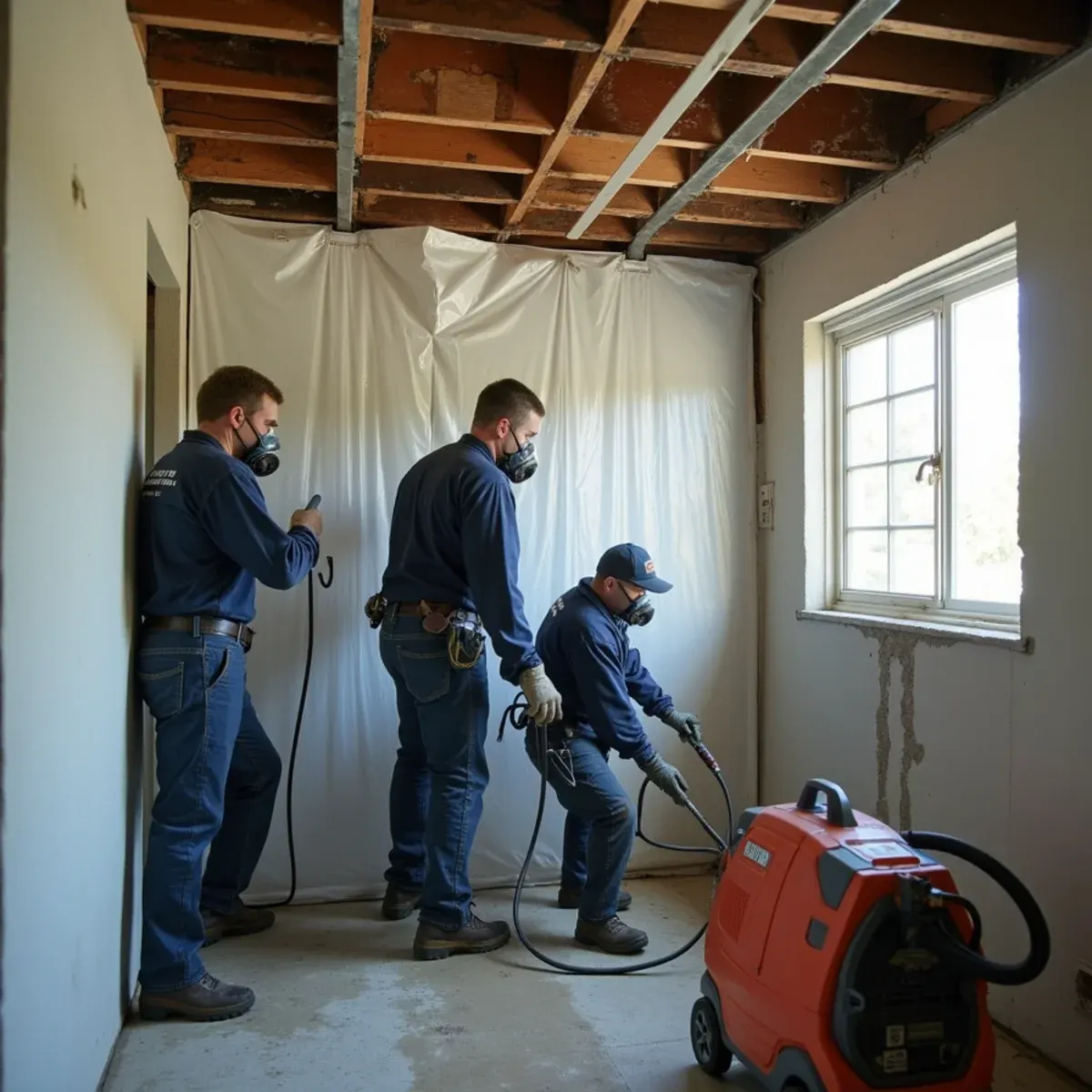
- Containment and negative air
- Documentation and contents triage
- Extraction and controlled demolition
- Cleaning and disinfection
- Structural drying and clearance
The La Mirada Background Worth Knowing
La Mirada's gentle slopes mean storm water moves across properties instead of sitting on them, which is generally an advantage — except where fifty years of added patios, raised planters, retaining walls, and settled hardscape have redirected it.
There is more on the housing stock, drainage and plumbing history of this city on our water damage restoration in La Mirada page.
La Mirada at a glance
- Dominant construction era
- 1953–1965
- Foundation type
- slab on grade
- Supply piping found here
- under-slab copper, galvanized steel
- Drain line materials
- cast iron
- Terrain and water table
- rolling, moderate water table
- Most common local failure
- exterior water entering where fifty years of added patios, planters and retaining walls redirected the original drainage back toward the house
- Highest-value local prevention
- walking the property during the first real rain and watching where water actually goes
What It Costs in La Mirada
We do not quote a number over the phone before seeing the property — anyone who does is guessing. The variables that actually move the price on a flood cleanup job are how high the water reached, how long it sat before extraction, contents volume in the flooded area, and they are broken down in full on the flood damage cleanup page. The assessment and the written estimate are free anywhere in La Mirada, day or night, with no obligation.
Flood Cleanup Questions from La Mirada Homeowners
We are not the right people to settle that, and we will not pretend otherwise — it depends on both policies, on whether either property altered drainage, and sometimes on a lawyer. What we can do is preserve the facts while they still exist: photographs of the flow path and debris line, grade elevations at the entry point, timing, and the interior moisture map. Those get collected in the first day or they are gone for good.
Yes. Water that crossed soil, pavement, or a storm drain is Category 3 by IICRC classification regardless of appearance — it carries bacteria, fuel and oil residue, lawn chemicals, and whatever else was on the ground. Do not walk through it in open shoes, and keep children and pets out of the area entirely.
If the water came from outside across the ground, almost certainly not — that requires separate flood insurance. If it came from a failed water heater, a burst pipe, or a supply line inside the garage, it is usually covered. We document the source carefully because that distinction determines everything.
Almost always exterior drainage rather than a plumbing leak — a plugged area drain, a patio that has settled toward the house, or a planter holding moisture against the wall. We identify the actual path rather than just drying the wall, because drying without fixing the cause means doing it again next storm.