
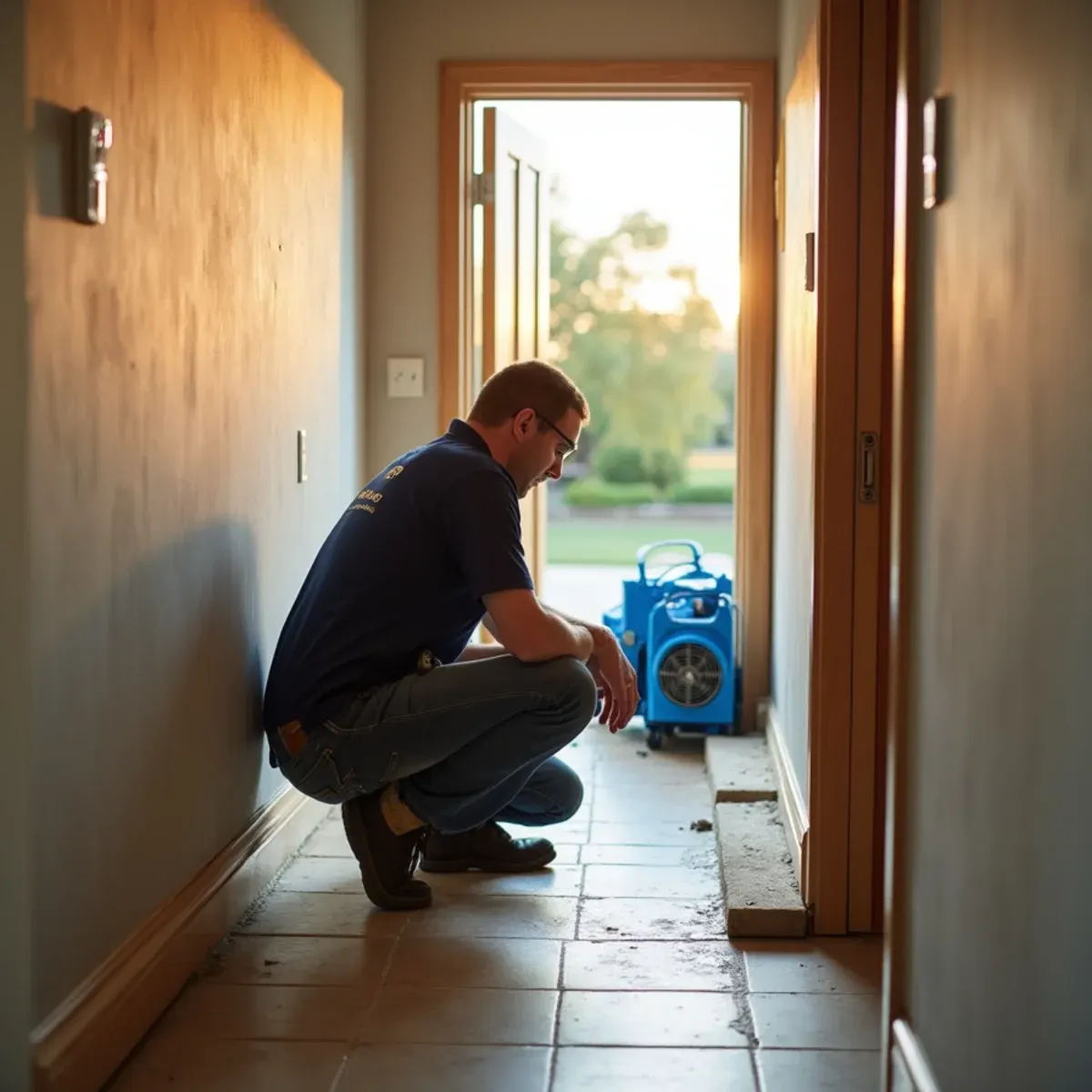
A La Habra homeowner calls because the carpet in the back bedroom is wet. The broken supply line turns out to be in a hallway wall forty feet away. That happens here more than in the flat cities we serve, because La Habra is built on gently rolling ground at the head of the Coyote Creek watershed and the slabs follow the grade. Water from a burst line finds the low side of the pour and runs under the flooring until something stops it. Chasing the wet spot is how you open three walls and still miss the pipe.
The stock is mostly 1950s through 1970s single-story slab tract through Westridge, Vista Grande and the Idaho Street area, running under-slab copper with some surviving galvanized in the older sections. Downtown holds mixed older construction on smaller lots, and the corridors along Whittier Boulevard carry apartment buildings where one unit's failure quickly becomes three units' problem. We're roughly seventeen minutes north of our Cypress base, on the same creek, and we dispatch as fast as conditions allow.
What La Habra Changes About Burst Pipe Damage
1Wet carpet is not the leak location
On sloping ground the visible moisture marks where water stopped, not where it started. We take meter readings in a grid across the whole floor plane and read the thermal pattern before choosing an opening. That costs an extra half hour on site and routinely saves two unnecessary wall repairs. If someone opens the wall nearest the stain without mapping first, expect to open another one after that.
2Added hardscape redirected the runoff
Decades of patios, room additions and driveway widening in these neighborhoods changed how water moves across the lots. It matters on a burst-pipe job because we need to know whether exterior grading is also feeding the wet area, or the readings will never come down to standard. We walk the perimeter on arrival and note where downspouts discharge, since an unrelated exterior source will quietly defeat the drying plan.
3Corridor apartments share one loss
Along Whittier Boulevard and the multi-family pockets, a supply failure in an upper unit drains through the floor assembly into the units below. That assembly is one wet system, so drying only the unit that called leaves water sitting in the middle of it. We coordinate access with the property manager, document each unit separately from the first hour, and set equipment where it will not block egress.
How the Work Runs
The method is the same one we use on every burst pipe damage job, documented to the IICRC S500:2025 standard. Here it is in short — the full burst pipe water damage repair process explains each stage in detail.
- Stop the source
- Locate the failure precisely
- Coordinate the plumbing repair
- Extract and open only what must be opened
- Cavity and structural drying
- Rebuild and finish
The La Habra Background Worth Knowing
Copper is good pipe. What it is not is immortal, and the way it went in during this era shortened its life. Soft copper tubing was laid in the sand under the slab before the pour, sometimes in direct contact with aggregate, often with tight bends that thinned the wall on the outside of the curve. Add fifty to seventy years of water moving through the inside and soil chemistry working on the outside, and it develops pinholes. The hot line almost always goes first, because heat accelerates every part of that process.
There is more on the housing stock, drainage and plumbing history of this city on our water damage restoration in La Habra page.
La Habra at a glance
- Dominant construction era
- 1950–1980
- Foundation type
- slab on grade
- Supply piping found here
- under-slab copper, galvanized steel
- Drain line materials
- cast iron
- Terrain and water table
- rolling, moderate water table
- Most common local failure
- under-slab copper failures in 1960s tract housing, plus drainage that decades of added hardscape has redirected
- Highest-value local prevention
- watching where water actually runs during the first storm, because the ground here is not flat
What It Costs in La Habra
We do not quote a number over the phone before seeing the property — anyone who does is guessing. The variables that actually move the price on a burst pipe damage job are how long the line ran before discovery, which floor it happened on, hot line versus cold line, and they are broken down in full on the burst pipe water damage repair page. The assessment and the written estimate are free anywhere in La Habra, day or night, with no obligation.
Burst Pipe Damage Questions from La Habra Homeowners
Because La Habra isn't flat. The slabs here follow gently rolling ground, so water from a burst supply line runs to the low side of the pour and under the flooring before it wicks up somewhere visible. The wet carpet tells us where the water stopped, not where it started. Thermal imaging plus meter readings across the whole floor gives us the actual path, and we open at the break so nobody is chasing it a second time.
We restore the water damage and coordinate the plumbing repair, working with your plumber or bringing in a licensed one from our network. Handling both under one schedule is what keeps a burst pipe from turning into two weeks of contractor coordination.
More than people expect. A half-inch supply line at typical residential pressure moves in the range of 8 to 10 gallons a minute. That is roughly 500 gallons in an hour — comparable to filling a small backyard pool inside your walls and floor.
Do a meter test. Shut off every fixture and the irrigation, note the leak indicator, and check it again a few hours later with nobody using water. If it moved, something is losing water. In 1960s La Habra tract homes that is most often the hot line under the slab, and the giveaway is a warm patch of floor or the sound of water running behind a closed system.