
La Habra isn't flat, and for sewage work that matters more than it sounds. Most of the city went in between 1950 and 1980 on gently rolling ground at the head of the Coyote Creek watershed — the same creek that runs past our own shop in Cypress. Grade means the lowest fixture in a house isn't always the one you'd guess, and on streets that fall away toward the corridors, a blockage in the main can relieve into the house sitting lowest rather than the one that caused it.
The housing itself is consistent — slab on grade, cast iron waste lines, tract construction across Westridge, Vista Grande and the neighborhoods off Idaho Street, with older stock downtown and apartments along Whittier Boulevard. There's one local wrinkle worth knowing: La Habra is Orange County, but La Habra Heights immediately north is Los Angeles County, and utility responsibility and permitting don't stop being different just because the streets connect. We confirm which side of that line an address falls on before anything gets scheduled.
What La Habra Changes About Sewage Cleanup
1Grade decides which house floods
On rolling streets the relief point for a blocked main is the lowest connected fixture upstream of it, which can easily be a neighbor's house rather than yours. It also means a backup can appear at a floor drain or a garage sink you've never thought about. We walk the whole low side of a property before setting the containment boundary.
2Additions built over original drain lines
A lot of houses here picked up a family room or a converted garage in the seventies and eighties, tied into drainage that was sized and laid in the fifties. Those tie-ins are where we find the blockage more often than you'd think, and the added floor above them is usually the part with no access. We map before we cut.
3County line changes the paperwork
Addresses on the north edge sit close enough to the Los Angeles County line that the agency handling the main, and the permitting for any excavation, isn't the one your neighbor dealt with. It doesn't change the cleanup. It does change who we're calling and how long a repair approval takes, so we settle it in the first hour.
How the Work Runs
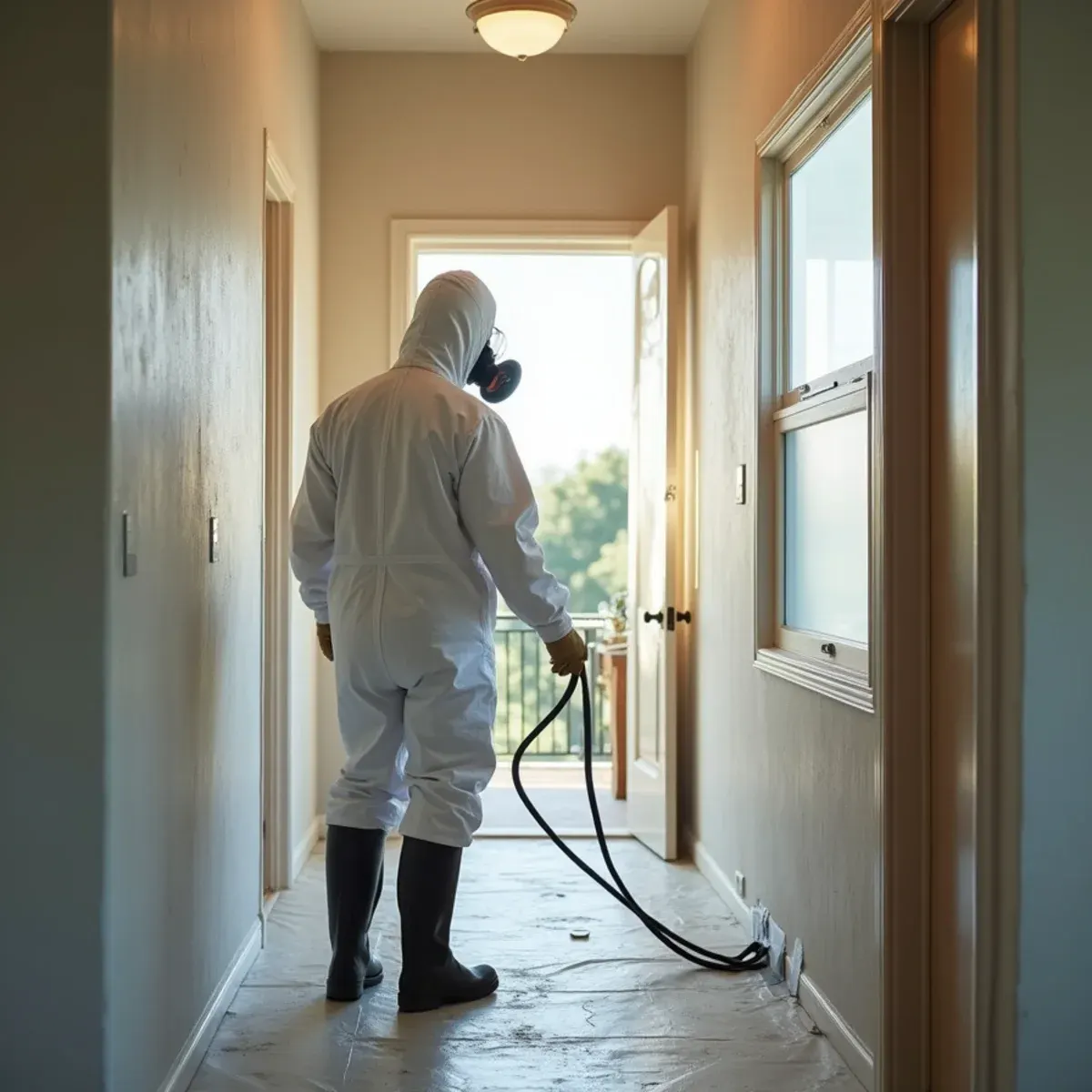
The method is the same one we use on every sewage cleanup job, documented to the IICRC S500:2025 standard. Here it is in short — the full sewage backup cleanup process explains each stage in detail.
- Secure the area and set containment
- Full PPE and safe extraction
- Remove contaminated porous materials
- Clean and disinfect all remaining surfaces
- Deodorize at the source
- Dry, verify, and clear
The La Habra Background Worth Knowing
Copper is good pipe. What it is not is immortal, and the way it went in during this era shortened its life. Soft copper tubing was laid in the sand under the slab before the pour, sometimes in direct contact with aggregate, often with tight bends that thinned the wall on the outside of the curve. Add fifty to seventy years of water moving through the inside and soil chemistry working on the outside, and it develops pinholes. The hot line almost always goes first, because heat accelerates every part of that process.
There is more on the housing stock, drainage and plumbing history of this city on our water damage restoration in La Habra page.
La Habra at a glance
- Dominant construction era
- 1950–1980
- Foundation type
- slab on grade
- Supply piping found here
- under-slab copper, galvanized steel
- Drain line materials
- cast iron
- Terrain and water table
- rolling, moderate water table
- Most common local failure
- under-slab copper failures in 1960s tract housing, plus drainage that decades of added hardscape has redirected
- Highest-value local prevention
- watching where water actually runs during the first storm, because the ground here is not flat
What It Costs in La Habra
We do not quote a number over the phone before seeing the property — anyone who does is guessing. The variables that actually move the price on a sewage cleanup job are affected square footage, volume of porous material removed, contents in the affected area, and they are broken down in full on the sewage backup cleanup page. The assessment and the written estimate are free anywhere in La Habra, day or night, with no obligation.
Sewage Cleanup Questions from La Habra Homeowners
Often, yes. On La Habra's sloping lots the garage frequently sits lowest, and a garage floor drain or laundry standpipe becomes the relief point for a blockage out toward the main rather than anything inside. That's useful information: it points the diagnosis outward. It doesn't change the cleanup standard. Garage slabs, wall base, stored boxes and anything porous stacked on the floor all got Category 3 water and get treated that way.
It depends on the source. A toilet that overflows with clean bowl water because of a stuck fill valve is Category 1 or 2 and is far less serious. A toilet that backs up from the main line is carrying waste from the whole system, and that is Category 3 — it needs the full protocol.
No. Standard practice for Category 3 water is removal and disposal of carpet and pad that were contacted. Porous materials cannot be reliably disinfected all the way through, and the health risk of leaving them is not worth the savings.
Do a meter test. Shut off every fixture and the irrigation, note the leak indicator, and check it again a few hours later with nobody using water. If it moved, something is losing water. In 1960s La Habra tract homes that is most often the hot line under the slab, and the giveaway is a warm patch of floor or the sound of water running behind a closed system.