
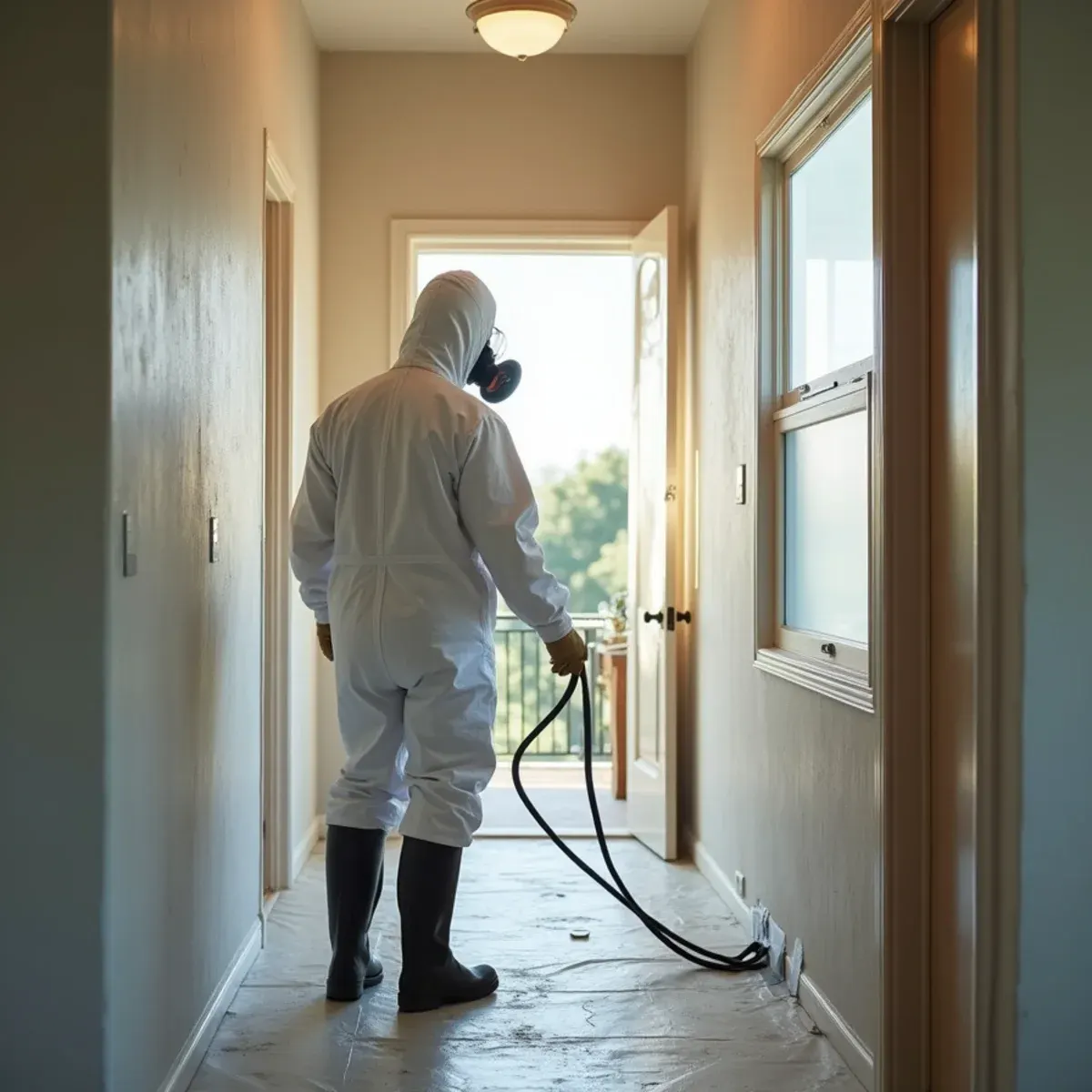
The question we get most in Whittier is why it happened at this house and not the one next door. On the hillside streets the answer is usually elevation. College Hills was subdivided in 1923 as the city's first planned hillside development and still has the steep grades and curving streets to show for it, and in a gravity sewer the house sitting lowest upstream of a blockage becomes the relief point for everything above it. Your plumbing can be perfect and you still get the backup.
Uptown is a different problem entirely. The blocks around Greenleaf Avenue and Philadelphia Street hold late-Victorian houses, early-1900s Craftsman and 1920s Spanish Revival, nearly all on raised foundations over clay laterals that were laid when this was still a Quaker farm town. Sewage there doesn't spread across a floor. It goes down into the crawl space and sits in the dirt, and the first symptom is often odor days later. East Whittier, built out postwar on slab, behaves like ordinary tract housing.
What Whittier Changes About Sewage Cleanup
1Steep grades make you the relief point
On the Turnbull Canyon side and through College Hills, streets fall away fast. A blockage uphill of you doesn't touch your house. One below it turns your lowest fixture into the relief point for every home above you on the line. That's why we ask about neighbors' symptoms before assuming the problem is inside your own walls. It often isn't.
2Uptown crawl spaces hold it
Under a Greenleaf-area Craftsman, Category 3 water soaks bare soil, the vapor barrier and any batt insulation between the joists. The finished floor above can look untouched. We open the crawl space and inspect before we scope anything, then strip, clean, treat and dry from below with verification readings taken at the framing and the ground.
3Uptown storefronts with apartments above
The commercial blocks on Greenleaf mix ground-floor businesses with residential units upstairs on shared, century-old waste lines. A backup closes a business and displaces tenants at the same time, under two different sets of obligations. We seal the affected tenancy from shared corridors and return air, and write each tenancy up as its own file.
How the Work Runs
The method is the same one we use on every sewage cleanup job, documented to the IICRC S500:2025 standard. Here it is in short — the full sewage backup cleanup process explains each stage in detail.
- Secure the area and set containment
- Full PPE and safe extraction
- Remove contaminated porous materials
- Clean and disinfect all remaining surfaces
- Deodorize at the source
- Dry, verify, and clear
The Whittier Background Worth Knowing
A leak under a raised foundation does not announce itself the way a slab leak does. There is no puddle on the floor and no warm spot underfoot, because the water drips down into the soil and stays there. What you get instead is a smell that is stronger in the morning, a board that feels slightly soft, and eventually a floor that has been quietly feeding fungal growth for months. By the time an Uptown homeowner calls us about a crawl space leak, the question is rarely how to dry it. It is how much of the joist and subfloor is still doing its job.
There is more on the housing stock, drainage and plumbing history of this city on our water damage restoration in Whittier page.
Whittier at a glance
- Dominant construction era
- 1890–1980
- Foundation type
- mixed on grade
- Supply piping found here
- original turn-of-century piping, galvanized steel, under-slab copper
- Drain line materials
- cast iron, clay
- Terrain and water table
- hillside-mixed, moderate water table
- Most common local failure
- raised-foundation crawl-space leaks in Uptown, and slope drainage failures in the hillside tracts
- Highest-value local prevention
- an annual crawl-space or slope-drain check, depending which Whittier you live in
What It Costs in Whittier
We do not quote a number over the phone before seeing the property — anyone who does is guessing. The variables that actually move the price on a sewage cleanup job are affected square footage, volume of porous material removed, contents in the affected area, and they are broken down in full on the sewage backup cleanup page. The assessment and the written estimate are free anywhere in Whittier, day or night, with no obligation.
Sewage Cleanup Questions from Whittier Homeowners
Maybe not. On a grade that steep, the house lowest upstream of a blockage takes the relief regardless of whose pipe is at fault, so a clean lateral of your own doesn't rule you out. We'd want a scope of your run and a look at whether the obstruction sits in the main below you. That distinction changes who's responsible for the repair, and it's worth establishing before anyone starts opening the street.
It depends on the source. A toilet that overflows with clean bowl water because of a stuck fill valve is Category 1 or 2 and is far less serious. A toilet that backs up from the main line is carrying waste from the whole system, and that is Category 3 — it needs the full protocol.
No. Standard practice for Category 3 water is removal and disposal of carpet and pad that were contacted. Porous materials cannot be reliably disinfected all the way through, and the health risk of leaving them is not worth the savings.
It cuts both ways. A crawl space leak hides longer, because the water drips into soil instead of pooling on your floor, so it often runs for months and reaches the framing before anyone notices. The upside is real though: the plumbing is accessible, so locating and repairing it does not mean breaking concrete. On balance, detection is your weak point in Uptown, which is why an annual look under the house is worth doing.