
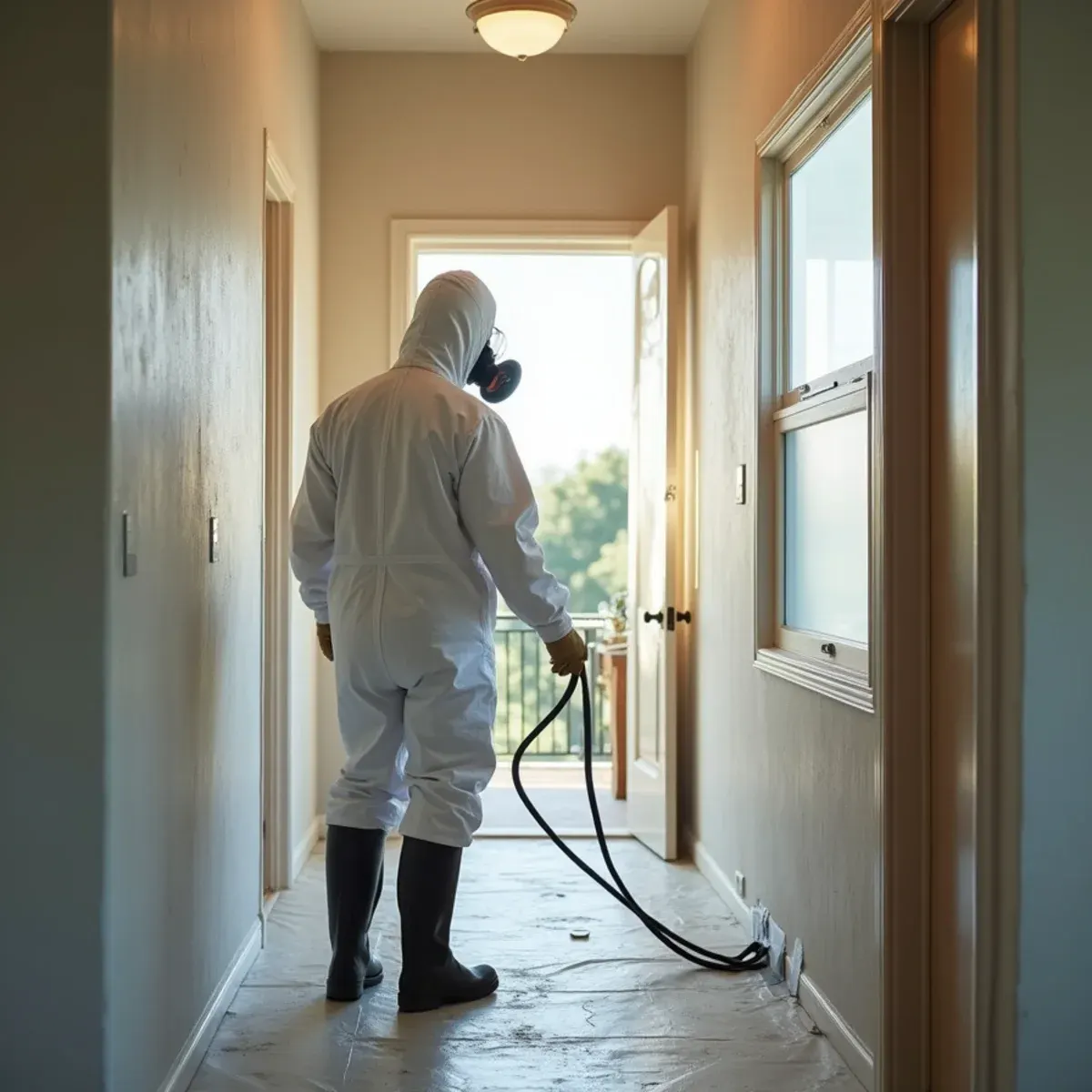
Most of what we clean up in Santa Fe Springs isn't a bathroom. It's a floor drain in a warehouse off Norwalk Boulevard, a restroom core serving two hundred people on a shift, or a waste line under a manufacturing bay. This is one of the most industrial cities in this part of Los Angeles County, and its warehouse, distribution and manufacturing base dwarfs the residential pockets around Los Nietos. That changes almost everything about how a Category 3 loss gets handled.
On a large open-plan floor there are no rooms to contain, so containment gets built. Racking has to be worked around or emptied, product on the lowest pallet level has to be triaged before anything is cleaned, and the operation usually cannot stop. Add the tenant-improvement history in these buildings — waste lines rerouted for a previous occupant, floor drains capped and forgotten — and finding where the contamination traveled takes as long as cleaning it. We'd rather know your building before the call comes in.
What Santa Fe Springs Changes About Sewage Cleanup
1Access and shutoff information on file
Failures happen at two in the morning, and that's when nobody can find who has the gate code, where the sewer cleanout sits or which valve isolates the restroom core. We'd rather build that file with your facilities lead on a quiet weekday. Ten minutes of paperwork in advance regularly saves two hours on the night it matters.
2Product triage before cleaning starts
Category 3 water that reached packaging, raw material or finished goods creates a disposal and documentation problem before it creates a cleaning one. We photograph and inventory affected stock by pallet position while it's still where it landed, because once it's moved, nobody can prove what was and wasn't in contact. Your insurer will ask.
3Containment built, not found
A hundred thousand square feet of open floor has no walls to work with. We frame and sheet hard containment around the affected bays, run HEPA negative air with the exhaust routed clear of the working side of the building, and keep forklift traffic on a defined path. Done right, the rest of the operation keeps running.
How the Work Runs
The method is the same one we use on every sewage cleanup job, documented to the IICRC S500:2025 standard. Here it is in short — the full sewage backup cleanup process explains each stage in detail.
- Secure the area and set containment
- Full PPE and safe extraction
- Remove contaminated porous materials
- Clean and disinfect all remaining surfaces
- Deodorize at the source
- Dry, verify, and clear
The Santa Fe Springs Background Worth Knowing
The water sitting in a wet-pipe sprinkler system has been there for years. It is stagnant, it has been in contact with black steel and scale that whole time, and some systems carry corrosion inhibitors or antifreeze as well. When a head discharges, that is what lands on your floor and soaks into your product. Under IICRC S500:2025 water gets categorized on the evidence in front of us, and sprinkler discharge that has run across a warehouse floor almost never stays in Category 1. That decision drives what we dry in place, what comes out, and how the crew works.
There is more on the housing stock, drainage and plumbing history of this city on our water damage restoration in Santa Fe Springs page.
Santa Fe Springs at a glance
- Dominant construction era
- 1950–1975
- Foundation type
- slab on grade
- Supply piping found here
- galvanized steel, copper, commercial-grade systems
- Drain line materials
- cast iron, commercial waste lines
- Terrain and water table
- flat, moderate water table
- Most common local failure
- fire-sprinkler discharge and commercial supply failures across large open-plan warehouse and manufacturing floors
- Highest-value local prevention
- keeping current building access and shutoff information on file before an after-hours failure
What It Costs in Santa Fe Springs
We do not quote a number over the phone before seeing the property — anyone who does is guessing. The variables that actually move the price on a sewage cleanup job are affected square footage, volume of porous material removed, contents in the affected area, and they are broken down in full on the sewage backup cleanup page. The assessment and the written estimate are free anywhere in Santa Fe Springs, day or night, with no obligation.
Sewage Cleanup Questions from Santa Fe Springs Homeowners
Read your lease before you need to. In most industrial triple-net leases the tenant carries interior maintenance and the landlord carries the building shell and often the lines beyond the wall, but the split varies and it's routinely disputed after the fact. What we do either way is document the origin precisely, contain and clean to a verified standard, and issue reports both parties and both insurers can work from without arguing over our scope.
It depends on the source. A toilet that overflows with clean bowl water because of a stuck fill valve is Category 1 or 2 and is far less serious. A toilet that backs up from the main line is carrying waste from the whole system, and that is Category 3 — it needs the full protocol.
No. Standard practice for Category 3 water is removal and disposal of carpet and pad that were contacted. Porous materials cannot be reliably disinfected all the way through, and the health risk of leaving them is not worth the savings.
No. Water that has sat in a wet-pipe system for years picks up scale, rust and whatever inhibitors are in the system, and once it runs across a warehouse floor it collects everything on that floor too. We categorize on the evidence per IICRC S500:2025, and sprinkler discharge almost always lands past Category 1. That affects what gets dried in place, what gets removed, and what protective equipment the crew works in.