
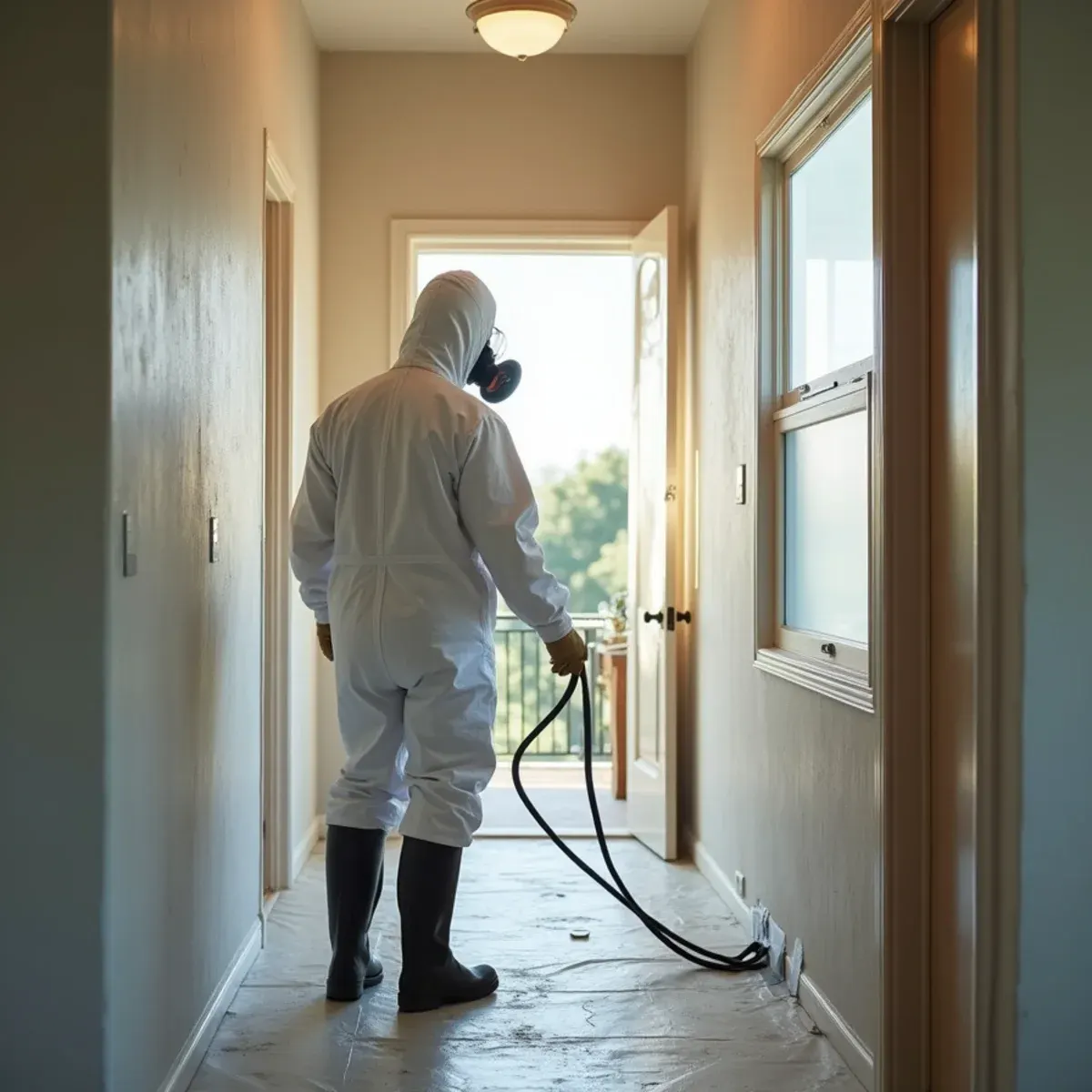
After a hard rain along the western edge of Norwalk, the calls come in clusters from the same few blocks. The San Gabriel River channel carries an enormous share of regional runoff, and the neighborhoods near it saturate quickly. Groundwater rises into aging clay and cast iron joints, the collection system takes on volume it was never sized for, and lines that manage fine in dry weather relieve into the lowest fixtures in the nearest houses. When we get three addresses within a couple of streets on the same night, it is not three coincidences. It is one system running past capacity.
The housing makes that harder to absorb. Norwalk went from farmland to a full city between about 1945 and 1960, modest homes on small lots, built quickly and economically, still running the original cast iron waste lines seventy years later. Those small lots leave very little ground between the street and the house to take on any water, and very little room to work. Around Norwalk Park and the neighborhoods near Cerritos College, a crew ends up staging from the street because there is nowhere else for equipment or contaminated material to go.
What Norwalk Changes About Sewage Cleanup
1Wet weather hits the block, not the house
When several homes on the same street back up during a storm, the cause is upstream capacity rather than anything in your line. That matters for what you do next. Snaking your own lateral will not prevent a repeat, but a backflow prevention device might, and knowing whether your house sits low on the run tells you whether it is worth the cost. We say which one you are looking at.
2Small lots and street-side staging
There is often no driveway to spare and no side yard worth the name, so the truck sits on the street, hose runs are longer, and every bag of contaminated material comes out through the front of the house. We lay protection along that path before anything moves and plan waste routing first, because the fastest way to make a one-room job into a three-room job is carrying it through the living room.
3Seventy-year-old cast iron underneath
These homes are still running their original waste lines. Cast iron of that age thins along the bottom, roughens inside and collects solids, so most houses here have a slow-drain history before the day it stops. After the cleanup we recommend a camera scope that reports wall condition and grade, not just whatever cleared this time, so you know whether you are in for an annual event.
How the Work Runs
The method is the same one we use on every sewage cleanup job, documented to the IICRC S500:2025 standard. Here it is in short — the full sewage backup cleanup process explains each stage in detail.
- Secure the area and set containment
- Full PPE and safe extraction
- Remove contaminated porous materials
- Clean and disinfect all remaining surfaces
- Deodorize at the source
- Dry, verify, and clear
The Norwalk Background Worth Knowing
The homes built in Norwalk during the postwar surge were built to be affordable and built fast, which was exactly the right priority at the time. Seventy years later, some of those choices have consequences.
There is more on the housing stock, drainage and plumbing history of this city on our water damage restoration in Norwalk page.
Norwalk at a glance
- Dominant construction era
- 1945–1960
- Foundation type
- slab on grade
- Supply piping found here
- original galvanized steel
- Drain line materials
- cast iron
- Terrain and water table
- flat, moderate water table
- Most common local failure
- original galvanized supply lines failing after decades of internal scaling and erosion at fittings
- Highest-value local prevention
- clearing yard and area drains before the season, since small lots leave little ground between the street and the house
What It Costs in Norwalk
We do not quote a number over the phone before seeing the property — anyone who does is guessing. The variables that actually move the price on a sewage cleanup job are affected square footage, volume of porous material removed, contents in the affected area, and they are broken down in full on the sewage backup cleanup page. The assessment and the written estimate are free anywhere in Norwalk, day or night, with no obligation.
Sewage Cleanup Questions from Norwalk Homeowners
A cluster like that on the same night points upstream, toward the collection system taking on more water than it can move, which is common near the San Gabriel River channel when the ground is saturated. Report it, because the pattern matters to the agency. On your side, the cleanup and the interior damage still run through your own coverage, and sewer backup is usually a separate endorsement worth confirming today. If your house sits low on the run, ask us about a backwater valve before the rebuild.
It depends on the source. A toilet that overflows with clean bowl water because of a stuck fill valve is Category 1 or 2 and is far less serious. A toilet that backs up from the main line is carrying waste from the whole system, and that is Category 3 — it needs the full protocol.
No. Standard practice for Category 3 water is removal and disposal of carpet and pad that were contacted. Porous materials cannot be reliably disinfected all the way through, and the health risk of leaving them is not worth the savings.
If it is original galvanized from the postwar build-out, it has exceeded any reasonable service life. If you have had one failure, a second is a matter of when. The cheapest moment to repipe is while walls are already open for a repair — the demolition and patching are already in the scope.