
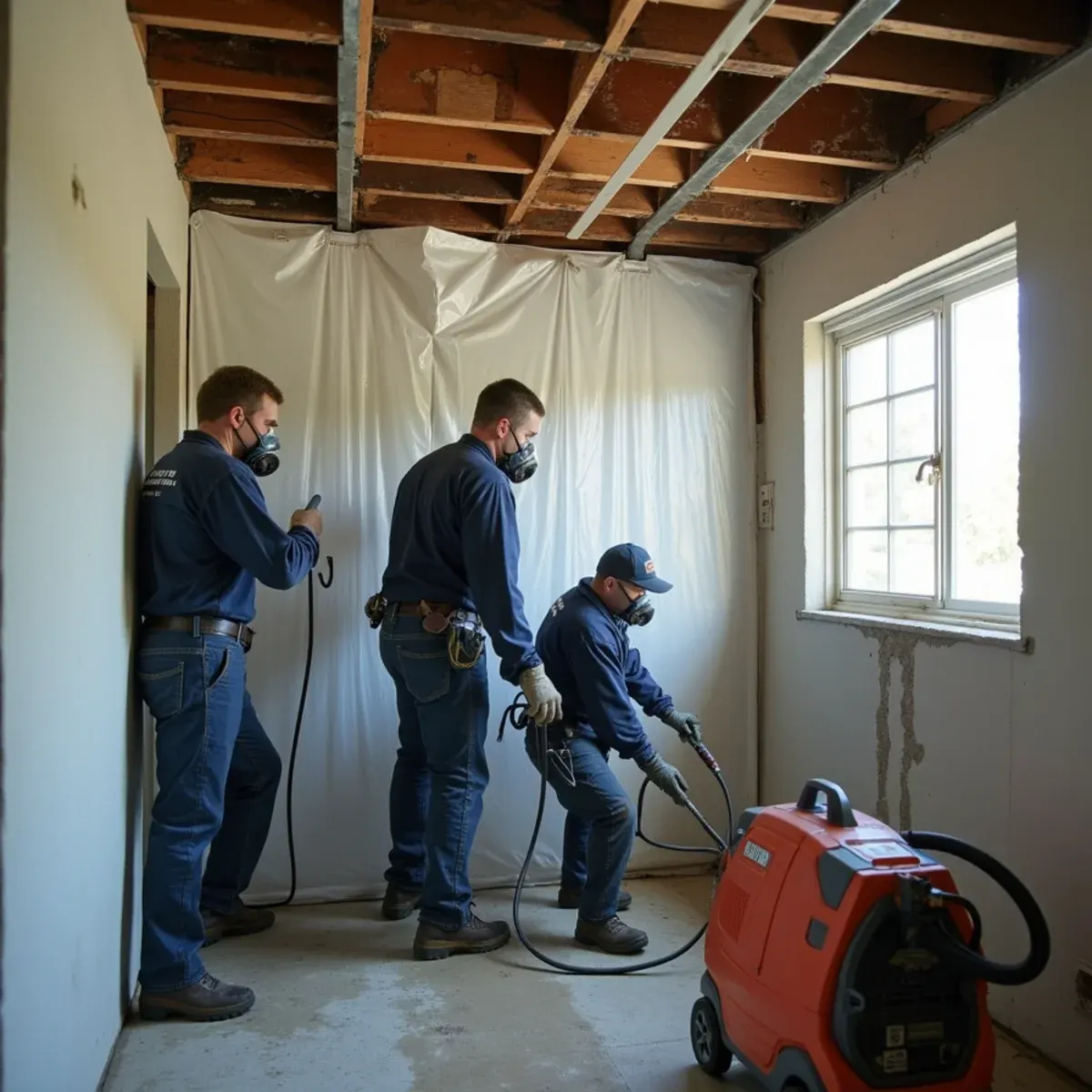
The Santa Fe Springs call usually comes from a facility manager, not a homeowner, and usually at an hour nobody wants to be awake. Two hundred thousand square feet of concrete with water across a third of it, pallet racking loaded to the top beam, and a shift due in five hours. This is one of the most industrial cities in this part of Los Angeles County — the warehouse, manufacturing and distribution base along Telegraph Road and Norwalk Boulevard dwarfs the residential footprint, and it shapes almost every flood job we run here.
Big commercial floors flood differently. Water spreads across a slab with no walls to stop it, gets under racking that cannot be moved while loaded, wicks up into cardboard cases and pallet bottoms, and finds the tenant-improvement office built in the corner out of ordinary residential-grade drywall and carpet. The residential pockets in Los Nietos and around Florence Avenue are conventional 1950s-to-1970s slab tract and we treat them accordingly. Everything else here is a logistics problem as much as a restoration one.
What Santa Fe Springs Changes About Flood Cleanup
1Racked inventory decides the work sequence
You cannot dry a floor you cannot reach. We work with your team to sort what can be pulled, what your own equipment operators need to unload, and what stays put while we dry around it. Cardboard wicks water several inches up and holds it, so bottom-tier cases usually need triage early. Documenting those decisions protects both the restoration scope and any inventory claim that follows.
2Category 3 across an open-plan floor
Ground water entering a loading dock or a roll-up door is Category 3 exactly as it is in a house, which means contained work areas, negative air and disposal of porous material — including the carpet and drywall in tenant-improvement offices. On a floor this size that means building containment around the affected zone so unaffected operations keep running, rather than shutting down the whole building.
3Access and shutoff information saves hours
After-hours losses stall on the same things every time: who has keys, where the main is, which panel kills the affected circuits, whether the sprinkler riser has been isolated. We keep that information on file for the facilities we serve so a two in the morning call starts with work instead of phone tag. We are about seventeen minutes north of our Cypress base and roll as soon as conditions allow.
How the Work Runs
The method is the same one we use on every flood cleanup job, documented to the IICRC S500:2025 standard. Here it is in short — the full flood damage cleanup process explains each stage in detail.
- Safety assessment and utility check
- Containment and negative air
- Documentation and contents triage
- Extraction and controlled demolition
- Cleaning and disinfection
- Structural drying and clearance
The Santa Fe Springs Background Worth Knowing
The water sitting in a wet-pipe sprinkler system has been there for years. It is stagnant, it has been in contact with black steel and scale that whole time, and some systems carry corrosion inhibitors or antifreeze as well. When a head discharges, that is what lands on your floor and soaks into your product. Under IICRC S500:2025 water gets categorized on the evidence in front of us, and sprinkler discharge that has run across a warehouse floor almost never stays in Category 1. That decision drives what we dry in place, what comes out, and how the crew works.
There is more on the housing stock, drainage and plumbing history of this city on our water damage restoration in Santa Fe Springs page.
Santa Fe Springs at a glance
- Dominant construction era
- 1950–1975
- Foundation type
- slab on grade
- Supply piping found here
- galvanized steel, copper, commercial-grade systems
- Drain line materials
- cast iron, commercial waste lines
- Terrain and water table
- flat, moderate water table
- Most common local failure
- fire-sprinkler discharge and commercial supply failures across large open-plan warehouse and manufacturing floors
- Highest-value local prevention
- keeping current building access and shutoff information on file before an after-hours failure
What It Costs in Santa Fe Springs
We do not quote a number over the phone before seeing the property — anyone who does is guessing. The variables that actually move the price on a flood cleanup job are how high the water reached, how long it sat before extraction, contents volume in the flooded area, and they are broken down in full on the flood damage cleanup page. The assessment and the written estimate are free anywhere in Santa Fe Springs, day or night, with no obligation.
Flood Cleanup Questions from Santa Fe Springs Homeowners
Often not, and it is better to know that early. Commercial property policies generally exclude surface and ground water the same way homeowners policies do, unless flood coverage was purchased separately or added by endorsement. Sprinkler discharge and interior pipe failures are usually a different story. We document the entry point, depth, timeline and moisture readings to the standard adjusters expect, and we bill directly against whatever coverage genuinely applies.
Yes. Water that crossed soil, pavement, or a storm drain is Category 3 by IICRC classification regardless of appearance — it carries bacteria, fuel and oil residue, lawn chemicals, and whatever else was on the ground. Do not walk through it in open shoes, and keep children and pets out of the area entirely.
If the water came from outside across the ground, almost certainly not — that requires separate flood insurance. If it came from a failed water heater, a burst pipe, or a supply line inside the garage, it is usually covered. We document the source carefully because that distinction determines everything.
No. Water that has sat in a wet-pipe system for years picks up scale, rust and whatever inhibitors are in the system, and once it runs across a warehouse floor it collects everything on that floor too. We categorize on the evidence per IICRC S500:2025, and sprinkler discharge almost always lands past Category 1. That affects what gets dried in place, what gets removed, and what protective equipment the crew works in.