
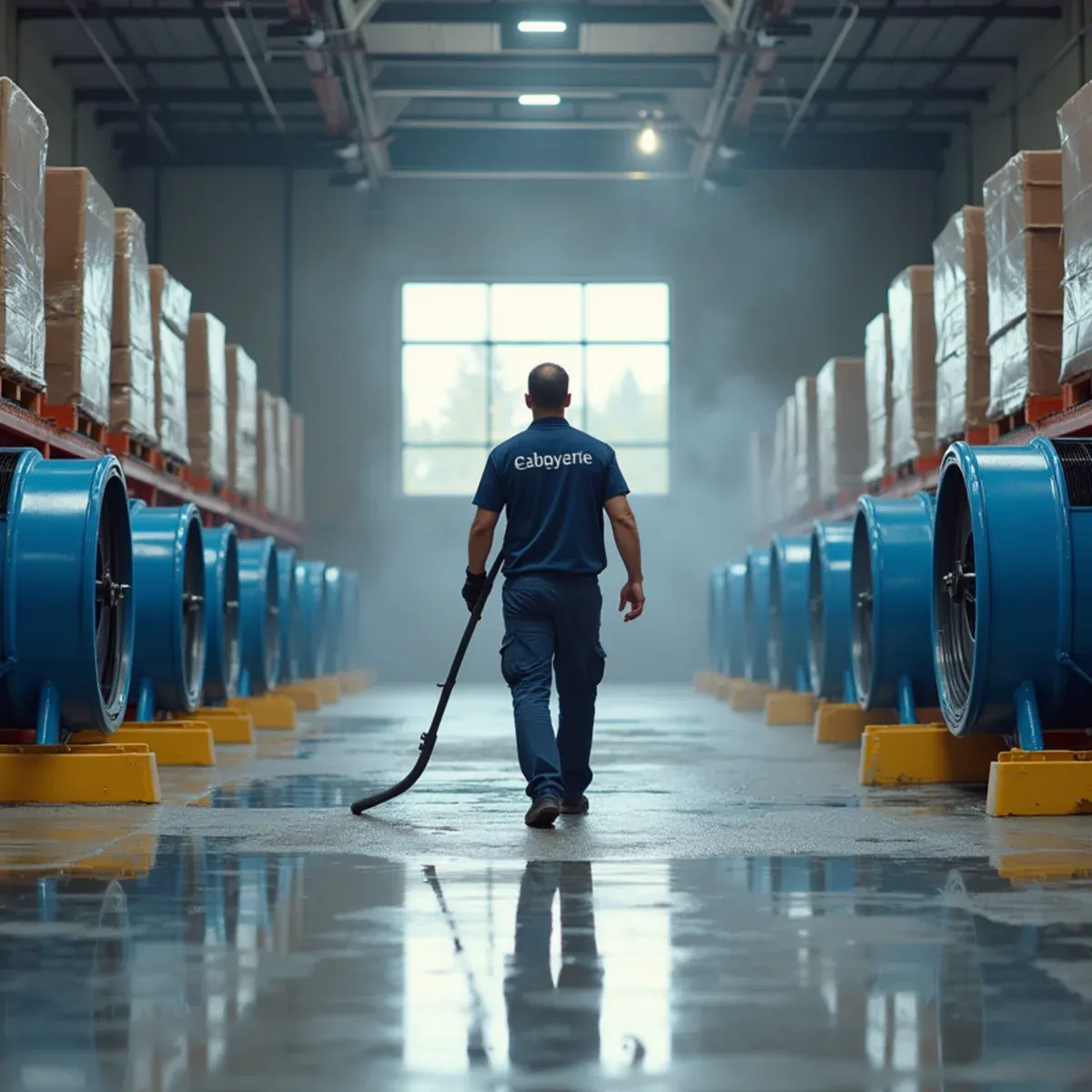
A sprinkler head lets go at eleven at night in a distribution building off Norwalk Boulevard. Nobody is inside. The head keeps discharging until somebody finds the riser and closes it, and on a flat concrete floor that water goes everywhere at once. Under the racking. Into the bottom row of palletized product. Through the door sweeps into the front offices, and into the seam where the tenant improvement carpet meets the slab. The alarm company calls the property manager, who calls whoever answers. That is the Santa Fe Springs call, and it looks nothing like a burst angle stop in a kitchen.
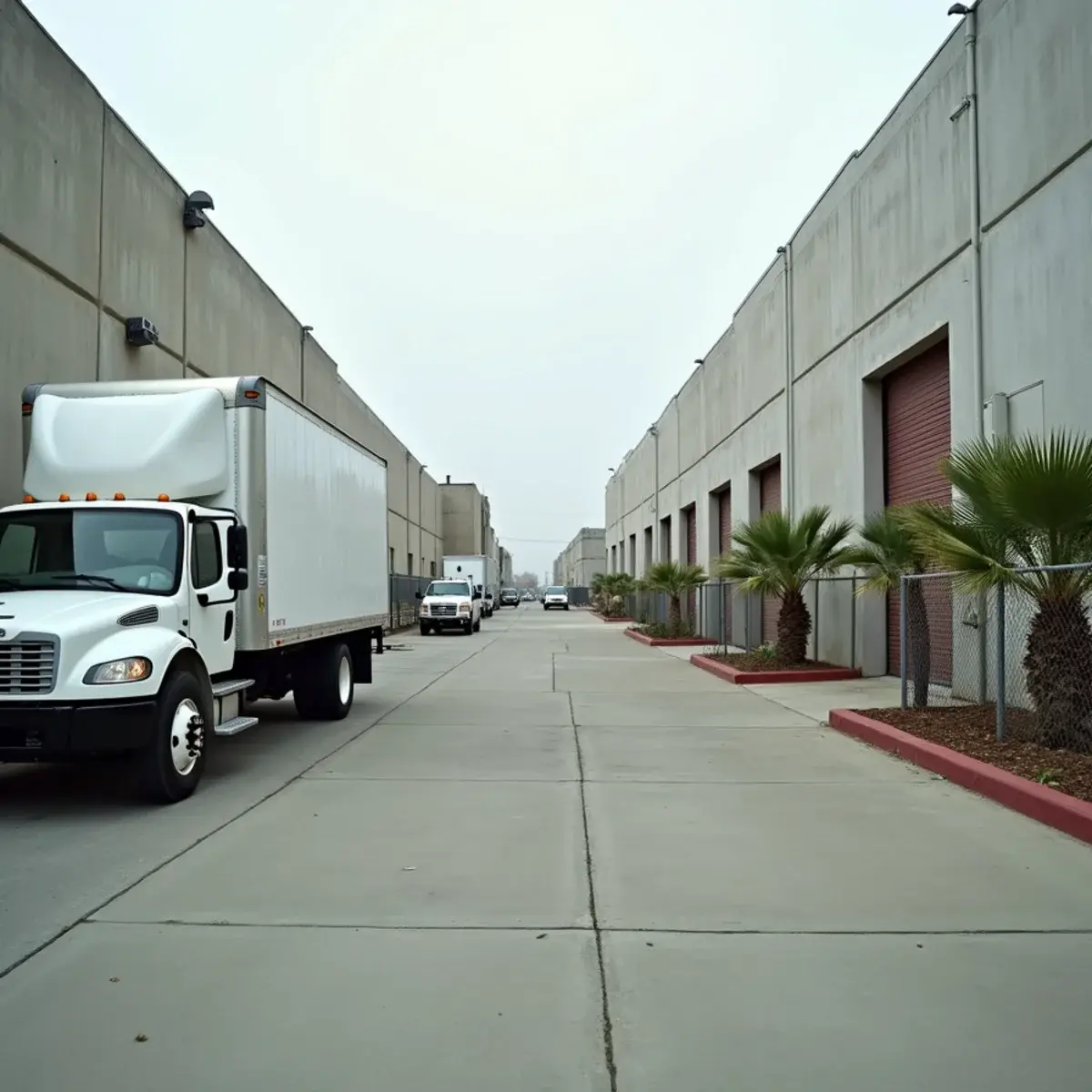
This is one of the most industrial cities in this corner of Los Angeles County. The oil field that put it on the map a century ago gave way to a warehouse, manufacturing and distribution base that dwarfs the residential footprint: the parks along Telegraph Road and Norwalk Boulevard, the yards behind Florence Avenue, block after block of tilt-up concrete and steel. Houses are here too, mostly postwar slab construction in Los Nietos and the pockets near Heritage Park and the Clarke Estate, but they are the minority of the ground and the minority of our work.
So most of what we do here is commercial, and commercial water behaves differently. Supply systems are larger and hold more volume. Roofs are flat with internal drains that back up rather than overflow. Floors are wide open, so water travels a long way before anything stops it. And a clock is running that a house does not have, because every hour a floor stays wet is an hour of production or shipping that is not happening. We are about seventeen minutes north of our Cypress base and we dispatch as fast as conditions allow, day or night.
Sprinkler Water Is Not Clean Water
The water sitting in a wet-pipe sprinkler system has been there for years. It is stagnant, it has been in contact with black steel and scale that whole time, and some systems carry corrosion inhibitors or antifreeze as well. When a head discharges, that is what lands on your floor and soaks into your product. Under IICRC S500:2025 water gets categorized on the evidence in front of us, and sprinkler discharge that has run across a warehouse floor almost never stays in Category 1. That decision drives what we dry in place, what comes out, and how the crew works.
Volume is the other surprise. A single head runs continuously until the riser is closed, and a discharge that starts after the last shift can run for hours. The result is not a wet patch. It is a thin sheet across tens of thousands of square feet, wicking up into cardboard cartons on the bottom pallet, into the bottom track of office partition walls, and into any gypsum touching the slab. Cardboard and paper move water upward faster than most people expect, and that wicking is usually where the real loss is.
The standing water and the stained ceiling tiles are the easy part. What we look for is where it went sideways, under racking legs, into the seams of an epoxy floor coating, behind the base of a demising wall, into electrical and server rooms nobody thought to check. We map the floor with moisture meters before deciding where equipment goes, because guessing in a building this size is expensive in both directions, whether that means drying space that was never wet or missing space that was.
Drying a Warehouse Floor Is Volume Math
Drying a house is a room-by-room problem. Drying a large open-plan floor is an air volume problem, and the arithmetic is different. There are no partitions to hold conditioned air, the deck is twenty-five or thirty feet up, and the whole cubic volume has to be brought down and held there long enough for the slab and the wet materials to give up their moisture. In practice that means desiccant dehumidification and containment, sectioning the affected area off with poly so we are conditioning the space that matters instead of the entire envelope.
Power is the next constraint. A tenant panel running conveyors, compressors and high-bay lighting rarely has spare capacity for a full drying setup, so we plan for generators or a temporary tie-in rather than discovering the problem at two in the morning. Racking is the constraint after that. Product on the bottom rows has to move before we can dry what is underneath, and moving racked inventory takes a forklift, an operator and somewhere to put it, all of which we would rather arrange with you in the first hour than on the second day.
We should be straight about what drying can and cannot save. Structure usually comes back if we reach it early: slab, framing, drywall, insulation, most hard finishes. Saturated corrugated, paper goods and particleboard fixtures generally do not, and pretending otherwise only delays the inventory decision your adjuster is waiting on. We log moisture readings daily so the drying record holds up under review, and we tell you early which contents are worth the equipment days and which are not. Getting that call made on the first day is usually worth more to a business than anything we do with a fan.
What To Have On File Before the Call
The biggest difference between a four-hour loss and a fourteen-hour one in this city is whether the person answering the phone at midnight knows where the riser room is. Industrial buildings here are usually leased, often to a tenant who has been in the space three years and never opened the mechanical room. The building may be owned out of state and managed by a firm with an answering service. Walking that chain takes time in the middle of the night, and the water does not pause while it happens.
The other thing worth sorting out before you need it is who insures what. In a typical lease along Telegraph or Norwalk, the shell belongs to the owner's policy, the tenant improvements may belong to either party depending on how the lease was written, and contents and business interruption are the tenant's. That is three policies and often three adjusters looking at one floor. We write documentation so it works for all of them, with scope, photographs, moisture logs and drying records tied to specific areas of the building rather than to the loss as a whole.
- Riser room location, key or code, and which valve actually closes the system
- Domestic water and gas shutoffs, photographed and labeled where staff can find them
- Alarm monitoring company name and account number
- After-hours contacts for both the property manager and the building owner
- Whether the space is wet-pipe or dry-pipe, and when it was last inspected
- A forklift operator who can be reached outside business hours
Neighborhoods and Landmarks We Cover in Santa Fe Springs
We work throughout Santa Fe Springs — every neighborhood, every street, residential and commercial. If your address is in the city, we cover it.
Neighborhoods & corridors
- Los Nietos
- Telegraph Road corridor
- Norwalk Boulevard industrial district
- Florence Avenue area
Landmarks nearby
- Heritage Park
- Clarke Estate
- Santa Fe Springs Swap Meet
- Telegraph Road industrial district
- Los Nietos
Why Santa Fe Springs Residents Call Us First
Any restoration company can put Santa Fe Springs on a service-area list. What matters at 2 a.m. is how far the truck has to come and whether the crew has opened a wall in a house like yours before.
About 17 minutes north
We dispatch from 6122-6182 Katella Ave in Cypress — not from a regional depot and not from a call centre that sells your job to whoever bids for it. That is the whole reason the 60-minute commitment is one we can put in writing.
Sprinkler discharge across open floor plates
A warehouse or manufacturing floor takes a volume of water a residential setup cannot handle. We size the chamber for the footprint.
After-hours access on file
Keeping current building access and shutoff information means a 2 a.m. failure does not wait for someone to find a key.
- 20+ years restoring Orange County homes
- IICRC Certified Firm
- Licensed, Bonded & Insured
- We bill your insurance company directly
- IICRC S500:2025 compliant on every job
- 100% satisfaction guarantee — in writing, on every job
Santa Fe Springs Water Damage Questions
No. Water that has sat in a wet-pipe system for years picks up scale, rust and whatever inhibitors are in the system, and once it runs across a warehouse floor it collects everything on that floor too. We categorize on the evidence per IICRC S500:2025, and sprinkler discharge almost always lands past Category 1. That affects what gets dried in place, what gets removed, and what protective equipment the crew works in.
Usually, with planning. We contain the affected area so we are conditioning that space rather than the whole envelope, stage equipment clear of forklift aisles, and schedule the loud work around your shifts. What we need from you early is forklift access and a decision on where displaced pallets go. Full shutdowns are rare, and if your situation is one of them we will say so on the first walkthrough instead of halfway through.
Both. The residential pockets here, Los Nietos, the streets around Heritage Park, the neighborhoods off Florence Avenue, are mostly 1950s and 1960s slab homes with galvanized supply lines and cast iron drains, and they fail the same way houses in Cypress do. Commercial is simply the larger share of our work in this city because the industrial base is so much bigger than the residential one.
We are roughly seventeen minutes north of our Cypress base on empty roads, and we dispatch as fast as conditions allow at any hour. The honest limiting factor is rarely the drive. It is how long it takes to get someone with a key into the riser room and the mechanical room. Give us that contact when you call and we will work the access problem while the truck is still moving.