
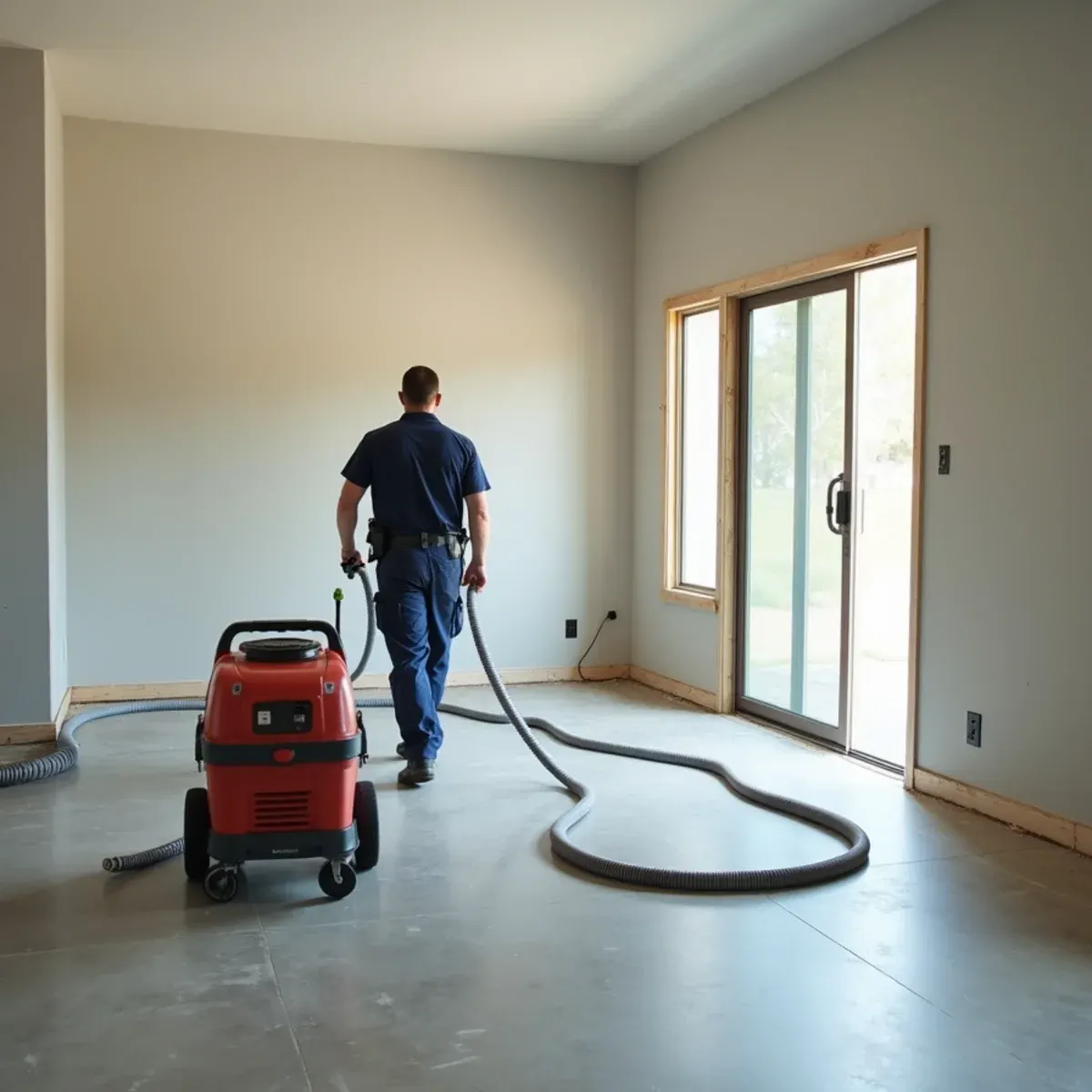
One sprinkler head lets go over a packaging line at two in the morning, and by the time anyone arrives several thousand gallons have crossed an open floor. Water out of a fire sprinkler system has been standing in black steel pipe for years. It comes out dark, it stains, and it carries a distinct smell of its own that transfers into cardboard, pallets and product. Santa Fe Springs is one of the most industrial cities in this part of LA County, and warehouse, manufacturing and distribution work is the majority of what we do here.
The odor problem in these buildings is rarely the structure. Concrete and steel clean up. It is the inventory. Corrugated cases wick water eighteen inches up from the slab and hold the smell long after the floor meters dry, and a customer rejecting a shipment because the boxes smell is a bigger loss than the drying bill. So the sequence changes: get racked goods off wet slab, separate what is salvageable, run HEPA filtration and dehumidification sized for an air volume most residential crews never handle, and treat only after the wet material is gone.
What Santa Fe Springs Changes About Odor Removal
1Stagnant sprinkler water has its own signature
Water sitting in black steel for years comes out rust-dark and smelling of it, and it transfers that odor into everything porous it touches. It also stains, which makes the loss look worse than it is in some places and better than it is in others. We document what it touched carefully, because that distinction drives what gets replaced and what only gets cleaned.
2Cardboard is the odor reservoir
Corrugated cases sitting on a wet slab wick moisture a foot or more up the stack and hold onto it. The building can meet every drying goal while the pallets are still off-gassing. Inventory triage on day one, deciding what comes off the floor, what gets repacked and what is a loss, does more for the final smell than any equipment we set.
3Open volume, not rooms
A large distribution floor with clear-height racking is a single air volume with no walls to contain anything. Deodorization has to be planned as air changes across that whole space, with equipment sized accordingly, and it usually runs in sections so shipping keeps moving. Ozone means shutting the building down completely, which for most operations here is the more expensive option.
How the Work Runs
The method is the same one we use on every odor removal job, documented to the IICRC S500:2025 standard. Here it is in short — the full odor removal & deodorization process explains each stage in detail.
- Locate the residue
- Remove what holds it
- Clean the surfaces that stay
- Filter the air while we work
- Seal only what cannot be cleaned
- Treat the air, then verify
The Santa Fe Springs Background Worth Knowing
The water sitting in a wet-pipe sprinkler system has been there for years. It is stagnant, it has been in contact with black steel and scale that whole time, and some systems carry corrosion inhibitors or antifreeze as well. When a head discharges, that is what lands on your floor and soaks into your product. Under IICRC S500:2025 water gets categorized on the evidence in front of us, and sprinkler discharge that has run across a warehouse floor almost never stays in Category 1. That decision drives what we dry in place, what comes out, and how the crew works.
There is more on the housing stock, drainage and plumbing history of this city on our water damage restoration in Santa Fe Springs page.
Santa Fe Springs at a glance
- Dominant construction era
- 1950–1975
- Foundation type
- slab on grade
- Supply piping found here
- galvanized steel, copper, commercial-grade systems
- Drain line materials
- cast iron, commercial waste lines
- Terrain and water table
- flat, moderate water table
- Most common local failure
- fire-sprinkler discharge and commercial supply failures across large open-plan warehouse and manufacturing floors
- Highest-value local prevention
- keeping current building access and shutoff information on file before an after-hours failure
What It Costs in Santa Fe Springs
We do not quote a number over the phone before seeing the property — anyone who does is guessing. The variables that actually move the price on a odor removal job are how much material comes out, where the residue ended up, the type of odor involved, and they are broken down in full on the odor removal & deodorization page. The assessment and the written estimate are free anywhere in Santa Fe Springs, day or night, with no obligation.
Odor Removal Questions from Santa Fe Springs Homeowners
Sometimes, and usually not completely. Corrugated absorbs both the moisture and the rust-laden water that was sitting in the sprinkler lines, and once it wicks into a case the odor is in the fibers. Repacking salvageable goods into new cases is generally faster and cheaper than trying to deodorize the old ones, and it protects you from a customer opening a box downstream and rejecting the shipment. We sort by wick line and document it for the carrier.
It may mask it for a few weeks. Rental units are usually undersized for a whole structure, and they treat air rather than the material producing the odor. They also should not run with anyone home, and long heavy cycles can degrade rubber seals, leather, and paint sheen. If the residue sits in a wall cavity or under the flooring, no amount of ozone reaches it.
Because residue was left somewhere. That is the answer nearly every time. The usual spots are attic insulation, the inside of flex duct, the wall cavity behind drywall that was replaced but never cleaned, the subfloor under new flooring, and the back of a cabinet run. Drying a structure to standard does not remove residue, so a job dried correctly can still smell if cleaning stopped at visible surfaces.
No. Water that has sat in a wet-pipe system for years picks up scale, rust and whatever inhibitors are in the system, and once it runs across a warehouse floor it collects everything on that floor too. We categorize on the evidence per IICRC S500:2025, and sprinkler discharge almost always lands past Category 1. That affects what gets dried in place, what gets removed, and what protective equipment the crew works in.