
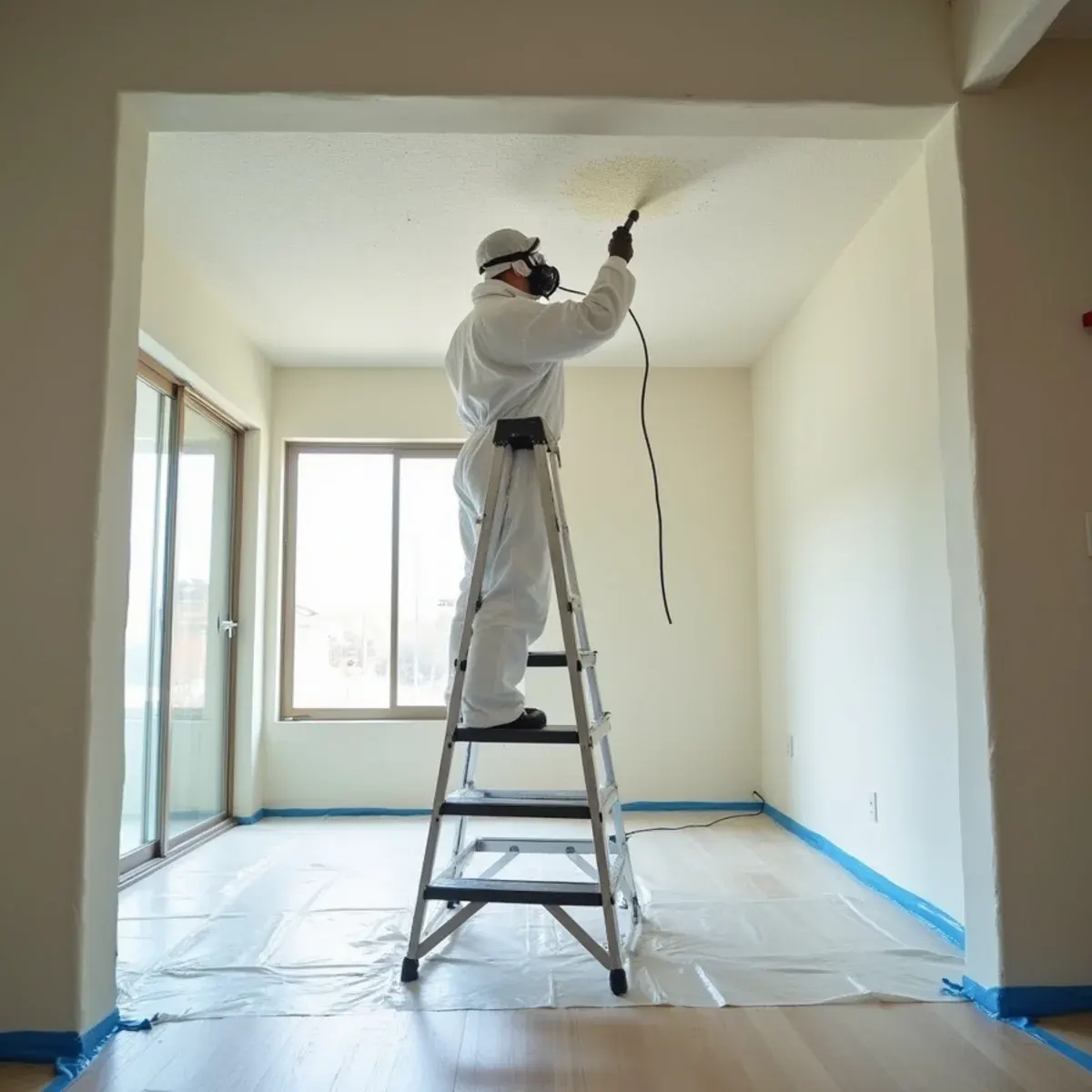
Most of what we do in Santa Fe Springs is not residential. The warehouse, manufacturing and distribution base here dwarfs the housing, and those buildings carry materials houses never had: roofing mastic and built-up roof plies, transite panel, boiler and pipe lagging in mechanical rooms, fire-door cores, and mastic under sheet flooring in the office build-out. For commercial buildings the survey obligation attaches to the renovation or demolition work itself rather than the year of construction, so a 1990s tilt-up is not automatically exempt from anything.
The signature loss here is a fire sprinkler line letting go over an open warehouse floor. Thousands of gallons across racked inventory, into the offices at the end of the building, under pallet racking that cannot be moved quickly. The demolition that follows touches suspended ceiling systems, older floor tile in the office area, and sometimes wall assemblies built decades before the current tenant moved in. Oil-field history and the 1950s through 1970s residential pockets round out the picture, and those follow ordinary house rules.
What Santa Fe Springs Changes About Asbestos & Lead Testing
1Warehouse materials houses never have
Sampling a distribution building means looking at things that never appear in a tract home — roof mastic and flashing cement, transite wall and roof panel, mechanical room lagging, fire-door cores, and the mastic under office sheet goods. We scope by building system rather than by room, and hand the report to a licensed abatement contractor to price containment against your shutdown window.
2Sprinkler losses hit occupied production space
A sprinkler discharge does not wait for a convenient week. Product is wet, racking is loaded and the tenant needs the floor back. Testing has to run alongside extraction rather than after it, so demolition can start the moment results land. We sequence sampling around the areas that need to reopen first and stage the rest behind them.
3Residential pockets are the smaller half
The 1950s through 1970s slab houses here follow the same rules as anywhere else in the area — ceiling texture, joint compound, floor tile and mastic, plus lead if the house predates 1978. We do that work and the sampling scope is small. It is simply not what most Santa Fe Springs calls turn out to be.
How the Work Runs
The method is the same one we use on every asbestos & lead testing job, documented to the IICRC S500:2025 standard. Here it is in short — the full asbestos & lead paint testing process explains each stage in detail.
- Emergency stabilization without cutting
- Define exactly what gets disturbed
- A certified inspector takes the samples
- Independent laboratory analysis
- Lead assessment on painted surfaces
- Abatement, clearance, then restoration
The Santa Fe Springs Background Worth Knowing
The water sitting in a wet-pipe sprinkler system has been there for years. It is stagnant, it has been in contact with black steel and scale that whole time, and some systems carry corrosion inhibitors or antifreeze as well. When a head discharges, that is what lands on your floor and soaks into your product. Under IICRC S500:2025 water gets categorized on the evidence in front of us, and sprinkler discharge that has run across a warehouse floor almost never stays in Category 1. That decision drives what we dry in place, what comes out, and how the crew works.
There is more on the housing stock, drainage and plumbing history of this city on our water damage restoration in Santa Fe Springs page.
Santa Fe Springs at a glance
- Dominant construction era
- 1950–1975
- Foundation type
- slab on grade
- Supply piping found here
- galvanized steel, copper, commercial-grade systems
- Drain line materials
- cast iron, commercial waste lines
- Terrain and water table
- flat, moderate water table
- Most common local failure
- fire-sprinkler discharge and commercial supply failures across large open-plan warehouse and manufacturing floors
- Highest-value local prevention
- keeping current building access and shutoff information on file before an after-hours failure
What It Costs in Santa Fe Springs
We do not quote a number over the phone before seeing the property — anyone who does is guessing. The variables that actually move the price on a asbestos & lead testing job are the number of distinct materials, how many samples each needs, how fast you need results, and they are broken down in full on the asbestos & lead paint testing page. The assessment and the written estimate are free anywhere in Santa Fe Springs, day or night, with no obligation.
Asbestos & Lead Testing Questions from Santa Fe Springs Homeowners
For a commercial building, yes — the requirement follows the work, not the age. A late-1990s tilt-up frequently comes back clean and the survey is quick relative to the job. Skipping it is what stalls projects, because the demolition contractor and the permitting side will both ask for it. If the shell is newer but the tenant improvements inside are older, those improvements are where positives actually turn up.
No, and that's the whole point of testing. Plenty of ceilings from that decade come back clean — the manufacturers were mixed, the formulas changed year to year, and two houses on the same street can give different results. What we can't do is assume either way. A 1974 ceiling is a suspect material, which means one sample and a lab report separates a routine repair from a regulated one. Guessing in either direction is the expensive choice.
Usually less than people fear, and we design around it. Extraction, containment and dehumidification all start on the first visit, because none of that disturbs a suspect material. Sampling happens the same day where we can get an inspector out, and rush lab analysis is available when the clock matters. What genuinely adds time is a positive result, since abatement, containment and clearance testing have to finish before we cut. We'll give you a realistic date rather than an optimistic one.
No. Water that has sat in a wet-pipe system for years picks up scale, rust and whatever inhibitors are in the system, and once it runs across a warehouse floor it collects everything on that floor too. We categorize on the evidence per IICRC S500:2025, and sprinkler discharge almost always lands past Category 1. That affects what gets dried in place, what gets removed, and what protective equipment the crew works in.