
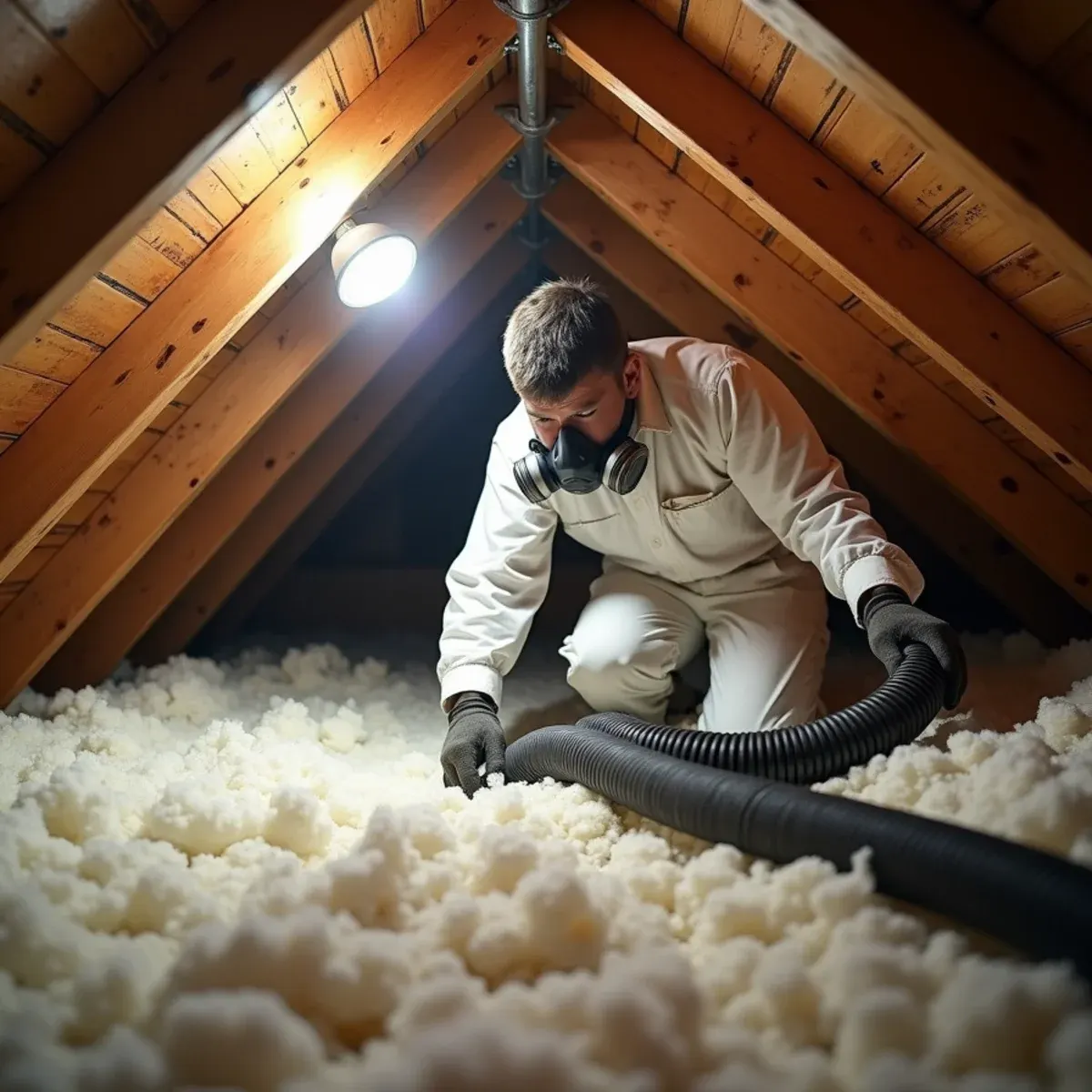
Straight answer for Santa Fe Springs: attic insulation replacement, the way a homeowner pictures it, is not most of what we do here. This is one of the most industrial cities in this part of LA County, with an oil-field history and a warehouse, manufacturing and distribution base that dwarfs the residential footprint. Those buildings do not have attics. They have insulated metal roof decks, exposed structure, and office areas with suspended ceilings carrying batt insulation on top of the tiles. The insulation work is real and it matters. It just lives somewhere other than an attic.
The usual trigger is a fire sprinkler head, and sprinkler water does not behave like a roof leak. It arrives fast, in volume, across an open floor, and it soaks everything above the office ceilings on the way down. Wet batts over drop tiles have to come out because they will never regain R-value and they will grow. Where rigid board sits over metal deck, water gets between the board and the deck and has to be lifted and inspected rather than vacuumed. In the residential pockets between the corridors, we do the conventional attic job.
What Santa Fe Springs Changes About Attic & Insulation
1Sprinkler discharge soaks office ceiling batts
A single head puts out far more water than a roof leak, and in a building with office space under a warehouse roof, much of it ends up on the ceiling grid. Batts lying on tiles saturate immediately and stay wet long after the floor is squeegeed. They come out, the grid and deck get dried, and replacement goes back only after the structure above reads dry.
2Roof-deck board gets lifted, not vacuumed
On an insulated metal deck, rigid board sits above the structure and water tracks between the board and the deck where nothing can be vacuumed and nothing dries on its own. That assembly has to be opened and inspected in sections, with wet board removed and the deck dried before it is closed back up. Guessing here is how corrosion problems start quietly.
3Working around racking and shift schedules
Nobody shuts a distribution building down for our convenience. We phase by zone, work nights where that keeps the floor running, protect racked inventory with containment rather than moving it, and coordinate with dock schedules so drying equipment is not in the way of a truck. The scope and documentation get built the way a commercial adjuster wants to read them.
How the Work Runs
The method is the same one we use on every attic & insulation job, documented to the IICRC S500:2025 standard. Here it is in short — the full attic water damage & insulation replacement process explains each stage in detail.
- Map the wet area before touching it
- Contain the hatch and protect the path
- Vacuum out the saturated insulation
- HEPA vacuum and treat the plane
- Dry the deck, joists, and top plates
- Reinstall insulation and check the details
The Santa Fe Springs Background Worth Knowing
The water sitting in a wet-pipe sprinkler system has been there for years. It is stagnant, it has been in contact with black steel and scale that whole time, and some systems carry corrosion inhibitors or antifreeze as well. When a head discharges, that is what lands on your floor and soaks into your product. Under IICRC S500:2025 water gets categorized on the evidence in front of us, and sprinkler discharge that has run across a warehouse floor almost never stays in Category 1. That decision drives what we dry in place, what comes out, and how the crew works.
There is more on the housing stock, drainage and plumbing history of this city on our water damage restoration in Santa Fe Springs page.
Santa Fe Springs at a glance
- Dominant construction era
- 1950–1975
- Foundation type
- slab on grade
- Supply piping found here
- galvanized steel, copper, commercial-grade systems
- Drain line materials
- cast iron, commercial waste lines
- Terrain and water table
- flat, moderate water table
- Most common local failure
- fire-sprinkler discharge and commercial supply failures across large open-plan warehouse and manufacturing floors
- Highest-value local prevention
- keeping current building access and shutoff information on file before an after-hours failure
What It Costs in Santa Fe Springs
We do not quote a number over the phone before seeing the property — anyone who does is guessing. The variables that actually move the price on a attic & insulation job are how much of the attic got wet, clearance, access, and layout, the type of insulation up there, and they are broken down in full on the attic water damage & insulation replacement page. The assessment and the written estimate are free anywhere in Santa Fe Springs, day or night, with no obligation.
Attic & Insulation Questions from Santa Fe Springs Homeowners
Yes, wherever it took water. Fiberglass batt that has been saturated compresses and loses R-value permanently, and lying on a grid with no airflow above it, it stays wet for weeks and grows. We pull the wet batts and affected tiles, dry the grid, deck and any ductwork in that plenum, treat growth if it has started, then reinstall to the specified value. Sound material outside the wet zone stays where it is.
Only the affected area plus a margin back to dry, lofted material. If the wet section covers a small part of the attic, that is all that comes out. Once it reaches roughly half the plane, replacing the whole field usually costs less than blending old and new to an even depth, and it leaves you with one consistent R-value instead of a patchwork ceiling that performs unevenly room to room.
Most attics take a few days once the wet insulation is out, but we will not promise a number on day one, and you should be careful with anyone who does. Plywood sheathing dries at a different rate than old plank decking, a sealed attic dries faster than a heavily vented one, and marine-layer mornings slow everything down. The daily readings decide when equipment leaves, not the calendar.
No. Water that has sat in a wet-pipe system for years picks up scale, rust and whatever inhibitors are in the system, and once it runs across a warehouse floor it collects everything on that floor too. We categorize on the evidence per IICRC S500:2025, and sprinkler discharge almost always lands past Category 1. That affects what gets dried in place, what gets removed, and what protective equipment the crew works in.