
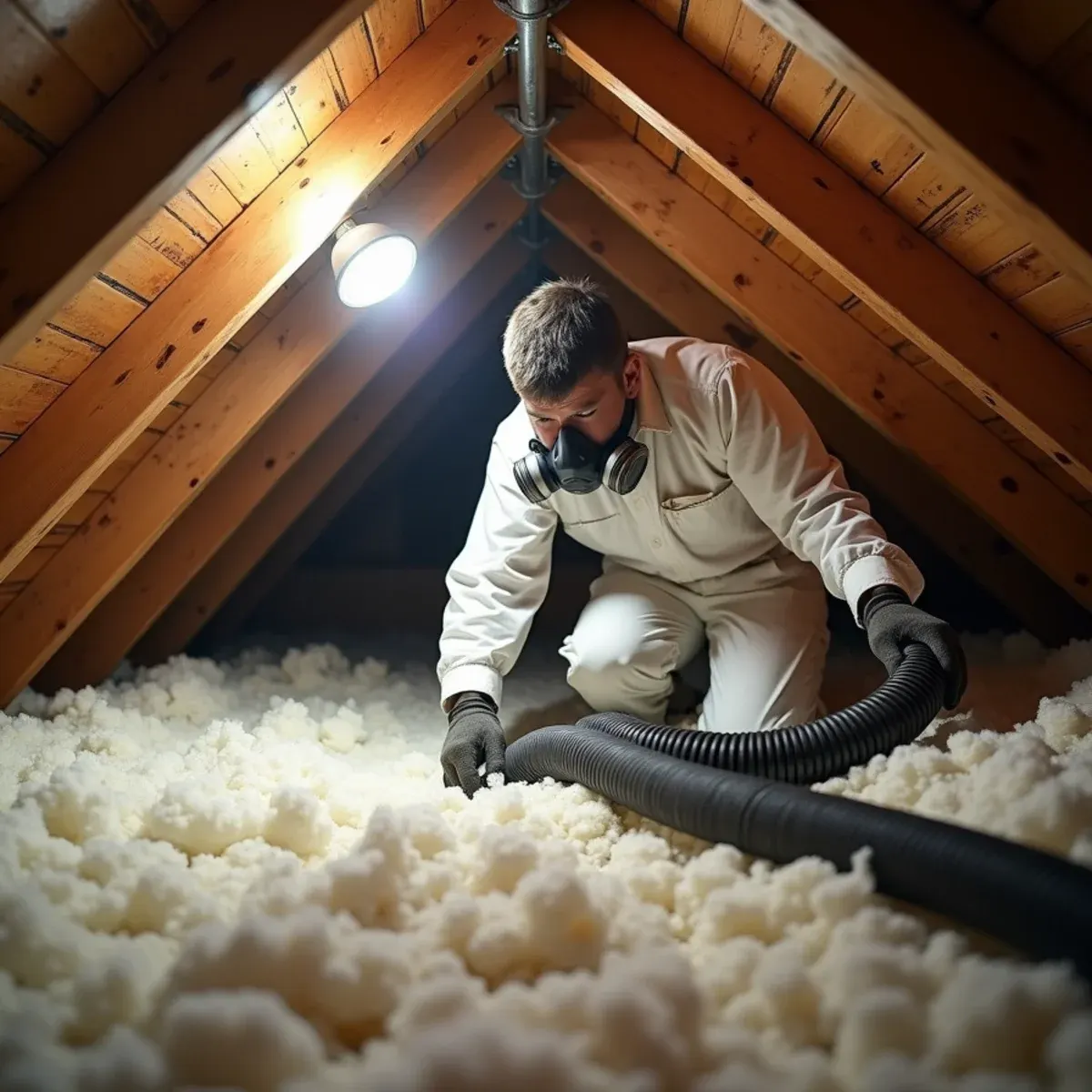
The call often comes from a tenant in a Bellflower fourplex who noticed a ceiling starting to sag, then from the owner an hour later. In the multi-family stock added since the original tract era, the attic is frequently one continuous space over every unit, with no meaningful draft stops. Water entering above unit one runs the joist line and soaks insulation over units two and three, so the damage is always wider than the stain. Suddenly the conversation involves three households, a property manager and one policy, and everybody wants a different answer.
The single-family side is older than almost anything in Orange County. Bellflower filled in between about 1940 and 1960 on former dairy and orchard ground, named for an apple, built as small houses on small lots. A lot of those roofs have been re-covered twice or three times without a tear-off. Layered coverings trap moisture, hold it against the sheathing and give a slow leak somewhere to travel before it drops. The attics themselves are tight, low and awkward, which makes methodical removal the only honest way through them.
What Bellflower Changes About Attic & Insulation
1Shared attics spread one leak sideways
Duplexes and fourplexes here commonly have a single open attic across all units. Insulation over a neighboring unit can be soaked while that tenant sees nothing on their ceiling at all. We meter the full attic plane before scoping, because stopping at the unit with the visible stain leaves wet material sitting over somebody's bedroom and a growth problem for later.
2Layered roof re-covers hide slow leaks
Two or three layers of composition shingle over the original deck is common on Bellflower's postwar houses. Water that gets under the top layer travels between courses before it finds a nail hole and drops, which is why the wet insulation and the failed shingle are rarely in the same place. It also means the deck can hold moisture long after the surface looks dry.
3Owner and tenant claims run separately
On a multi-family loss, the building and the contents usually sit under different policies and different people. We document by unit, photograph before anything comes out, itemize removal and replacement per unit, and bill the carrier direct where the policy allows. Tenants get their own copy of what was found over their ceiling so they are not relying on secondhand summaries.
How the Work Runs
The method is the same one we use on every attic & insulation job, documented to the IICRC S500:2025 standard. Here it is in short — the full attic water damage & insulation replacement process explains each stage in detail.
- Map the wet area before touching it
- Contain the hatch and protect the path
- Vacuum out the saturated insulation
- HEPA vacuum and treat the plane
- Dry the deck, joists, and top plates
- Reinstall insulation and check the details
The Bellflower Background Worth Knowing
Galvanized steel was the standard supply pipe when Bellflower was being built, and it fails from the inside out. The zinc lining wears through, the steel underneath corrodes, and scale builds on the interior wall until the pipe is a fraction of its original diameter. Narrower pipe means faster, more turbulent water, which chews at elbows and threaded fittings until one of them lets go. Hot lines corrode faster than cold, which is why hot water pressure is usually the first thing to drop. Eighty years is well past any service life anyone intended when this was installed.
There is more on the housing stock, drainage and plumbing history of this city on our water damage restoration in Bellflower page.
Bellflower at a glance
- Dominant construction era
- 1940–1960
- Foundation type
- slab on grade
- Supply piping found here
- original galvanized steel, early copper
- Drain line materials
- cast iron
- Terrain and water table
- flat, moderate water table
- Most common local failure
- original galvanized supply lines and cast-iron laterals failing together in the same decade
- Highest-value local prevention
- scoping the sewer lateral, which on a house this age has usually never been looked at
What It Costs in Bellflower
We do not quote a number over the phone before seeing the property — anyone who does is guessing. The variables that actually move the price on a attic & insulation job are how much of the attic got wet, clearance, access, and layout, the type of insulation up there, and they are broken down in full on the attic water damage & insulation replacement page. The assessment and the written estimate are free anywhere in Bellflower, day or night, with no obligation.
Attic & Insulation Questions from Bellflower Homeowners
Because in most Bellflower multi-family the attic is one space, not four. Water follows the joist bays past the unit walls and soaks insulation over neighbors who see nothing on their ceiling yet. We meter first and only open where the readings say we have to, but leaving saturated material above an occupied unit is how a water claim turns into a mold claim three months later, with a much larger number attached.
Only the affected area plus a margin back to dry, lofted material. If the wet section covers a small part of the attic, that is all that comes out. Once it reaches roughly half the plane, replacing the whole field usually costs less than blending old and new to an even depth, and it leaves you with one consistent R-value instead of a patchwork ceiling that performs unevenly room to room.
Most attics take a few days once the wet insulation is out, but we will not promise a number on day one, and you should be careful with anyone who does. Plywood sheathing dries at a different rate than old plank decking, a sealed attic dries faster than a heavily vented one, and marine-layer mornings slow everything down. The daily readings decide when equipment leaves, not the calendar.
It is the most common gap we see here. A cast iron lateral that age has corroded along the bottom, the joints have shifted, and the parkway trees on most Bellflower streets have had seventy years to find them. A camera inspection costs a small fraction of a sewage remediation, and on a line that has never been scoped it usually finds something worth knowing about before it finds you at two in the morning.