
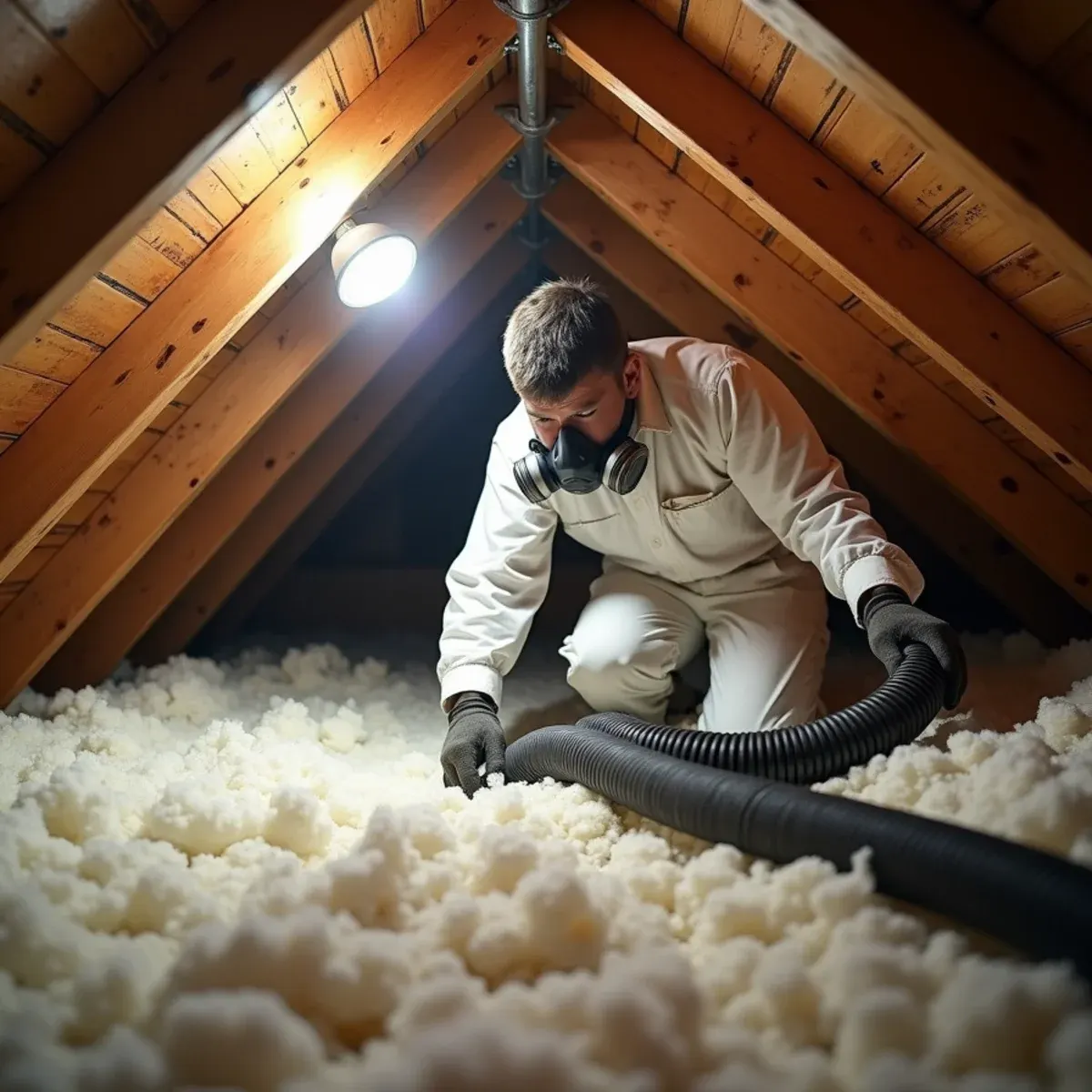
A lot of these calls start in a mobile home park, with a stain spreading across a ceiling panel and a resident who has been told the roof is theirs to handle. Manufactured homes do not have an attic you can enter. Above the ceiling panels there is a shallow cavity, a few inches deep, with blown insulation and a bowed metal or membrane roof over it. Getting wet material out means working from the roof or removing ceiling panels and battens, and it cannot simply be over-filled on the way back in without causing new problems.
Carson also has plenty of conventional housing. The 1950-to-1975 slab tracts that came together on former ranch and oil-field land before the city incorporated in 1968 have ordinary attics with the usual furnace-and-condensate failures, on ground with a shallow water table that keeps ambient humidity up year round. And with refineries and logistics operations immediately adjacent, older insulation in either building type tends to be dirty, with settled particulate through the fibers, so containment and HEPA vacuuming after removal count for more here than in an average tract.
What Carson Changes About Attic & Insulation
1Manufactured roof cavities open from outside
There is no hatch and no crawl space above a manufactured home ceiling, just a few inches of cavity. We access it by lifting roof material or pulling ceiling panels and battens, remove the wet insulation by hand or with a narrow hose, dry the cavity and framing, and reinstall to the depth the cavity actually allows. Overfilling that space blocks what little ventilation it has.
2Park spacing limits equipment and hoses
Coach spacing in Carson's parks is tight and the lanes are narrow. Vacuum trucks and drying equipment need a plan for where they sit, how far the hose has to run and whose space it crosses. We coordinate with park management before we arrive, keep quiet hours in mind, and stage so your neighbors can still get out of their driveway.
3Nearby industry leaves insulation dirty
With refineries, rail and port logistics right next door, decades-old insulation in this part of the county carries settled particulate. Pulling it without containment sends that into the living space through the ceiling opening. We seal the work area, run negative air while material is coming out, and HEPA vacuum the cavity or attic plane before anything new goes back in.
How the Work Runs
The method is the same one we use on every attic & insulation job, documented to the IICRC S500:2025 standard. Here it is in short — the full attic water damage & insulation replacement process explains each stage in detail.
- Map the wet area before touching it
- Contain the hatch and protect the path
- Vacuum out the saturated insulation
- HEPA vacuum and treat the plane
- Dry the deck, joists, and top plates
- Reinstall insulation and check the details
The Carson Background Worth Knowing
Manufactured homes are built with the floor deck, usually particleboard or OSB, sitting on a steel frame, with batt insulation below it and a vapor barrier belly wrap stapled underneath to hold everything in place. Supply lines run through that cavity. When one leaks, the water does not run out onto the ground where you would see it. The belly wrap catches and holds it, the insulation soaks it up, and you now have a sealed reservoir under your floor with no path to evaporate. It can sit there for months before anything shows upstairs.
There is more on the housing stock, drainage and plumbing history of this city on our water damage restoration in Carson page.
Carson at a glance
- Dominant construction era
- 1950–1975
- Foundation type
- slab on grade
- Supply piping found here
- galvanized steel, under-slab copper, manufactured-home supply lines
- Drain line materials
- cast iron
- Terrain and water table
- flat, shallow water table
- Most common local failure
- manufactured-home underfloor leaks trapped in the belly wrap, alongside conventional 1960s slab failures
- Highest-value local prevention
- treating any soft spot in a manufactured-home floor as moisture until a meter proves otherwise
What It Costs in Carson
We do not quote a number over the phone before seeing the property — anyone who does is guessing. The variables that actually move the price on a attic & insulation job are how much of the attic got wet, clearance, access, and layout, the type of insulation up there, and they are broken down in full on the attic water damage & insulation replacement page. The assessment and the written estimate are free anywhere in Carson, day or night, with no obligation.
Attic & Insulation Questions from Carson Homeowners
We document what is actually wet before anything moves, photograph the cavity, and itemize insulation removal, drying and replacement separately from any roof repair so nobody is guessing what they are paying for. Where your policy covers it, we bill the carrier direct. We will give the park office a copy of the scope if they ask. What we will not do is tell you what your policy covers, because that is between you and your adjuster.
Only the affected area plus a margin back to dry, lofted material. If the wet section covers a small part of the attic, that is all that comes out. Once it reaches roughly half the plane, replacing the whole field usually costs less than blending old and new to an even depth, and it leaves you with one consistent R-value instead of a patchwork ceiling that performs unevenly room to room.
Most attics take a few days once the wet insulation is out, but we will not promise a number on day one, and you should be careful with anyone who does. Plywood sheathing dries at a different rate than old plank decking, a sealed attic dries faster than a heavily vented one, and marine-layer mornings slow everything down. The daily readings decide when equipment leaves, not the calendar.
By locating it rather than arguing about it. The dividing line is the connection point where the park's service meets your home. Upstream of that is the park's responsibility, downstream is yours. We open the belly wrap where water is pooling, trace the wet path back to its source, and photograph what we find with the connection in frame. That documentation settles the question. Guessing from where the wet spot showed up inside is unreliable, because water travels along the frame first.