
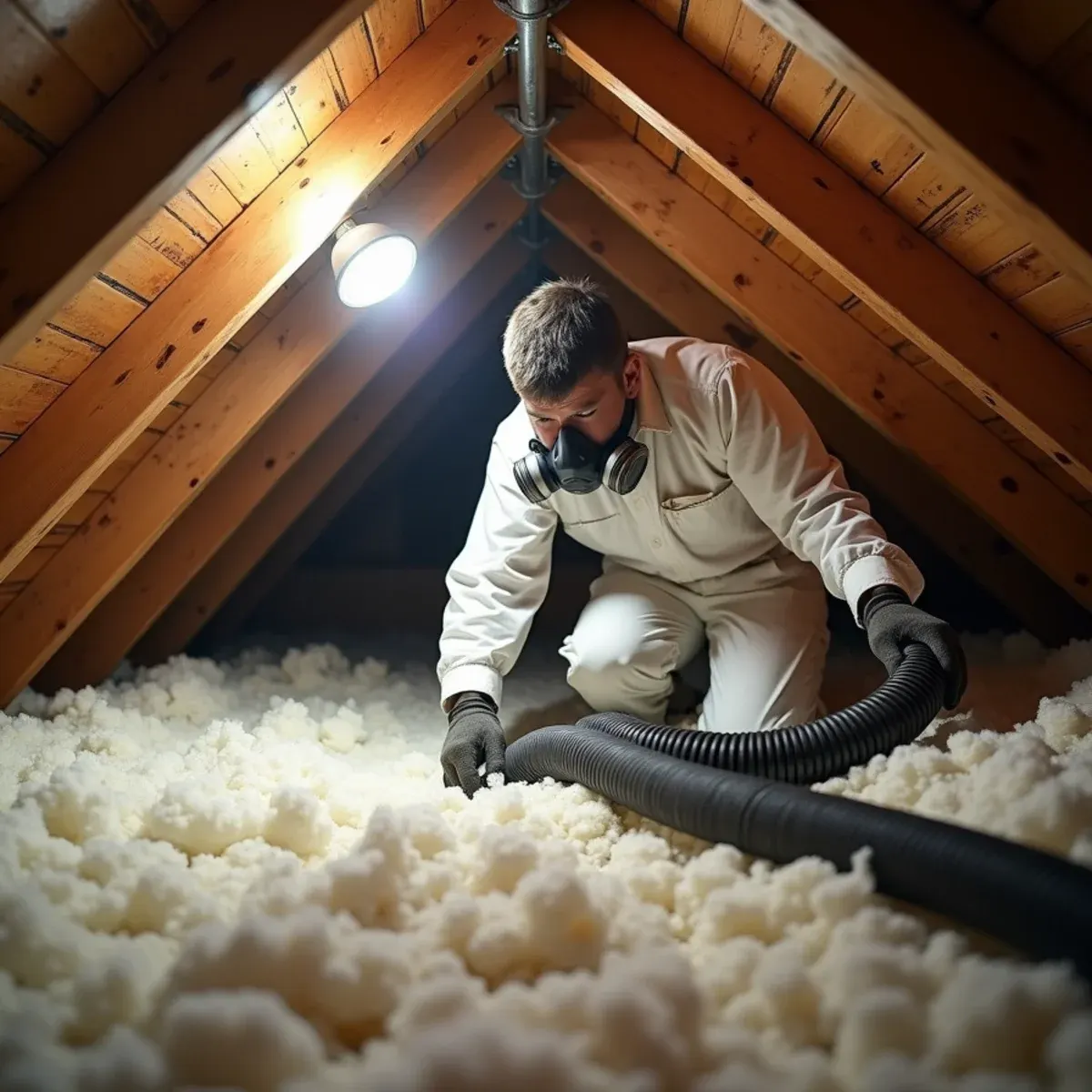
There is no single Long Beach attic. In Bluff Park and California Heights we are on board sheathing and steep rafters over lath-and-plaster ceilings, working carefully so the removal does not cost you a ceiling. Out in El Dorado Park Estates and Los Altos it is a postwar tract attic that behaves almost exactly like the ones we work in Cypress, low pitch, blown fiberglass, flex duct and an air handler up top. Same service, two very different days of work, and different numbers on the estimate.
Closer to the water the constraint changes again. In Belmont Shore the lots are narrow and there are no driveways, so the truck sits at the curb or in the alley and the vacuum hose does a long run before it ever reaches a hatch. Naples is tighter still, canal-front, salt air on every vent and flashing. Marine air also slows drying, since outside air that is already humid is not much help as makeup air, so we close the attic up and dry it with equipment rather than ventilation.
What Long Beach Changes About Attic & Insulation
1Prewar attics vented at the gables only
Bluff Park and California Heights houses were built with gable vents and no soffit intake. Adding depth without intake raises humidity under the deck instead of lowering it, so baffles there protect nothing. We put the R-value back, keep the material off the top plate, and tell you honestly which improvements need a roofer rather than an insulation crew.
2On the peninsula, access sets the schedule
Belmont Shore lots are narrow with no driveways, and Naples adds canals and one-car alleys. Where the truck can sit decides hose length, crew size and how long removal takes, so we scout before we book. It also decides whether debris goes out the front door past your neighbors or through a side gate, which matters more to people than it sounds.
3East Long Beach runs like home turf
El Dorado Park Estates and Los Altos were built to the same postwar logic as the tracts around our shop, right down to the platform-mounted air handler and the hatch in the hall. We scope those fastest of anywhere in the city. The sixty-minute guarantee stays a Cypress-only promise, but from Katella we dispatch to East Long Beach as fast as conditions allow.
How the Work Runs
The method is the same one we use on every attic & insulation job, documented to the IICRC S500:2025 standard. Here it is in short — the full attic water damage & insulation replacement process explains each stage in detail.
- Map the wet area before touching it
- Contain the hatch and protect the path
- Vacuum out the saturated insulation
- HEPA vacuum and treat the plane
- Dry the deck, joists, and top plates
- Reinstall insulation and check the details
The Long Beach Background Worth Knowing
The postwar tracts around El Dorado Park, Los Altos, and the neighborhoods near the Cypress border were built in the same era and largely the same way as the housing in our home city. Single-story slab construction, plumbing routed under the concrete, and a fifty-to-seventy-year age on the supply lines.
There is more on the housing stock, drainage and plumbing history of this city on our water damage restoration in Long Beach page.
Long Beach at a glance
- Dominant construction era
- 1920–1980
- Foundation type
- mixed on grade
- Supply piping found here
- original 1920s piping, galvanized steel, under-slab copper
- Drain line materials
- cast iron, clay
- Terrain and water table
- coastal-flat, shallow water table
- Most common local failure
- the approach changing entirely by neighborhood — a 1926 plaster wall and a 1955 drywall wall are different restoration problems
- Highest-value local prevention
- identifying the construction type before anyone starts cutting
What It Costs in Long Beach
We do not quote a number over the phone before seeing the property — anyone who does is guessing. The variables that actually move the price on a attic & insulation job are how much of the attic got wet, clearance, access, and layout, the type of insulation up there, and they are broken down in full on the attic water damage & insulation replacement page. The assessment and the written estimate are free anywhere in Long Beach, day or night, with no obligation.
Attic & Insulation Questions from Long Beach Homeowners
Usually not. Everything comes out from above through the attic hatch, and the vacuum hose does the work so nobody is putting weight on plaster keys. We cut a ceiling only when there is no attic access over that area, or when the plaster is already sagging and unsafe to leave. Either way you see the spot, the reason and the repair plan before a blade touches it.
Only the affected area plus a margin back to dry, lofted material. If the wet section covers a small part of the attic, that is all that comes out. Once it reaches roughly half the plane, replacing the whole field usually costs less than blending old and new to an even depth, and it leaves you with one consistent R-value instead of a patchwork ceiling that performs unevenly room to room.
Most attics take a few days once the wet insulation is out, but we will not promise a number on day one, and you should be careful with anyone who does. Plywood sheathing dries at a different rate than old plank decking, a sealed attic dries faster than a heavily vented one, and marine-layer mornings slow everything down. The daily readings decide when equipment leaves, not the calendar.
All of it, with the fastest response to East Long Beach — El Dorado Park Estates, Los Altos, and the neighborhoods near the Cypress border, which are typically twenty to twenty-five minutes. Coastal and downtown areas run a little longer, and we will give you a realistic ETA when you call.