
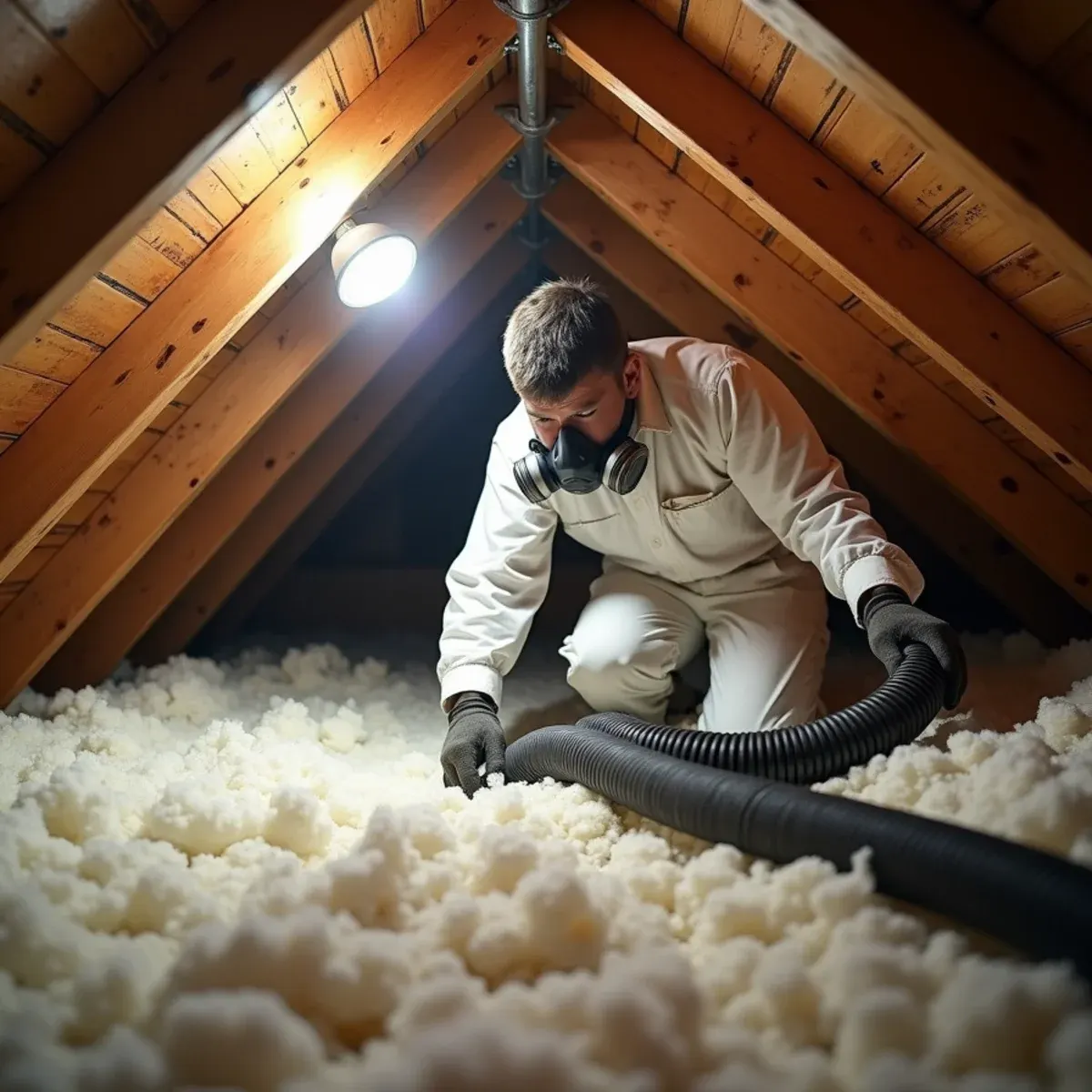
There's no single Anaheim attic. In the Colony District the houses are lath and plaster over skip-sheathed roof decks, with shallow attics and original rock wool that turns to mud when it's wet. West Anaheim is straight postwar tract: wide open attics, blown fiberglass, ducts everywhere. Anaheim Hills is the hard one, multi-level homes with vaulted ceilings and engineered site drainage, where the attic is a series of small sealed pockets over each level, some with no access at all.
Each one changes the method. Wet insulation sitting on a plaster ceiling is heavy, and plaster keys break before drywall sags, so in the Colony we shore or drop the ceiling early rather than gamble. In the Hills, a sealed vaulted bay has to be opened from somewhere, usually the drywall below and sometimes the roof, and we'll tell you which before we cut. In the Resort District, hotel roofs are flat and the cavity is a plenum, so it's containment and after-hours access, not blown-in removal.
What Anaheim Changes About Attic & Insulation
1Wet insulation is heavy on plaster
Colony District ceilings are plaster on wood lath, and they fail differently than drywall. The keys that hold plaster to the lath break under sustained load, so a soaked blanket of rock wool can bring a ceiling down with no sag warning first. We get the weight off early, shore where we have to, and treat a bulging plaster ceiling as a safety issue before a cosmetic one.
2Anaheim Hills bays have no way in
Multi-level hillside homes are full of vaulted and tray ceilings where the insulation sits in a closed rafter bay with no scuttle, no walkway and no airflow between bays. Each wet bay has to be opened individually, and the choice is drywall from inside or roofing from above. We show you the moisture map first so the opening plan is based on readings, not guesswork.
3West Anaheim tracts hide it in the ducts
The postwar tract attics across West Anaheim are easy to work in and easy to under-scope. The insulation comes out fine, but the flex duct running over every room has fibrous liner and an outer wrap that hold moisture long after the fiberglass around them reads dry. If the wet zone crossed a duct run, that duct gets inspected inside, not just wiped down.
How the Work Runs
The method is the same one we use on every attic & insulation job, documented to the IICRC S500:2025 standard. Here it is in short — the full attic water damage & insulation replacement process explains each stage in detail.
- Map the wet area before touching it
- Contain the hatch and protect the path
- Vacuum out the saturated insulation
- HEPA vacuum and treat the plane
- Dry the deck, joists, and top plates
- Reinstall insulation and check the details
The Anaheim Background Worth Knowing
The Anaheim Colony Historic District and the older streets around downtown contain homes built from the early 1900s through the 1930s, and they are constructed differently in ways that matter enormously during a water loss.
There is more on the housing stock, drainage and plumbing history of this city on our water damage restoration in Anaheim page.
Anaheim at a glance
- Dominant construction era
- 1900–2000
- Foundation type
- mixed on grade
- Supply piping found here
- galvanized steel, under-slab copper, original early-century piping in the Colony
- Drain line materials
- cast iron, clay
- Terrain and water table
- hillside-mixed, moderate water table
- Most common local failure
- lath-and-plaster assemblies that hold several times the water drywall does and release it far more slowly
- Highest-value local prevention
- acting immediately on any plaster-wall loss, because wet plaster keys soften and release from the lath
What It Costs in Anaheim
We do not quote a number over the phone before seeing the property — anyone who does is guessing. The variables that actually move the price on a attic & insulation job are how much of the attic got wet, clearance, access, and layout, the type of insulation up there, and they are broken down in full on the attic water damage & insulation replacement page. The assessment and the written estimate are free anywhere in Anaheim, day or night, with no obligation.
Attic & Insulation Questions from Anaheim Homeowners
We open it. There's no other honest answer, because a closed rafter bay can't be dried through an inch of drywall. We meter from below and with thermal imaging to find which bays are actually wet, then cut access in the drywall between rafters, remove the wet batt, dry the sheathing and rafters directly, and verify each bay before we close. On some roofs it's less damage to work from above, and we'll say if it is.
Only the affected area plus a margin back to dry, lofted material. If the wet section covers a small part of the attic, that is all that comes out. Once it reaches roughly half the plane, replacing the whole field usually costs less than blending old and new to an even depth, and it leaves you with one consistent R-value instead of a patchwork ceiling that performs unevenly room to room.
Most attics take a few days once the wet insulation is out, but we will not promise a number on day one, and you should be careful with anyone who does. Plywood sheathing dries at a different rate than old plank decking, a sealed attic dries faster than a heavily vented one, and marine-layer mornings slow everything down. The daily readings decide when equipment leaves, not the calendar.
Yes, and we approach them differently. Lath and plaster holds much more water than drywall and dries far more slowly, so it needs more equipment and considerably more patience — but it can usually be saved in place, and original plaster is not something a repair can replace.