
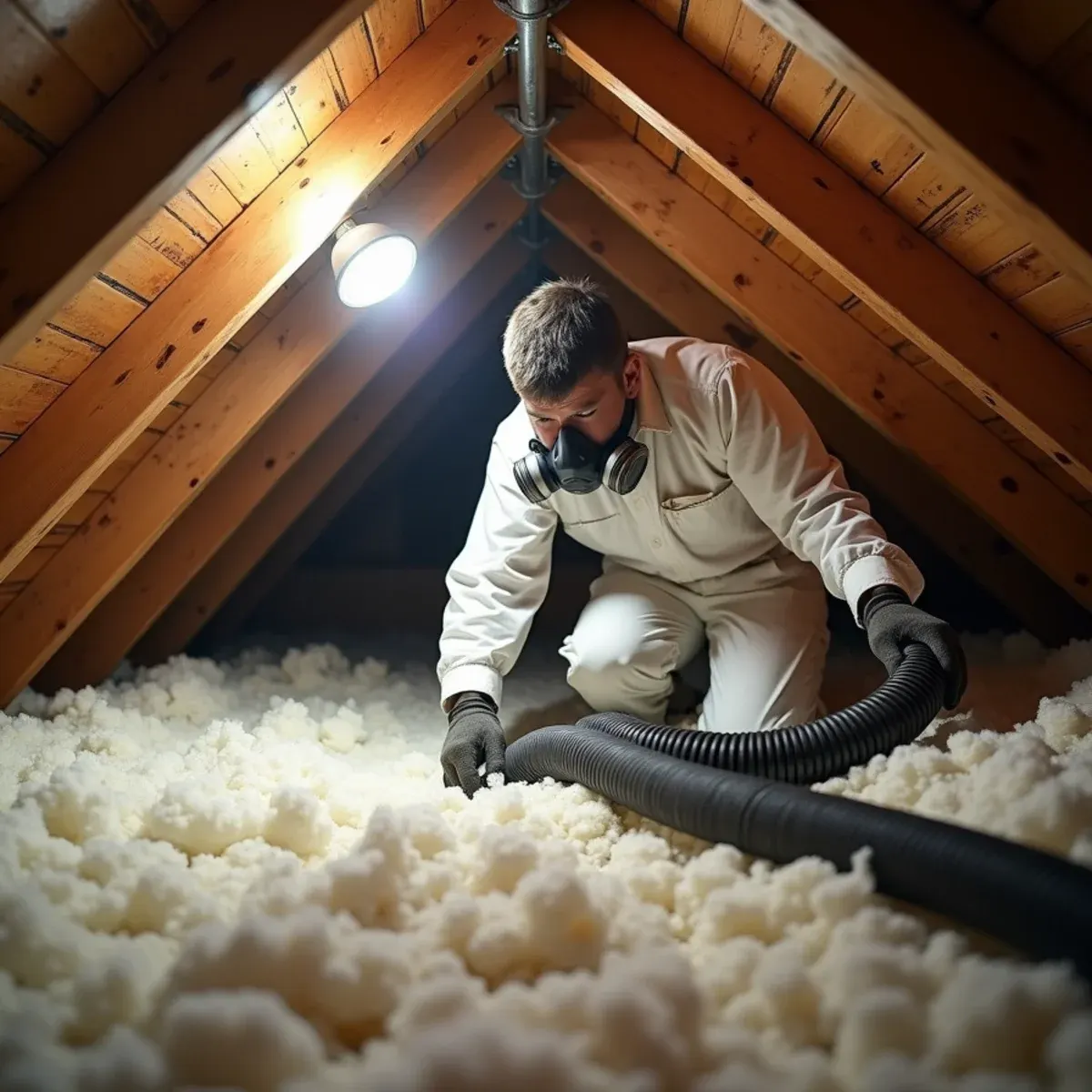
A hard storm comes up Carbon Canyon and pushes rain sideways. In the hillside tracts built through the 1990s and 2000s, that wind finds gable louvers, ridge vents and the open eave, and lays a wet band across the insulation just inside the vent line. The roof is fine. The roofer will tell you so and he will be right. What is wet is a strip of blown-in along one exposure, and if it is not pulled it packs down, loses R-value for good and holds moisture against the top plate through the rest of the season.
Brea's other half is the old oil town. Small 1920s houses near downtown sit minutes from those hillside tracts and their attics are a different job entirely, cramped and low, framed before anybody planned on insulation, often with later blown-in sitting on top of original batts. Add the canyon's oak and sycamore litter, which packs valleys and gutters until water backs up under the shingle course, and you get two unrelated failure patterns inside one small city. We dispatch as fast as conditions allow.
What Brea Changes About Attic & Insulation
1Wind-driven rain enters at the vents
On the hillside tracts toward Carbon Canyon, storm wind arrives with enough push to carry water horizontally through vent openings that work perfectly in normal weather. The wet field is a band inside one exposure, not a cone under a hole. If we find that pattern we say so plainly, because the fix is vent detailing and shelter, not a roof you do not need to replace.
2Canyon debris backs water under shingles
Oak and sycamore litter off the canyon slopes packs valleys and gutter lines faster than the flatland tracts ever deal with. Once a valley dams, water rides sideways under the shingle course and onto the deck, and the insulation below takes it. We check the valleys and the debris load while we are up there, because reinstalling insulation under a valley that will dam again next month is wasted money.
3Downtown 1920s attics have no room
The small houses near downtown Brea were framed when insulation was not part of the plan. Clearance is low, hatches are small, and what is up there now is usually a later blown-in layer sitting over original material. Removing wet insulation from those attics is hand and hose work in tight quarters, and it is worth pulling the buried older layer too rather than sealing moisture under new material.
How the Work Runs
The method is the same one we use on every attic & insulation job, documented to the IICRC S500:2025 standard. Here it is in short — the full attic water damage & insulation replacement process explains each stage in detail.
- Map the wet area before touching it
- Contain the hatch and protect the path
- Vacuum out the saturated insulation
- HEPA vacuum and treat the plane
- Dry the deck, joists, and top plates
- Reinstall insulation and check the details
The Brea Background Worth Knowing
Brea's hillside tracts were designed to handle rain. Terrace drains catch runoff partway up a slope, v-ditches carry it around the toe, area drains take the flat yard, and everything ties into a system that moves water past the house rather than through it. The design works. What fails is maintenance. Over a dry summer those inlets fill with eucalyptus leaf litter, decomposed granite, and whatever the wind brought down the canyon, and nobody looks at them because they sit on a slope behind a fence. The first hard storm of the season finds every one that is blocked.
There is more on the housing stock, drainage and plumbing history of this city on our water damage restoration in Brea page.
Brea at a glance
- Dominant construction era
- 1920–2005
- Foundation type
- mixed on grade
- Supply piping found here
- galvanized steel, under-slab copper, PEX in newer hillside tracts
- Drain line materials
- cast iron, clay, ABS
- Terrain and water table
- hillside-mixed, deep water table
- Most common local failure
- canyon and hillside runoff overwhelming slope drainage during concentrated storms
- Highest-value local prevention
- keeping Carbon Canyon-side slope drains, v-ditches and downspout extensions genuinely clear
What It Costs in Brea
We do not quote a number over the phone before seeing the property — anyone who does is guessing. The variables that actually move the price on a attic & insulation job are how much of the attic got wet, clearance, access, and layout, the type of insulation up there, and they are broken down in full on the attic water damage & insulation replacement page. The assessment and the written estimate are free anywhere in Brea, day or night, with no obligation.
Attic & Insulation Questions from Brea Homeowners
That stripe is the signature of wind-driven rain coming in at a vent rather than water coming through the roof field. During a canyon-driven storm, rain gets pushed through a gable louver or up under the eave and drops on the insulation immediately inside. Your roofer is not missing anything. The material still has to come out because it will not recover its R-value, and the real repair is changing how that vent handles horizontal water.
Only the affected area plus a margin back to dry, lofted material. If the wet section covers a small part of the attic, that is all that comes out. Once it reaches roughly half the plane, replacing the whole field usually costs less than blending old and new to an even depth, and it leaves you with one consistent R-value instead of a patchwork ceiling that performs unevenly room to room.
Most attics take a few days once the wet insulation is out, but we will not promise a number on day one, and you should be careful with anyone who does. Plywood sheathing dries at a different rate than old plank decking, a sealed attic dries faster than a heavily vented one, and marine-layer mornings slow everything down. The daily readings decide when equipment leaves, not the calendar.
Usually not under a standard homeowners policy. Water that runs across the ground and enters a building is surface water, and that is an excluded cause on nearly every form, whether it came off a Carbon Canyon slope or out of the street. Separate flood coverage handles it. Damage from a covered failure is a different story, so let us document the entry point and cause before anything gets cleaned up.