
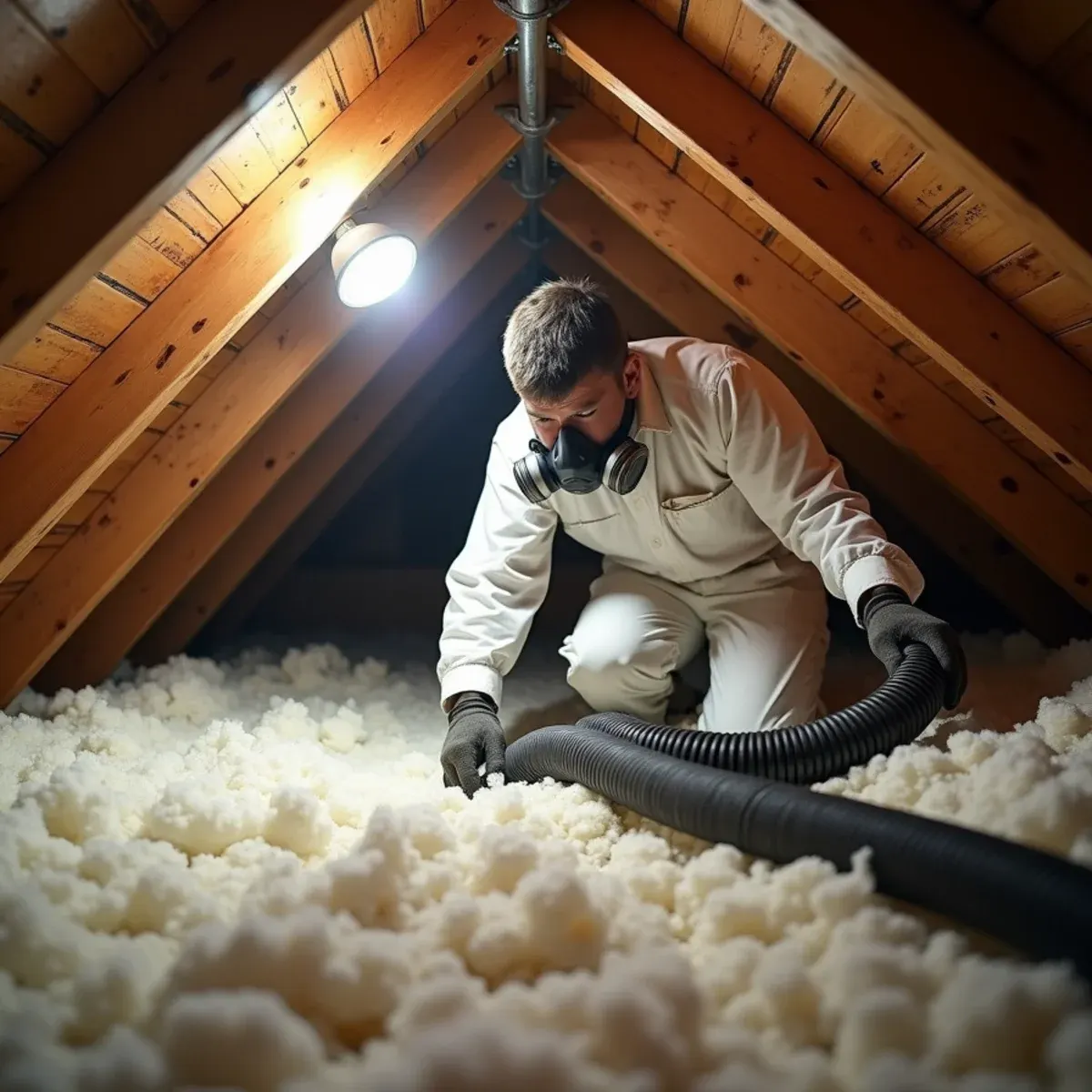
La Habra earns its reputation for exterior water. The city sits on gently rolling ground at the head of the Coyote Creek watershed, the same creek that runs past our Cypress base, and decades of added hardscape have pushed runoff where the original grading never intended it to go. That story is mostly a slab and foundation story, and it is honest to say so. Attics here fail for a different reason: the low-slope roofs over enclosed patios, family-room additions and converted carports that got tied into the original pitched roof, some with permits and some without.
Those tie-ins are both where water gets in and where it hides. It enters at the transition flashing, runs along the top plate, and drops into the main attic well past the addition, so the wet insulation and the ceiling stain rarely line up with the leak itself. The 1950-to-1980 tracts also took air conditioning later than they were framed for, which put an air handler and a condensate line above ceilings that were never designed to carry either. Both problems finish the same way, with soaked blown-in that has to come out.
What La Habra Changes About Attic & Insulation
1Addition tie-ins leak far from stains
Where a low-slope addition roof meets the original pitch, the flashing joint is the weak point, and water that gets past it travels the top plate before it falls. That is why the stain shows in the hallway when the leak is at the family room. We meter across the whole attic plane rather than assuming the wet spot marks the entry, then work back to the joint that caused it.
2Retrofit A/C in unplanned attic space
Cooling came to these tracts after the framing did. Air handlers ended up on platforms in shallow attics, with drain pans sized small and condensate lines run long to reach an eave. Plugged lines overflow directly into insulation, and because nobody goes up there, the first report is drywall. While the attic is open we check the pan, the float switch and the drain termination as a matter of course.
3La Habra Heights is another county
Up the hill, La Habra Heights is Los Angeles County, with larger custom homes on steeper lots and long roof planes that behave nothing like the tract houses below. We work both sides of that line, but the buildings, the access and the permitting offices are different. If your address is in the Heights, tell us on the call so we bring the right setup for a hillside driveway.
How the Work Runs
The method is the same one we use on every attic & insulation job, documented to the IICRC S500:2025 standard. Here it is in short — the full attic water damage & insulation replacement process explains each stage in detail.
- Map the wet area before touching it
- Contain the hatch and protect the path
- Vacuum out the saturated insulation
- HEPA vacuum and treat the plane
- Dry the deck, joists, and top plates
- Reinstall insulation and check the details
The La Habra Background Worth Knowing
Copper is good pipe. What it is not is immortal, and the way it went in during this era shortened its life. Soft copper tubing was laid in the sand under the slab before the pour, sometimes in direct contact with aggregate, often with tight bends that thinned the wall on the outside of the curve. Add fifty to seventy years of water moving through the inside and soil chemistry working on the outside, and it develops pinholes. The hot line almost always goes first, because heat accelerates every part of that process.
There is more on the housing stock, drainage and plumbing history of this city on our water damage restoration in La Habra page.
La Habra at a glance
- Dominant construction era
- 1950–1980
- Foundation type
- slab on grade
- Supply piping found here
- under-slab copper, galvanized steel
- Drain line materials
- cast iron
- Terrain and water table
- rolling, moderate water table
- Most common local failure
- under-slab copper failures in 1960s tract housing, plus drainage that decades of added hardscape has redirected
- Highest-value local prevention
- watching where water actually runs during the first storm, because the ground here is not flat
What It Costs in La Habra
We do not quote a number over the phone before seeing the property — anyone who does is guessing. The variables that actually move the price on a attic & insulation job are how much of the attic got wet, clearance, access, and layout, the type of insulation up there, and they are broken down in full on the attic water damage & insulation replacement page. The assessment and the written estimate are free anywhere in La Habra, day or night, with no obligation.
Attic & Insulation Questions from La Habra Homeowners
Both, in sequence. The roof tie-in flashing is what needs repair, and until that happens anything we replace gets wet again. But the insulation on either side of that joint is already saturated and will not recover its R-value, and the top plate and framing under it need drying before they hold moisture long enough to grow something. We handle removal, drying and reinstall, and we will tell you plainly what the roofer has to do first.
Only the affected area plus a margin back to dry, lofted material. If the wet section covers a small part of the attic, that is all that comes out. Once it reaches roughly half the plane, replacing the whole field usually costs less than blending old and new to an even depth, and it leaves you with one consistent R-value instead of a patchwork ceiling that performs unevenly room to room.
Most attics take a few days once the wet insulation is out, but we will not promise a number on day one, and you should be careful with anyone who does. Plywood sheathing dries at a different rate than old plank decking, a sealed attic dries faster than a heavily vented one, and marine-layer mornings slow everything down. The daily readings decide when equipment leaves, not the calendar.
Do a meter test. Shut off every fixture and the irrigation, note the leak indicator, and check it again a few hours later with nobody using water. If it moved, something is losing water. In 1960s La Habra tract homes that is most often the hot line under the slab, and the giveaway is a warm patch of floor or the sound of water running behind a closed system.