
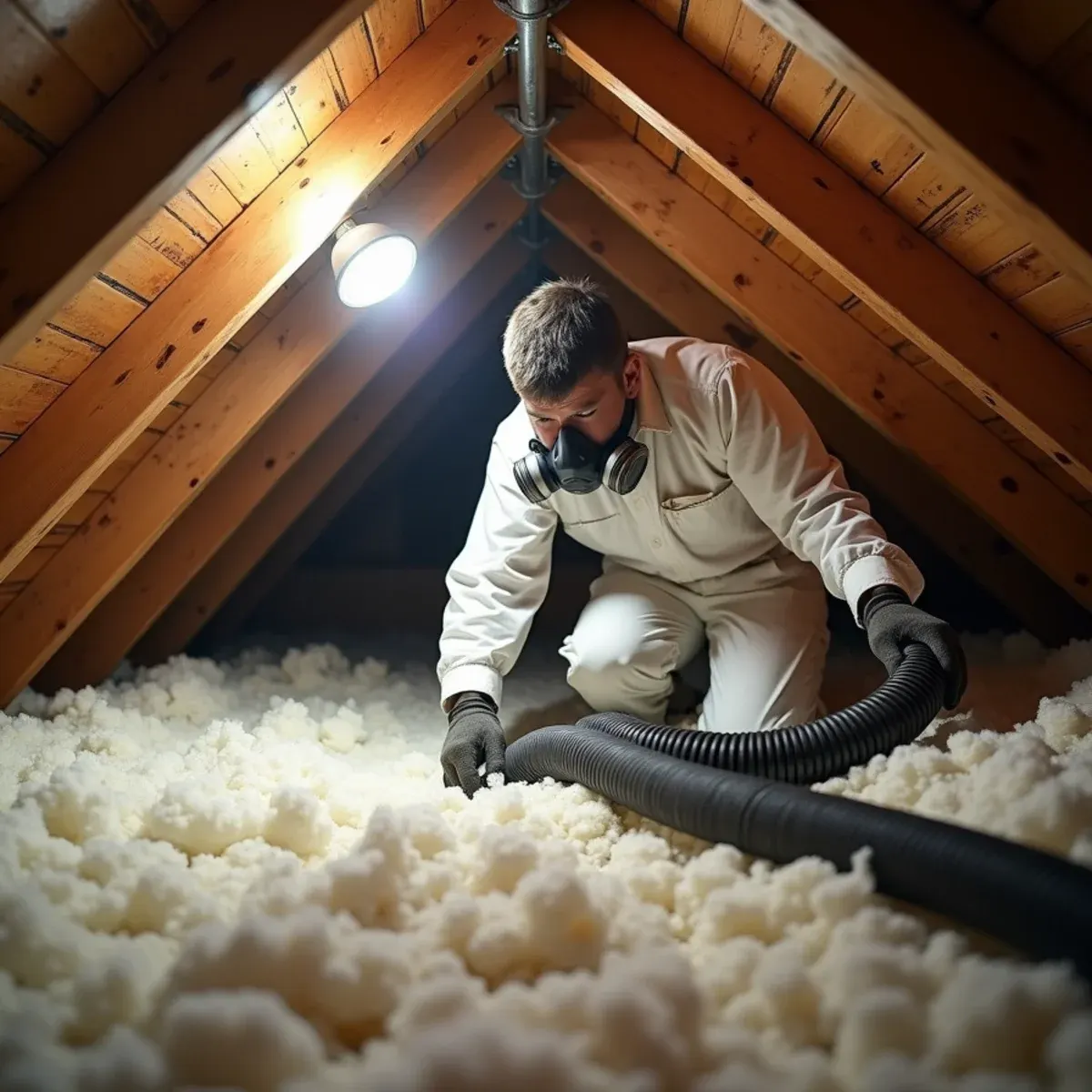
Artesia gives us two versions of this job on the same afternoon. On Pioneer Boulevard, the restaurants and shops sit in 1950s buildings that were never designed to hold commercial kitchens. Above the dropped ceiling there is no real attic, just eighteen inches of joist space, low-slope roof above, and insulation that has been absorbing kitchen exhaust for decades. Add water from a roof penetration or a failed condensate line and you have material that is wet, grease-fouled and unsalvageable. It comes out. It does not get dried and reinstalled.
The residential side is quieter and more familiar, modest postwar slab houses on the side streets with conventional vented attics and the HVAC up top, same as most of this area. What is not familiar is the schedule on Pioneer. A restaurant cannot close for three days in the middle of a weekend, so containment goes up after service, tear-out runs overnight, and the ceiling grid goes back before the kitchen fires again. We would rather tell you that plan up front than surprise you with a closed dining room.
What Artesia Changes About Attic & Insulation
1Roof penetrations over the kitchen line
Grease ducts, exhaust fans and makeup air units get punched through these old low-slope roofs, patched, and punched again as tenants change. The curb flashing around them is where water gets in, and it runs down the outside of the duct into the ceiling cavity beside it. We trace from the penetration down, not from the stain up, because the stain is always somewhere else.
2Grease changes handling, odor and disposal
Insulation above a working kitchen is loaded with cooking residue long before water touches it. Wet, it smells, it stays a fire concern, and it is not ordinary construction debris. We bag at the source inside containment, HEPA vacuum the cavity, then wipe the joists and deck rather than just blowing air at them. Drying alone leaves the odor and leaves the fuel.
3One roof, several storefronts underneath
Pioneer Boulevard buildings are attached, and the joist space above the ceiling grid often runs straight past the demising wall into the next tenancy. A leak over one shop wets the cavity above the one next door. We ask to look next door on day one and bring the property owner into the conversation early, because half of this scope is usually not yours.
How the Work Runs
The method is the same one we use on every attic & insulation job, documented to the IICRC S500:2025 standard. Here it is in short — the full attic water damage & insulation replacement process explains each stage in detail.
- Map the wet area before touching it
- Contain the hatch and protect the path
- Vacuum out the saturated insulation
- HEPA vacuum and treat the plane
- Dry the deck, joists, and top plates
- Reinstall insulation and check the details
The Artesia Background Worth Knowing
A commercial kitchen is one of the hardest things you can ask a building to accommodate. High water use, continuous drainage, grease loading, floor drains, and equipment connections that get added and modified over the years. When that kitchen is in a building from the 1950s with original cast-iron waste lines, the failure is a matter of time.
There is more on the housing stock, drainage and plumbing history of this city on our water damage restoration in Artesia page.
Artesia at a glance
- Dominant construction era
- 1950–1970
- Foundation type
- slab on grade
- Supply piping found here
- galvanized steel, copper
- Drain line materials
- cast iron
- Terrain and water table
- flat, moderate water table
- Most common local failure
- grease-loaded cast-iron waste lines restricting until a commercial kitchen backs up
- Highest-value local prevention
- hydro-jetting the waste line rather than snaking it, so the pipe wall actually gets cleaned
What It Costs in Artesia
We do not quote a number over the phone before seeing the property — anyone who does is guessing. The variables that actually move the price on a attic & insulation job are how much of the attic got wet, clearance, access, and layout, the type of insulation up there, and they are broken down in full on the attic water damage & insulation replacement page. The assessment and the written estimate are free anywhere in Artesia, day or night, with no obligation.
Attic & Insulation Questions from Artesia Homeowners
Usually, yes, if the wet area is confined. We set containment after close, run tear-out and vacuuming overnight, and pull equipment or tuck it above the grid before you open. Where it gets harder is a leak directly over the cook line or over dry storage, since those need the space clear and the health inspector will have an opinion. We will tell you which situation you are in on the first walk.
Only the affected area plus a margin back to dry, lofted material. If the wet section covers a small part of the attic, that is all that comes out. Once it reaches roughly half the plane, replacing the whole field usually costs less than blending old and new to an even depth, and it leaves you with one consistent R-value instead of a patchwork ceiling that performs unevenly room to room.
Most attics take a few days once the wet insulation is out, but we will not promise a number on day one, and you should be careful with anyone who does. Plywood sheathing dries at a different rate than old plank decking, a sealed attic dries faster than a heavily vented one, and marine-layer mornings slow everything down. The daily readings decide when equipment leaves, not the calendar.
Yes, and on Pioneer Boulevard that is usually how we schedule it. Overnight crews cost somewhat more in labor and almost always cost dramatically less than lost revenue from closing during operating hours.