
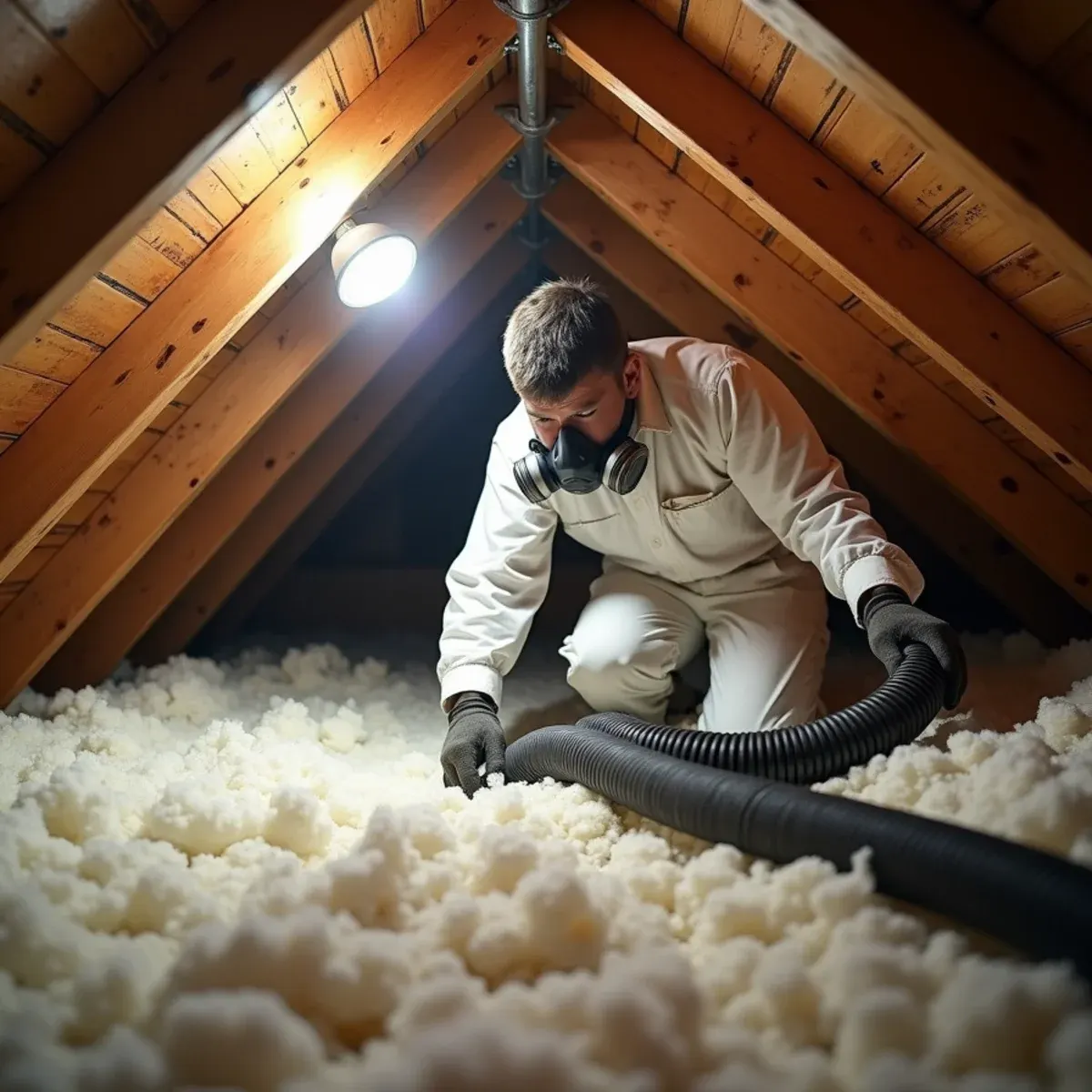
Here is the part that surprises Norwalk homeowners: the house was built on a slab, the original galvanized ran underground, and yet the water that ruined the insulation came from overhead. When galvanized scales shut after sixty-odd years, the standard fix is not digging up the slab. It is abandoning the old loop and running new copper or PEX up a wall, across the attic and back down. Those lines now sit above your ceiling, above the insulation, in a space nobody looks at. A fitting can weep for weeks before a stain shows.
The rest of it is 1945-to-1960 construction done fast and economically. Attics here are shallow, low-pitched and tight past the first few feet, which makes removal slow work and makes it worth doing thoroughly the first time. Lots are small with little permeable ground between street and house, so hoses and the vacuum unit stage right at the curb. Out near the San Gabriel River channel on the west edge, a storm week adds enough ambient humidity to stretch drying time past what the same job would take inland.
What Norwalk Changes About Attic & Insulation
1Repipe lines run above your ceiling
If your galvanized was replaced any time in the last thirty years, there is a good chance the new line crosses the attic. Those runs sit in unconditioned space, cycle hot and cold daily, and rub where they cross framing. When one lets go it drips straight into blown-in fiberglass, which soaks it up and holds it against the drywall instead of letting it show.
2Shallow low-pitch attics slow removal
Norwalk builders framed for cost, not for future access. Clearance drops off quickly from the hatch, so hose work and hand removal take longer than they would in a taller attic, and occasionally the only sane route to a back corner is a small ceiling access cut we patch afterward. We would rather tell you that up front than surprise you halfway through the day.
3Small lots mean curbside staging
Setbacks here are short and there is not much yard to work with. The HEPA vacuum unit and hose runs stage at the street and cross the sidewalk, which means walkway protection, cones and a conversation with whoever parks in front. It is a small thing that goes badly if nobody plans it, especially on the narrower blocks where two crews would be one too many.
How the Work Runs
The method is the same one we use on every attic & insulation job, documented to the IICRC S500:2025 standard. Here it is in short — the full attic water damage & insulation replacement process explains each stage in detail.
- Map the wet area before touching it
- Contain the hatch and protect the path
- Vacuum out the saturated insulation
- HEPA vacuum and treat the plane
- Dry the deck, joists, and top plates
- Reinstall insulation and check the details
The Norwalk Background Worth Knowing
The homes built in Norwalk during the postwar surge were built to be affordable and built fast, which was exactly the right priority at the time. Seventy years later, some of those choices have consequences.
There is more on the housing stock, drainage and plumbing history of this city on our water damage restoration in Norwalk page.
Norwalk at a glance
- Dominant construction era
- 1945–1960
- Foundation type
- slab on grade
- Supply piping found here
- original galvanized steel
- Drain line materials
- cast iron
- Terrain and water table
- flat, moderate water table
- Most common local failure
- original galvanized supply lines failing after decades of internal scaling and erosion at fittings
- Highest-value local prevention
- clearing yard and area drains before the season, since small lots leave little ground between the street and the house
What It Costs in Norwalk
We do not quote a number over the phone before seeing the property — anyone who does is guessing. The variables that actually move the price on a attic & insulation job are how much of the attic got wet, clearance, access, and layout, the type of insulation up there, and they are broken down in full on the attic water damage & insulation replacement page. The assessment and the written estimate are free anywhere in Norwalk, day or night, with no obligation.
Attic & Insulation Questions from Norwalk Homeowners
That is the standard Norwalk repipe. Original galvanized ran under the slab, and once it scaled shut, cutting concrete to replace it cost far more than routing new line overhead. So the old loop got capped and abandoned in place, and copper or PEX went up the wall and across the attic. It works fine for decades, then a single fitting fails and the first thing it soaks is your insulation.
Only the affected area plus a margin back to dry, lofted material. If the wet section covers a small part of the attic, that is all that comes out. Once it reaches roughly half the plane, replacing the whole field usually costs less than blending old and new to an even depth, and it leaves you with one consistent R-value instead of a patchwork ceiling that performs unevenly room to room.
Most attics take a few days once the wet insulation is out, but we will not promise a number on day one, and you should be careful with anyone who does. Plywood sheathing dries at a different rate than old plank decking, a sealed attic dries faster than a heavily vented one, and marine-layer mornings slow everything down. The daily readings decide when equipment leaves, not the calendar.
If it is original galvanized from the postwar build-out, it has exceeded any reasonable service life. If you have had one failure, a second is a matter of when. The cheapest moment to repipe is while walls are already open for a repair — the demolition and patching are already in the scope.