
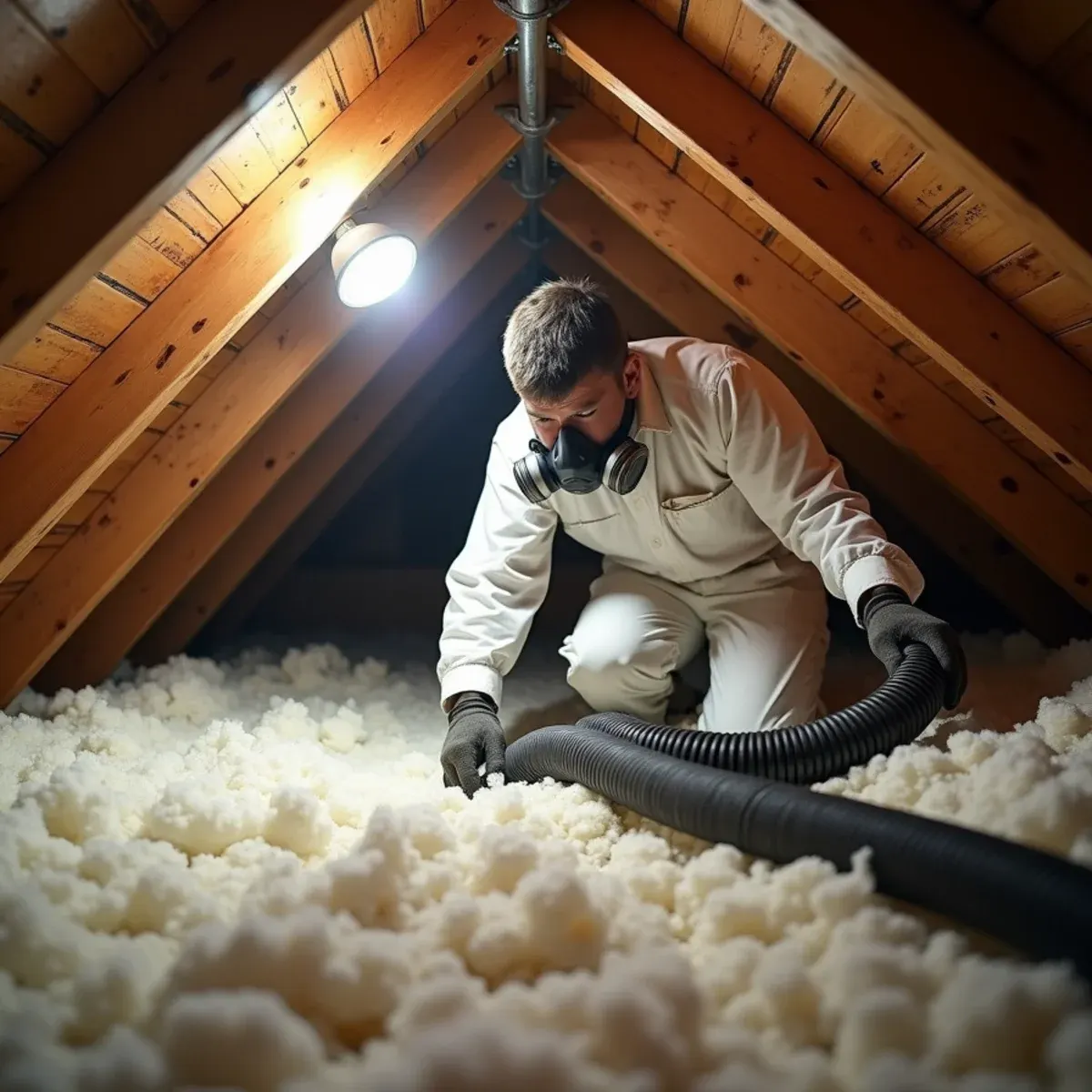
La Mirada went up almost all at once, a planned community mostly framed between 1953 and 1965, on ground that rolls instead of lying flat. That compressed build window shows up in the attics. Street after street shares the same shallow roof pitch, the same ceiling joist spacing, and the same thin original insulation that got topped with blown-in fiberglass sometime in the decades since. When a valley or an old swamp cooler curb lets go, the wet layer ends up buried under the newer one, and everything reads normal from the hatch.
Most of what we pull out of La Mirada attics traces back to where the house grew. Patio covers, room additions and enclosed porches were tied into the original roofline over fifty-plus years, and every one of those joints is a place water can run along a top plate and drop into insulation ten feet from where it got in. Around Biola, rental houses add a wrinkle: nobody checks the attic between tenants, so a slow leak gets months to work. We dispatch from Katella in Cypress as fast as conditions allow.
What La Mirada Changes About Attic & Insulation
1Add-on rooflines drop water off-target
Fifty years of patio covers, converted porches and back-bedroom additions left La Mirada roofs with tie-in joints the original builder never drew. Water entering one of those seams rides the top plate before it falls, so the soaked insulation sits well away from the actual entry point. We map the wet field with a moisture meter first, then trace it back uphill to the joint that caused it.
2One tract, one attic layout
Because the city was framed in a twelve-year push, houses on a given street share framing, roof pitch and hatch location. That helps. Once we have been in one attic on the block, we know where the ductwork runs, where the eave baffles sit and where the insulation depth changes. It also means a neighbor's failure is worth taking seriously in your own house.
3Rolling ground moves roof runoff fast
La Mirada is not flat, so storm water leaves rather than ponds. Good for the slab, harder on roofs. Gutters and downspouts on the downhill side of a house handle more volume than the same detail in a dead-flat tract, and overflow behind a fascia soaks the eave end of the insulation first. That eave zone is where we start probing before anything else.
How the Work Runs
The method is the same one we use on every attic & insulation job, documented to the IICRC S500:2025 standard. Here it is in short — the full attic water damage & insulation replacement process explains each stage in detail.
- Map the wet area before touching it
- Contain the hatch and protect the path
- Vacuum out the saturated insulation
- HEPA vacuum and treat the plane
- Dry the deck, joists, and top plates
- Reinstall insulation and check the details
The La Mirada Background Worth Knowing
La Mirada's gentle slopes mean storm water moves across properties instead of sitting on them, which is generally an advantage — except where fifty years of added patios, raised planters, retaining walls, and settled hardscape have redirected it.
There is more on the housing stock, drainage and plumbing history of this city on our water damage restoration in La Mirada page.
La Mirada at a glance
- Dominant construction era
- 1953–1965
- Foundation type
- slab on grade
- Supply piping found here
- under-slab copper, galvanized steel
- Drain line materials
- cast iron
- Terrain and water table
- rolling, moderate water table
- Most common local failure
- exterior water entering where fifty years of added patios, planters and retaining walls redirected the original drainage back toward the house
- Highest-value local prevention
- walking the property during the first real rain and watching where water actually goes
What It Costs in La Mirada
We do not quote a number over the phone before seeing the property — anyone who does is guessing. The variables that actually move the price on a attic & insulation job are how much of the attic got wet, clearance, access, and layout, the type of insulation up there, and they are broken down in full on the attic water damage & insulation replacement page. The assessment and the written estimate are free anywhere in La Mirada, day or night, with no obligation.
Attic & Insulation Questions from La Mirada Homeowners
Usually not. Blown-in moves water sideways less than people expect, so the wet field is often two or three joist bays wide and shorter than the ceiling stain suggests. We meter it, mark a boundary past the wet edge, remove to that line, and replace at matching depth and R-value so you do not end up with a cold stripe. If the tie-in leaked all season and the roof deck stayed wet, the removal area grows.
Only the affected area plus a margin back to dry, lofted material. If the wet section covers a small part of the attic, that is all that comes out. Once it reaches roughly half the plane, replacing the whole field usually costs less than blending old and new to an even depth, and it leaves you with one consistent R-value instead of a patchwork ceiling that performs unevenly room to room.
Most attics take a few days once the wet insulation is out, but we will not promise a number on day one, and you should be careful with anyone who does. Plywood sheathing dries at a different rate than old plank decking, a sealed attic dries faster than a heavily vented one, and marine-layer mornings slow everything down. The daily readings decide when equipment leaves, not the calendar.
Almost always exterior drainage rather than a plumbing leak — a plugged area drain, a patio that has settled toward the house, or a planter holding moisture against the wall. We identify the actual path rather than just drying the wall, because drying without fixing the cause means doing it again next storm.