
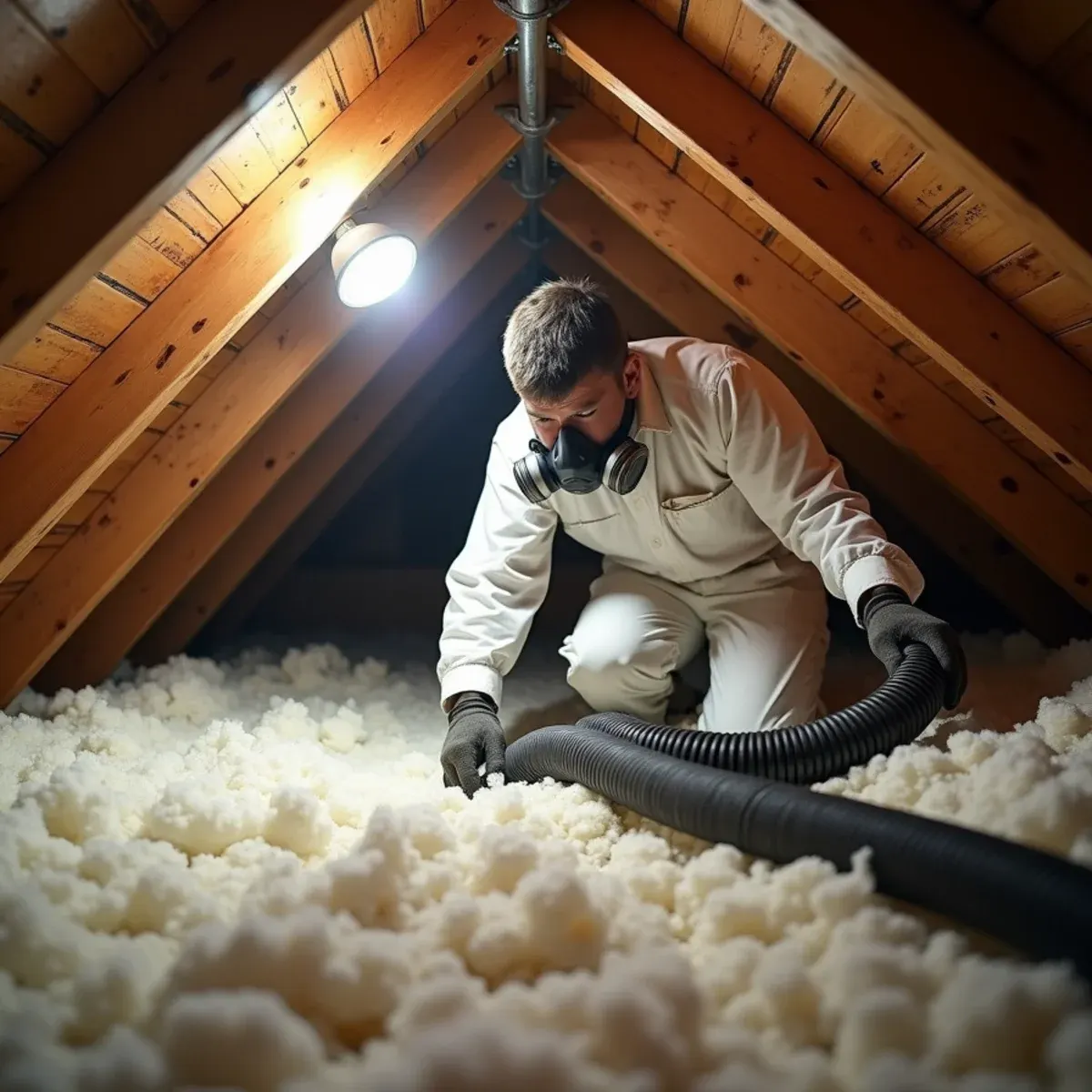
Most of the wet attics we get called into in Fullerton have been wet for a while. Around Cal State Fullerton and Fullerton College, whole streets are rentals, and a stain on a bedroom ceiling gets photographed, mentioned in a group chat, and reported to the management company days later. By then the insulation above it has been holding water against the joists through several warm afternoons. That changes the job. There is no drying wet fiberglass back into service at that point, and we plan for removal, treatment and a slower clearance rather than a quick dry-out.
The other Fullerton is the pre-war one, Craftsman and Spanish Revival with old-growth Douglas fir rafters and one-by sheathing under clay tile. That framing is dense, slow to give up moisture, and worth drying properly instead of replacing. Under tile, the underlayment does the waterproofing, so a roof that looks perfect from the street can be feeding the deck for a season. Up in Raymond Hills and Sunny Hills, split-level plans break the attic into separate pockets with their own hatches, and the wet one is rarely the one nearest the stain.
What Fullerton Changes About Attic & Insulation
1Old wiring we will not bury
Pre-war attics around downtown and the college still turn up cloth-sheathed and knob-and-tube runs. Code does not allow insulation packed over that wiring, and we will not do it quietly to finish faster. We photograph what we find, hold that section, and reinstall around it or wait while your electrician replaces the run. It is a short conversation that keeps an insurance file and a house sale clean later.
2Half these houses have crawl spaces
Fullerton is one of the few cities near us where a raised foundation is normal, and that matters because water finds the low side too. On a Craftsman with a wet attic, we open the crawl as well. Sometimes the ceiling stain and the damp subfloor share one plumbing failure. Charging you for attic work while a crawl space quietly stays wet is how repeat mold jobs get made.
3Rental jobs need two conversations
Near campus the tenant reports the leak and the owner or property manager authorizes the work and holds the policy. We keep both informed without making either chase the other: photos and meter readings to the tenant, an itemized scope and direct carrier billing to the owner, and work scheduled around class and shift hours so nobody loses a bedroom for a week without warning.
How the Work Runs
The method is the same one we use on every attic & insulation job, documented to the IICRC S500:2025 standard. Here it is in short — the full attic water damage & insulation replacement process explains each stage in detail.
- Map the wet area before touching it
- Contain the hatch and protect the path
- Vacuum out the saturated insulation
- HEPA vacuum and treat the plane
- Dry the deck, joists, and top plates
- Reinstall insulation and check the details
The Fullerton Background Worth Knowing
The pre-war homes around downtown Fullerton were built with materials that behave completely differently from modern construction. Lath and plaster walls hold several times the water drywall does. Old-growth Douglas fir framing is dense and dries slowly. Original oak and fir flooring is thick, high-quality material that is well worth saving.
There is more on the housing stock, drainage and plumbing history of this city on our water damage restoration in Fullerton page.
Fullerton at a glance
- Dominant construction era
- 1910–1980
- Foundation type
- mixed on grade
- Supply piping found here
- galvanized steel, copper, original pre-war piping
- Drain line materials
- cast iron, clay
- Terrain and water table
- rolling, moderate water table
- Most common local failure
- crawl-space leaks that run undetected for weeks because the water drips away instead of pooling on a floor
- Highest-value local prevention
- posting a shutoff location and emergency contact in every rental, since delayed reporting is the local failure mode
What It Costs in Fullerton
We do not quote a number over the phone before seeing the property — anyone who does is guessing. The variables that actually move the price on a attic & insulation job are how much of the attic got wet, clearance, access, and layout, the type of insulation up there, and they are broken down in full on the attic water damage & insulation replacement page. The assessment and the written estimate are free anywhere in Fullerton, day or night, with no obligation.
Attic & Insulation Questions from Fullerton Homeowners
Yes. Call and we will come look, take readings and photograph the attic at no charge. What we cannot do is start tear-out on your say-so, because the owner or management company authorizes the work and their policy covers the building. Your renters coverage handles your belongings, not the insulation. Send them our documentation and it usually moves faster than another round of maintenance requests. The number is (201) 277-9344, any hour.
Only the affected area plus a margin back to dry, lofted material. If the wet section covers a small part of the attic, that is all that comes out. Once it reaches roughly half the plane, replacing the whole field usually costs less than blending old and new to an even depth, and it leaves you with one consistent R-value instead of a patchwork ceiling that performs unevenly room to room.
Most attics take a few days once the wet insulation is out, but we will not promise a number on day one, and you should be careful with anyone who does. Plywood sheathing dries at a different rate than old plank decking, a sealed attic dries faster than a heavily vented one, and marine-layer mornings slow everything down. The daily readings decide when equipment leaves, not the calendar.
Yes, and they need a different approach. Lath and plaster and old-growth framing hold far more water than modern materials and dry much more slowly, so we plan for seven to fourteen days with higher-capacity equipment. The original material is worth that effort — nothing sold today replaces it.