
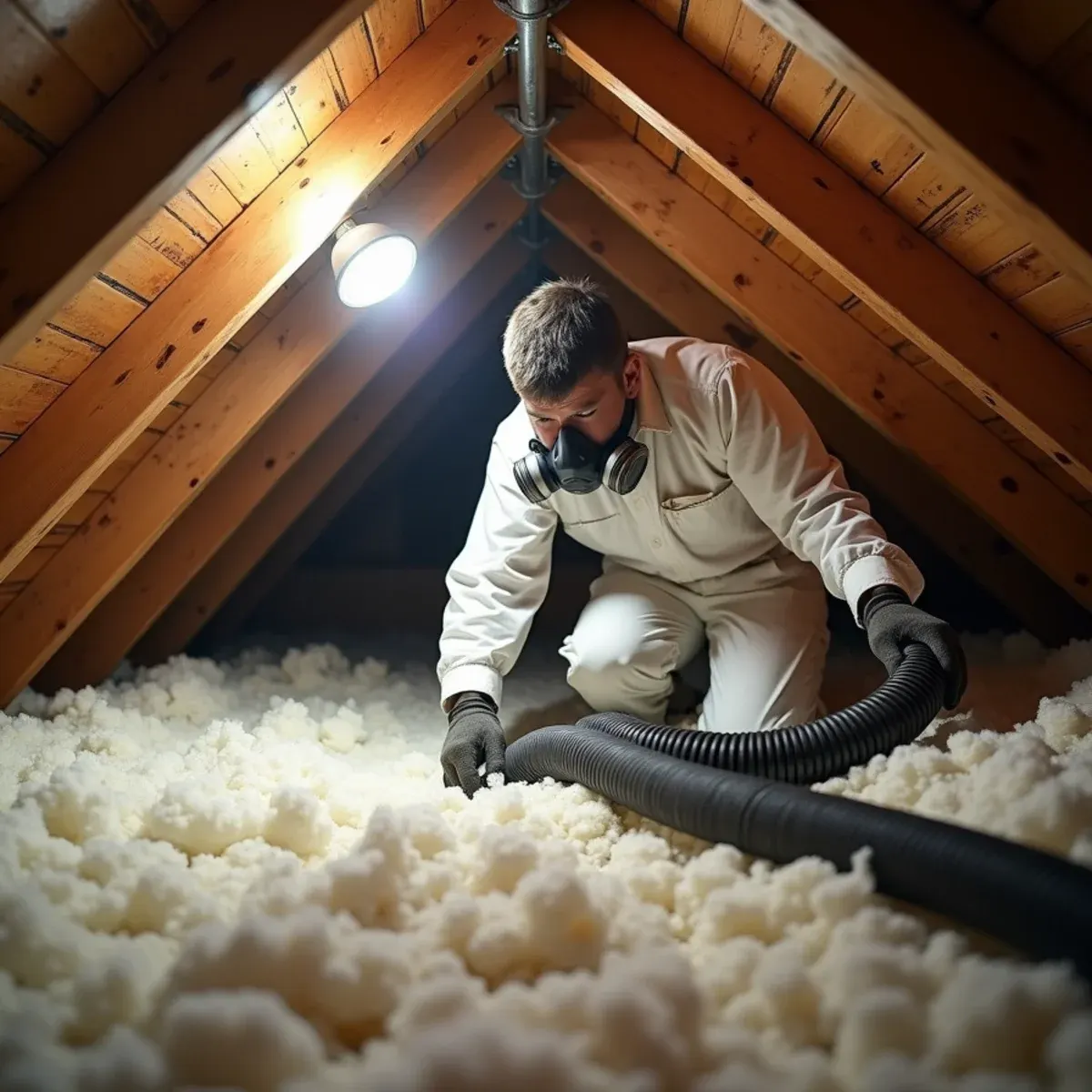
It usually starts the same way. A homeowner in one of the 1955-to-1980 tracts built out from the old Valencia groves gets a slab leak in under-slab copper. The plumber abandons the loop and runs the new line overhead through the attic. Two winters later a fitting seeps into blown-in insulation nobody has looked at since the reroute, and by the time a ceiling stain appears the material has already packed down and lost its R-value. Because Placentia's tracts are so uniform, that same sequence repeats up and down a street on its own schedule.
The cooling side clusters the same way. Whole blocks took attic air handlers from the same contractor in the same decade, with condensate lines run the same distance to the same eave. When those plug with biofilm, the pan overflows into insulation directly below and the drywall reports it late. Placentia also holds a small pocket of older stock near Old Town that does not follow tract rules at all, plus student rentals toward Cal State Fullerton where an attic can go years without anybody opening the hatch.
What Placentia Changes About Attic & Insulation
1Reroute lines sit above the insulation
Abandoning a failed under-slab copper loop and going overhead is the normal Placentia repair, and it works. What it also does is put pressurized line in an unconditioned attic, directly above blown-in that will hold anything that drips. If your slab leak was fixed years ago, the attic above that reroute is worth a look before a fitting decides for you.
2Identical plans, repeating condensate failures
Tract uniformity is why failures here arrive in waves. Same floor plan, same equipment location, same length of condensate line to the same termination. When we find a plugged line and a wet field in one house, the odds are decent the neighbor two doors down has the identical detail sitting at the same age. Knowing the plan saves us an hour of hunting.
3Old Town Placentia follows different rules
The older pocket near Old Town predates the tract build and does not share its framing, roof pitch or insulation history. Attics there are smaller, access is worse, and what is up there is often layered, part original and part added later. We treat those houses individually rather than assuming the tract playbook applies, because on those blocks it does not.
How the Work Runs
The method is the same one we use on every attic & insulation job, documented to the IICRC S500:2025 standard. Here it is in short — the full attic water damage & insulation replacement process explains each stage in detail.
- Map the wet area before touching it
- Contain the hatch and protect the path
- Vacuum out the saturated insulation
- HEPA vacuum and treat the plane
- Dry the deck, joists, and top plates
- Reinstall insulation and check the details
The Placentia Background Worth Knowing
Copper under a slab fails in two directions at once. From the inside, decades of water flow erode thin spots at bends and fittings, especially on the hot side where the metal runs warmer and the water moves faster. From the outside, soil chemistry and stray current attack the pipe wall. Either way the result is a pinhole rather than a burst, which is precisely why these losses are so expensive by the time we see them. A pinhole under concrete can run for months, soaking the sub-base, wicking up into the slab, and surfacing at the edge of the carpet as a stain nobody can explain.
There is more on the housing stock, drainage and plumbing history of this city on our water damage restoration in Placentia page.
Placentia at a glance
- Dominant construction era
- 1955–1980
- Foundation type
- slab on grade
- Supply piping found here
- under-slab copper, galvanized steel
- Drain line materials
- cast iron
- Terrain and water table
- flat, moderate water table
- Most common local failure
- under-slab copper reaching the end of its service life across whole tracts at once
- Highest-value local prevention
- the annual water-meter test, and treating a neighbor's slab leak as information
What It Costs in Placentia
We do not quote a number over the phone before seeing the property — anyone who does is guessing. The variables that actually move the price on a attic & insulation job are how much of the attic got wet, clearance, access, and layout, the type of insulation up there, and they are broken down in full on the attic water damage & insulation replacement page. The assessment and the written estimate are free anywhere in Placentia, day or night, with no obligation.
Attic & Insulation Questions from Placentia Homeowners
In a tract this uniform, yes, and it costs you nothing to know. If those houses share your plan, they share your condensate routing and probably your plumbing vintage too. We will pull the hatch, meter the insulation for hidden moisture, look at the pan, the float switch and the drain termination, and tell you honestly if there is nothing to do. Assessments are free and we would rather find a plugged line than a soaked ceiling.
Only the affected area plus a margin back to dry, lofted material. If the wet section covers a small part of the attic, that is all that comes out. Once it reaches roughly half the plane, replacing the whole field usually costs less than blending old and new to an even depth, and it leaves you with one consistent R-value instead of a patchwork ceiling that performs unevenly room to room.
Most attics take a few days once the wet insulation is out, but we will not promise a number on day one, and you should be careful with anyone who does. Plywood sheathing dries at a different rate than old plank decking, a sealed attic dries faster than a heavily vented one, and marine-layer mornings slow everything down. The daily readings decide when equipment leaves, not the calendar.
Worried is the wrong word, but you should start paying attention. These tracts were built in tight windows with the same copper at the same depth in the same soil, so failures cluster on a street rather than scattering randomly. Treat a neighbor's slab leak as a service bulletin for your own house. Run the meter test, listen for the water heater cycling at odd hours, and check the hallway and bedroom floors for warm or damp patches every so often.