
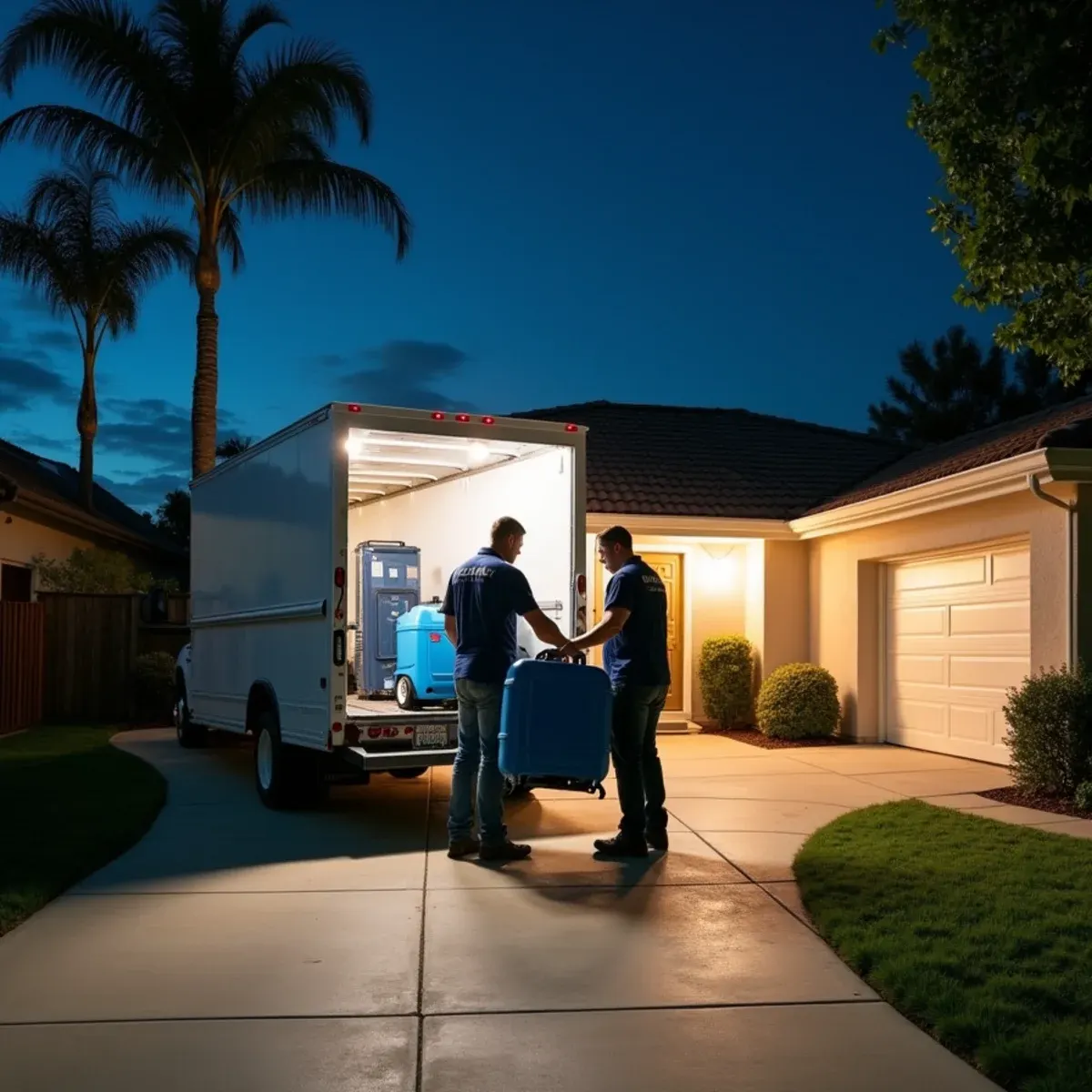
The call from Placentia usually sounds the same. A warm patch in the hallway, a water bill that jumped for no reason, carpet that stays damp near an interior wall. Placentia was built out of the Valencia orange groves between the mid-1950s and about 1980, and the tracts went in fast with the same crews, the same under-slab copper and the same water running through it ever since. When copper of one vintage reaches the end of its service life, it does not do it one house at a time.
That uniformity is the useful thing about working here. Around Alta Vista, the Morse Avenue tracts and the Kraemer Boulevard corridor, we can often predict where a line runs before we start looking, which shortens detection and shortens the demolition that follows. Old Town Placentia near the Bradford House is the exception, with older stock and different piping. Student rentals near Cal State Fullerton add another wrinkle, since the person who finds the water is rarely the person who owns the house. We are about sixteen minutes southwest in Cypress.
What Placentia Changes About Emergency Restoration
1Your neighbor's slab leak is information
When three houses on the same 1960s Placentia street have slab leaks inside two years, that is not coincidence. Same install date, same pipe, same soil, same water. If a neighbor has had one, run the meter test on your own house: shut every fixture, note the reading, wait an hour, read it again. Movement with everything off means water is going somewhere, and finding it early keeps the repair small.
2Predictable layouts shorten detection
Placentia's tract plans repeat, so the hot and cold runs under the slab tend to follow the same paths house to house. We still verify with acoustic and thermal equipment rather than assuming, but starting from a known layout means less exploratory work and fewer holes. On a house where the floor covering matters, that difference is measured in square feet of flooring you get to keep.
3Student rentals need two lines of communication
In the rentals around Kraemer and Chapman near Cal State Fullerton, tenants call us and owners pay the claim. That works only if both get the same information. We document arrival condition, moisture readings and equipment placement in a form the owner and the insurer can read from anywhere, and we confirm authorization before demolition rather than after. It keeps a stressful week from turning into a dispute.
How the Work Runs
The method is the same one we use on every emergency restoration job, documented to the IICRC S500:2025 standard. Here it is in short — the full emergency water damage restoration process explains each stage in detail.
- Call answered and crew dispatched
- Arrival, safety check, and moisture mapping
- Documentation before anything is touched
- Extraction
- Controlled structural drying
- Cleaning, sanitizing, and final verification
The Placentia Background Worth Knowing
Copper under a slab fails in two directions at once. From the inside, decades of water flow erode thin spots at bends and fittings, especially on the hot side where the metal runs warmer and the water moves faster. From the outside, soil chemistry and stray current attack the pipe wall. Either way the result is a pinhole rather than a burst, which is precisely why these losses are so expensive by the time we see them. A pinhole under concrete can run for months, soaking the sub-base, wicking up into the slab, and surfacing at the edge of the carpet as a stain nobody can explain.
There is more on the housing stock, drainage and plumbing history of this city on our water damage restoration in Placentia page.
Placentia at a glance
- Dominant construction era
- 1955–1980
- Foundation type
- slab on grade
- Supply piping found here
- under-slab copper, galvanized steel
- Drain line materials
- cast iron
- Terrain and water table
- flat, moderate water table
- Most common local failure
- under-slab copper reaching the end of its service life across whole tracts at once
- Highest-value local prevention
- the annual water-meter test, and treating a neighbor's slab leak as information
What It Costs in Placentia
We do not quote a number over the phone before seeing the property — anyone who does is guessing. The variables that actually move the price on a emergency restoration job are water category, affected square footage and number of rooms, how many days of equipment, and they are broken down in full on the emergency water damage restoration page. The assessment and the written estimate are free anywhere in Placentia, day or night, with no obligation.
Emergency Restoration Questions from Placentia Homeowners
Yes, and it costs nothing. Do the meter test monthly for a while, and pay attention to the specific signs that come with under-slab copper in this era of Placentia housing: a warm spot on a hallway or bedroom floor, the faint sound of running water with the house quiet, unexplained humidity, or flooring that cups or lifts. Catching a slab leak in week one instead of month six is usually the difference between a spot repair and replacing the flooring in three rooms.
We commit to being on-site within 60 minutes of a confirmed emergency call anywhere in Cypress, and we credit $100 off your invoice if we miss it. Most of the time we are there in 30 to 45 minutes because our trucks stage on Katella Avenue, right here in the city.
No. The emergency assessment and written estimate are free, 24 hours a day. You are not obligated to hire us after we walk the property, and we will tell you plainly if we think the damage is small enough to handle yourself.
Worried is the wrong word, but you should start paying attention. These tracts were built in tight windows with the same copper at the same depth in the same soil, so failures cluster on a street rather than scattering randomly. Treat a neighbor's slab leak as a service bulletin for your own house. Run the meter test, listen for the water heater cycling at odd hours, and check the hallway and bedroom floors for warm or damp patches every so often.