
Here's the most useful thing to know about a sewage backup in Placentia, and it has nothing to do with your house. It has to do with the ones around it. The city filled in from Valencia orange groves between the mid-fifties and the late seventies, tract by tract, and the cast iron drain lines under each of those tracts went in over a handful of years. They've carried the same load, in the same soil, for the same number of decades. When one fails, it's telling you something about the rest.
Two other things shape this work locally. Old Town Placentia holds a pocket of much older housing that doesn't follow the tract pattern at all, with clay in the ground and different foundations above it. And the streets closest to Cal State Fullerton carry a heavy share of student rentals, where six people share drain lines sized for a 1965 family of four and nobody living there has the landlord's number handy. Those two situations need different handling from a backup on a quiet Alta Vista street.
What Placentia Changes About Sewage Cleanup
1Cast iron aging on a tract schedule
Bottom-of-pipe channeling is what we see most in Placentia's cast iron — the invert wears thin, the pipe roughens, and solids start catching where they never used to. It doesn't happen overnight and it doesn't happen to one house alone. After we finish a cleanup, a scope of the remaining run tells you whether you fixed a symptom or the cause.
2Rentals near Cal State Fullerton
In a student rental the tenant finds the sewage and the owner authorizes the work, and those two are rarely in the same conversation. We stop the spread first, on the occupant's word, then reach the owner or property manager with photographs and a written scope the same day. Occupancy also matters for clearance: more people, more use, higher exposure while the work runs.
3Old Town Placentia doesn't match
The older blocks around Bradford House and Old Town's original commercial core predate the tract build by decades. Clay laterals, different foundation types and additions layered on over the years mean the assumptions that hold on a 1968 street don't hold here. We inspect before we scope the work rather than pricing it from the neighborhood name.
How the Work Runs
The method is the same one we use on every sewage cleanup job, documented to the IICRC S500:2025 standard. Here it is in short — the full sewage backup cleanup process explains each stage in detail.
- Secure the area and set containment
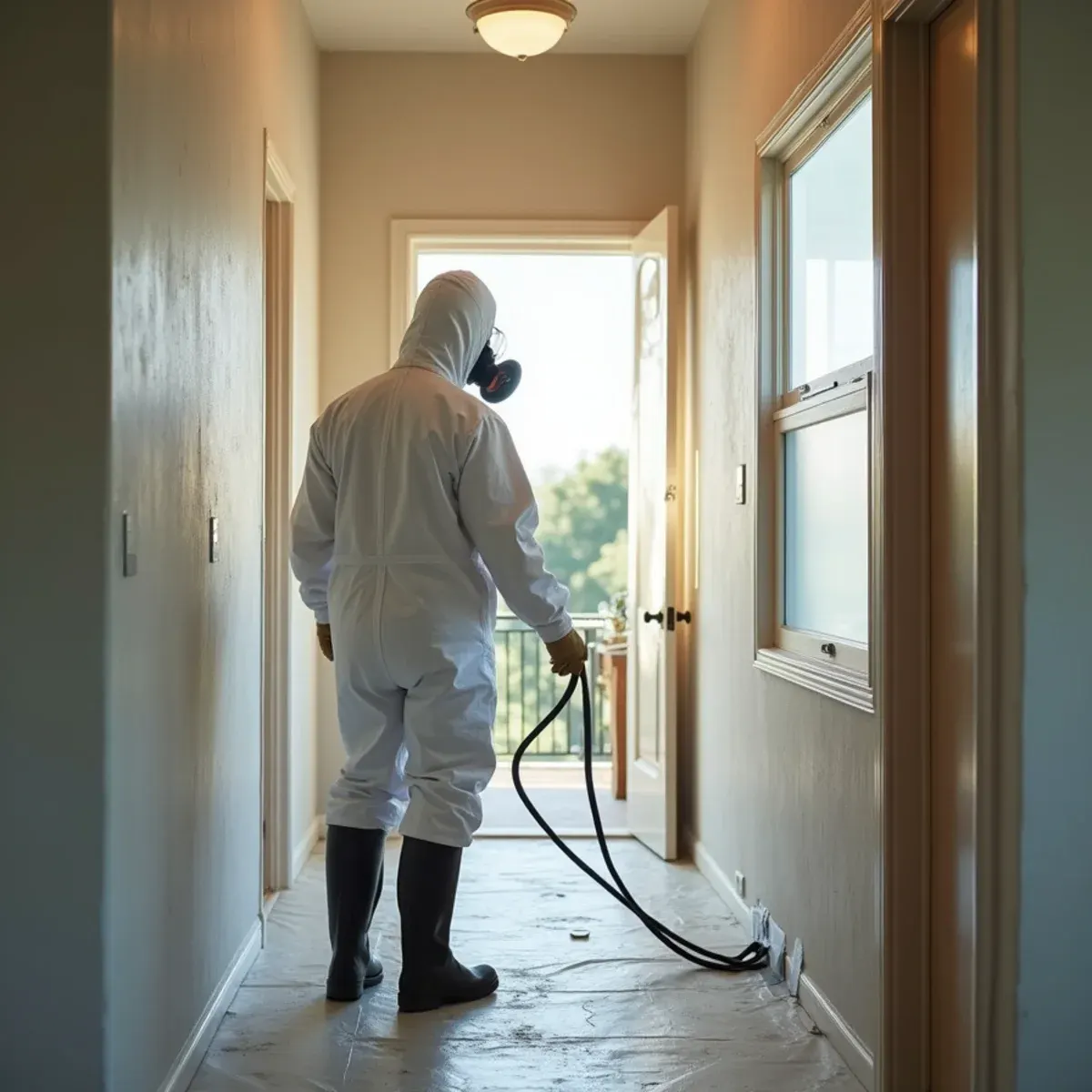
- Full PPE and safe extraction
- Remove contaminated porous materials
- Clean and disinfect all remaining surfaces
- Deodorize at the source
- Dry, verify, and clear
The Placentia Background Worth Knowing
Copper under a slab fails in two directions at once. From the inside, decades of water flow erode thin spots at bends and fittings, especially on the hot side where the metal runs warmer and the water moves faster. From the outside, soil chemistry and stray current attack the pipe wall. Either way the result is a pinhole rather than a burst, which is precisely why these losses are so expensive by the time we see them. A pinhole under concrete can run for months, soaking the sub-base, wicking up into the slab, and surfacing at the edge of the carpet as a stain nobody can explain.
There is more on the housing stock, drainage and plumbing history of this city on our water damage restoration in Placentia page.
Placentia at a glance
- Dominant construction era
- 1955–1980
- Foundation type
- slab on grade
- Supply piping found here
- under-slab copper, galvanized steel
- Drain line materials
- cast iron
- Terrain and water table
- flat, moderate water table
- Most common local failure
- under-slab copper reaching the end of its service life across whole tracts at once
- Highest-value local prevention
- the annual water-meter test, and treating a neighbor's slab leak as information
What It Costs in Placentia
We do not quote a number over the phone before seeing the property — anyone who does is guessing. The variables that actually move the price on a sewage cleanup job are affected square footage, volume of porous material removed, contents in the affected area, and they are broken down in full on the sewage backup cleanup page. The assessment and the written estimate are free anywhere in Placentia, day or night, with no obligation.
Sewage Cleanup Questions from Placentia Homeowners
Three things. Whether the occupants can safely stay while a sealed Category 3 zone runs in the house — usually they can if the affected area is a single bathroom and not the only one. Whether you want us to start containment before your adjuster calls back; we recommend it, because delay grows the loss. And whether you'll authorize a lateral scope while the floor is open, which on a rental you don't live in is the only way you'll ever know.
It depends on the source. A toilet that overflows with clean bowl water because of a stuck fill valve is Category 1 or 2 and is far less serious. A toilet that backs up from the main line is carrying waste from the whole system, and that is Category 3 — it needs the full protocol.
No. Standard practice for Category 3 water is removal and disposal of carpet and pad that were contacted. Porous materials cannot be reliably disinfected all the way through, and the health risk of leaving them is not worth the savings.
Worried is the wrong word, but you should start paying attention. These tracts were built in tight windows with the same copper at the same depth in the same soil, so failures cluster on a street rather than scattering randomly. Treat a neighbor's slab leak as a service bulletin for your own house. Run the meter test, listen for the water heater cycling at odd hours, and check the hallway and bedroom floors for warm or damp patches every so often.