
Placentia was laid out over Valencia orange groves between the mid-fifties and the late seventies, and it shows in how flood calls come in. Whole streets around Alta Vista and off Kraemer share one slab elevation, one lot grade and one carpet-over-pad floor assembly. When a storm overruns the drainage near Morse Avenue, we do not get one call. We get four from the same tract, all describing the same thing: an inch of muddy water that came under the garage door or the slider and kept going.
Slab on grade is simple in a flood and brutal in its own way. There is no crawl space to buffer anything, so contaminated water reaches finished flooring, pad, baseboard and the bottom of the drywall within minutes and wicks upward from there. The older pocket around Old Town Placentia behaves differently — smaller lots, older grading, some raised construction — and the student rentals near Cal State Fullerton add another wrinkle, because nobody in a rental knows where the shutoffs or the area drains are when it actually matters.
What Placentia Changes About Flood Cleanup
1Pad and carpet are not salvageable here
Ground floodwater is Category 3, and IICRC S500:2025 is unambiguous about porous materials that absorbed it. Carpet pad goes without argument. Carpet itself almost always goes. Tack strip, laminate and any engineered flooring with a fiberboard core go too. Owners in these tracts often hope for a hot-water extraction and a couple of fans. We would rather tell you the truth on day one than a week in.
2Four houses, one storm, one crew
Because these tracts are so uniform, a flood event here is rarely a single address. That changes how we schedule. We stage containment, negative air and disposal for a street rather than a house, and we are straight with you about sequencing when several neighbors call inside the same hour. Our Cypress base is about sixteen minutes out, so we dispatch as fast as conditions allow.
3Garage-first entry on flat tract grading
On this dead-flat ground water rarely comes in the front door. It comes under the garage door, crosses the garage slab, and enters the house through the interior door and the shared wall. That means the drywall you cannot see — garage side, behind stored boxes and shelving — is often wetter than anything in the living room, and it is where we start our moisture mapping.
How the Work Runs
The method is the same one we use on every flood cleanup job, documented to the IICRC S500:2025 standard. Here it is in short — the full flood damage cleanup process explains each stage in detail.
- Safety assessment and utility check
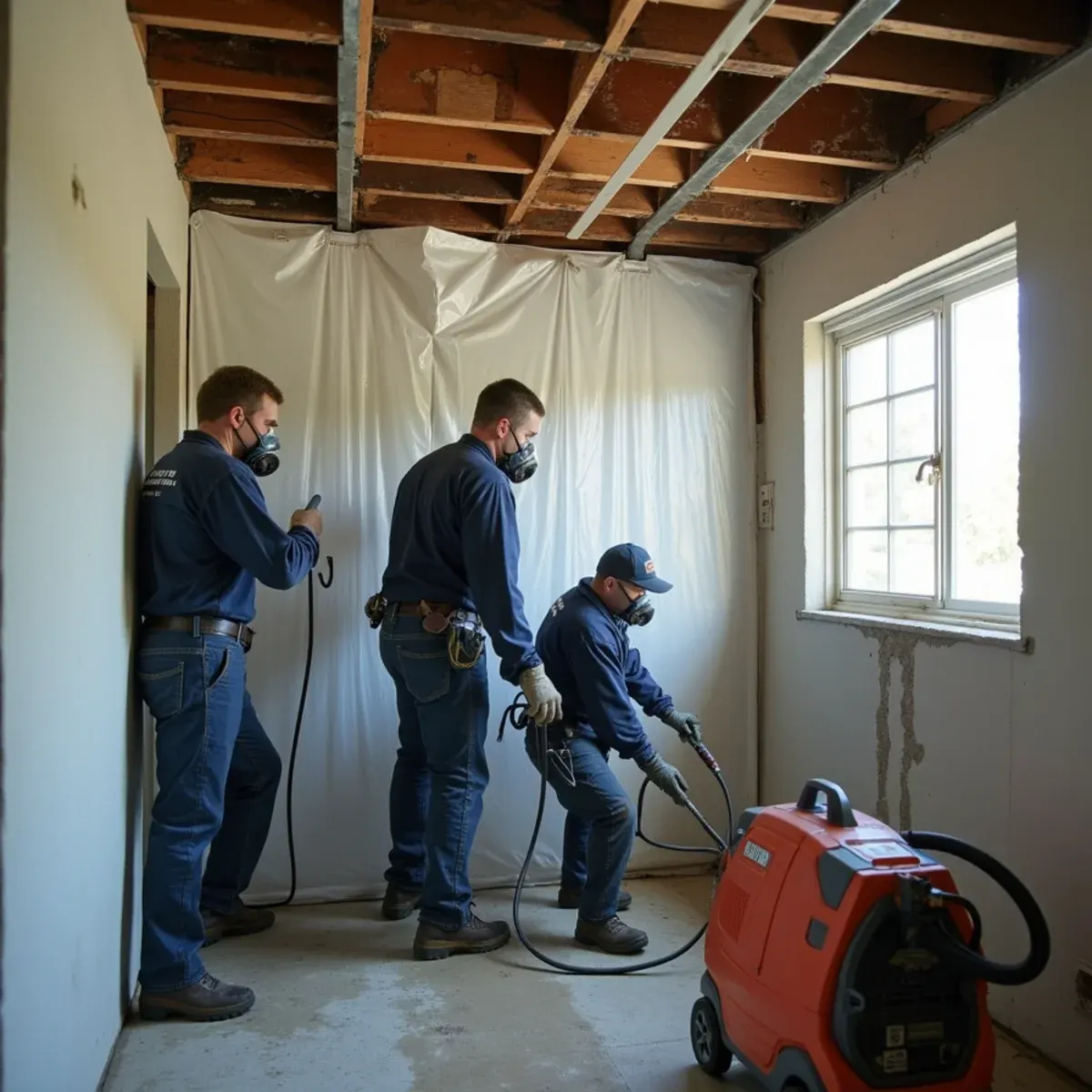
- Containment and negative air
- Documentation and contents triage
- Extraction and controlled demolition
- Cleaning and disinfection
- Structural drying and clearance
The Placentia Background Worth Knowing
Copper under a slab fails in two directions at once. From the inside, decades of water flow erode thin spots at bends and fittings, especially on the hot side where the metal runs warmer and the water moves faster. From the outside, soil chemistry and stray current attack the pipe wall. Either way the result is a pinhole rather than a burst, which is precisely why these losses are so expensive by the time we see them. A pinhole under concrete can run for months, soaking the sub-base, wicking up into the slab, and surfacing at the edge of the carpet as a stain nobody can explain.
There is more on the housing stock, drainage and plumbing history of this city on our water damage restoration in Placentia page.
Placentia at a glance
- Dominant construction era
- 1955–1980
- Foundation type
- slab on grade
- Supply piping found here
- under-slab copper, galvanized steel
- Drain line materials
- cast iron
- Terrain and water table
- flat, moderate water table
- Most common local failure
- under-slab copper reaching the end of its service life across whole tracts at once
- Highest-value local prevention
- the annual water-meter test, and treating a neighbor's slab leak as information
What It Costs in Placentia
We do not quote a number over the phone before seeing the property — anyone who does is guessing. The variables that actually move the price on a flood cleanup job are how high the water reached, how long it sat before extraction, contents volume in the flooded area, and they are broken down in full on the flood damage cleanup page. The assessment and the written estimate are free anywhere in Placentia, day or night, with no obligation.
Flood Cleanup Questions from Placentia Homeowners
Mostly lucky, and it is worth acting on. In a tract this uniform, your slab elevation, lot grading and downspout layout are within inches of your neighbors'. What usually separates a flooded house from a dry one is a single blocked area drain, a regraded planter, or a driveway resurfaced higher than the garage slab. Walk your lot during the next real rain and watch where water actually goes. That ten-minute look tells you more than any map will.
Yes. Water that crossed soil, pavement, or a storm drain is Category 3 by IICRC classification regardless of appearance — it carries bacteria, fuel and oil residue, lawn chemicals, and whatever else was on the ground. Do not walk through it in open shoes, and keep children and pets out of the area entirely.
If the water came from outside across the ground, almost certainly not — that requires separate flood insurance. If it came from a failed water heater, a burst pipe, or a supply line inside the garage, it is usually covered. We document the source carefully because that distinction determines everything.
Worried is the wrong word, but you should start paying attention. These tracts were built in tight windows with the same copper at the same depth in the same soil, so failures cluster on a street rather than scattering randomly. Treat a neighbor's slab leak as a service bulletin for your own house. Run the meter test, listen for the water heater cycling at odd hours, and check the hallway and bedroom floors for warm or damp patches every so often.