
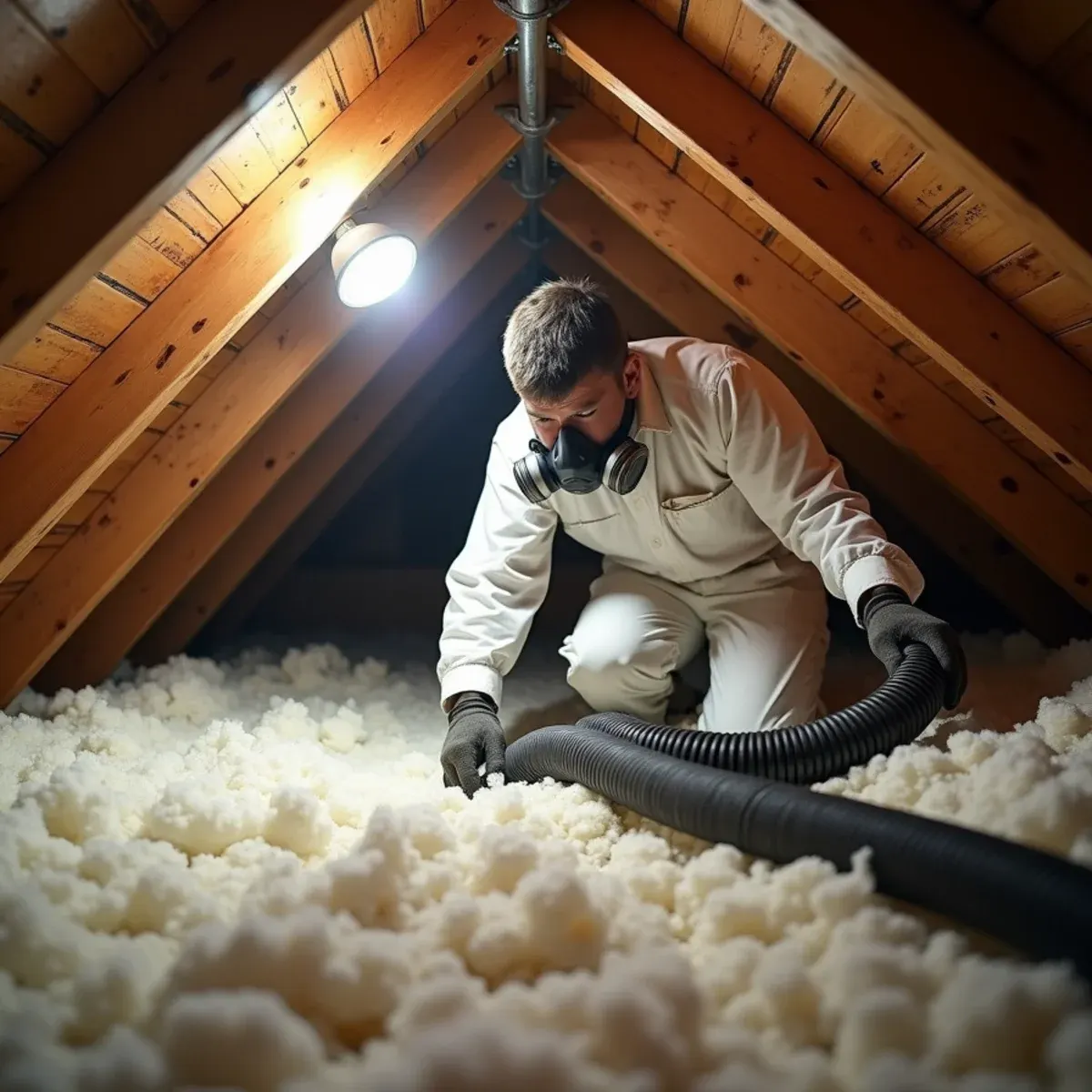
The marine layer sets the schedule on Seal Beach attic jobs. On a June morning the outside air sits near saturation until close to noon, and you can't ventilate an attic dry with air that wet. Open it up and you're pushing moisture in. So we close the attic, seal the vents temporarily where it's appropriate, and dry with dehumidification instead of exchange. It takes longer than an inland job and we'd rather say that up front than promise two days and come back on day four.
Then there's the question of whose attic it is. In Leisure World the units are attached, the cavity above your ceiling usually continues over your neighbor's, and the Mutual and the management company have a say in who works on the building and what gets replaced. We work with that process rather than around it. Old Town is different again, with 1920s to 1940s houses on tight lots, low attics and hoses that have to run down an alley. College Park behaves like a normal tract.
What Seal Beach Changes About Attic & Insulation
1Morning fog stalls attic ventilation
From late spring into summer the outside air here can sit close to saturation until midday. Ventilating an attic with that air adds water instead of removing it. We run closed-system drying, with dehumidifiers inside the contained space and air movers across the deck and joists, and check readings against outdoor conditions on each visit rather than assuming the afternoon will help.
2Leisure World work goes through the Mutual
In Leisure World the building isn't just yours. The Mutual and the management company control access, approve contractors and often own the structure above your ceiling, so we start by getting the authorization right instead of opening a cavity and sorting it out later. We can work with whatever documentation they require and keep the resident copied on scope and photos throughout.
3Old Town lots leave nowhere to stage
Old Town houses sit on narrow lots with alley access and, in a lot of cases, an attic barely deep enough to reach into from the hatch. Equipment gets staged in the alley, hoses run long, and removal happens in short reaches rather than a walk-through. Add the salt air and older framing, and the deck under the roofing is often worth a closer look than the insulation.
How the Work Runs
The method is the same one we use on every attic & insulation job, documented to the IICRC S500:2025 standard. Here it is in short — the full attic water damage & insulation replacement process explains each stage in detail.
- Map the wet area before touching it
- Contain the hatch and protect the path
- Vacuum out the saturated insulation
- HEPA vacuum and treat the plane
- Dry the deck, joists, and top plates
- Reinstall insulation and check the details
The Seal Beach Background Worth Knowing
Structural drying works by creating a vapor pressure differential — dry air pulls moisture out of wet materials. When the surrounding air is already carrying a heavy moisture load, that differential shrinks and everything slows down.
There is more on the housing stock, drainage and plumbing history of this city on our water damage restoration in Seal Beach page.
Seal Beach at a glance
- Dominant construction era
- 1920–1965
- Foundation type
- mixed on grade
- Supply piping found here
- galvanized steel, copper, shared community mains
- Drain line materials
- cast iron, clay
- Terrain and water table
- coastal-flat, shallow water table
- Most common local failure
- losses that cross shared walls between attached units, involving several policies and a mutual at once
- Highest-value local prevention
- documenting each affected unit separately from the first hour
What It Costs in Seal Beach
We do not quote a number over the phone before seeing the property — anyone who does is guessing. The variables that actually move the price on a attic & insulation job are how much of the attic got wet, clearance, access, and layout, the type of insulation up there, and they are broken down in full on the attic water damage & insulation replacement page. The assessment and the written estimate are free anywhere in Seal Beach, day or night, with no obligation.
Attic & Insulation Questions from Seal Beach Homeowners
Both, usually. The cavity above an attached unit is generally building structure, so the Mutual and the management company have to authorize access and the repair, while contents and interior finishes often fall to the resident's own coverage. We're comfortable working inside that process, and we'll document the loss for whoever needs it and coordinate scheduling with management. Call us either way, and we can look first and sort the paperwork with you.
Only the affected area plus a margin back to dry, lofted material. If the wet section covers a small part of the attic, that is all that comes out. Once it reaches roughly half the plane, replacing the whole field usually costs less than blending old and new to an even depth, and it leaves you with one consistent R-value instead of a patchwork ceiling that performs unevenly room to room.
Most attics take a few days once the wet insulation is out, but we will not promise a number on day one, and you should be careful with anyone who does. Plywood sheathing dries at a different rate than old plank decking, a sealed attic dries faster than a heavily vented one, and marine-layer mornings slow everything down. The daily readings decide when equipment leaves, not the calendar.
Coastal marine layer conditions keep ambient humidity high for extended periods, which reduces the vapor pressure differential that drives drying. Jobs near the water need sealed chambers and more dehumidification capacity than an equivalent loss inland, and the equipment stays on longer.