
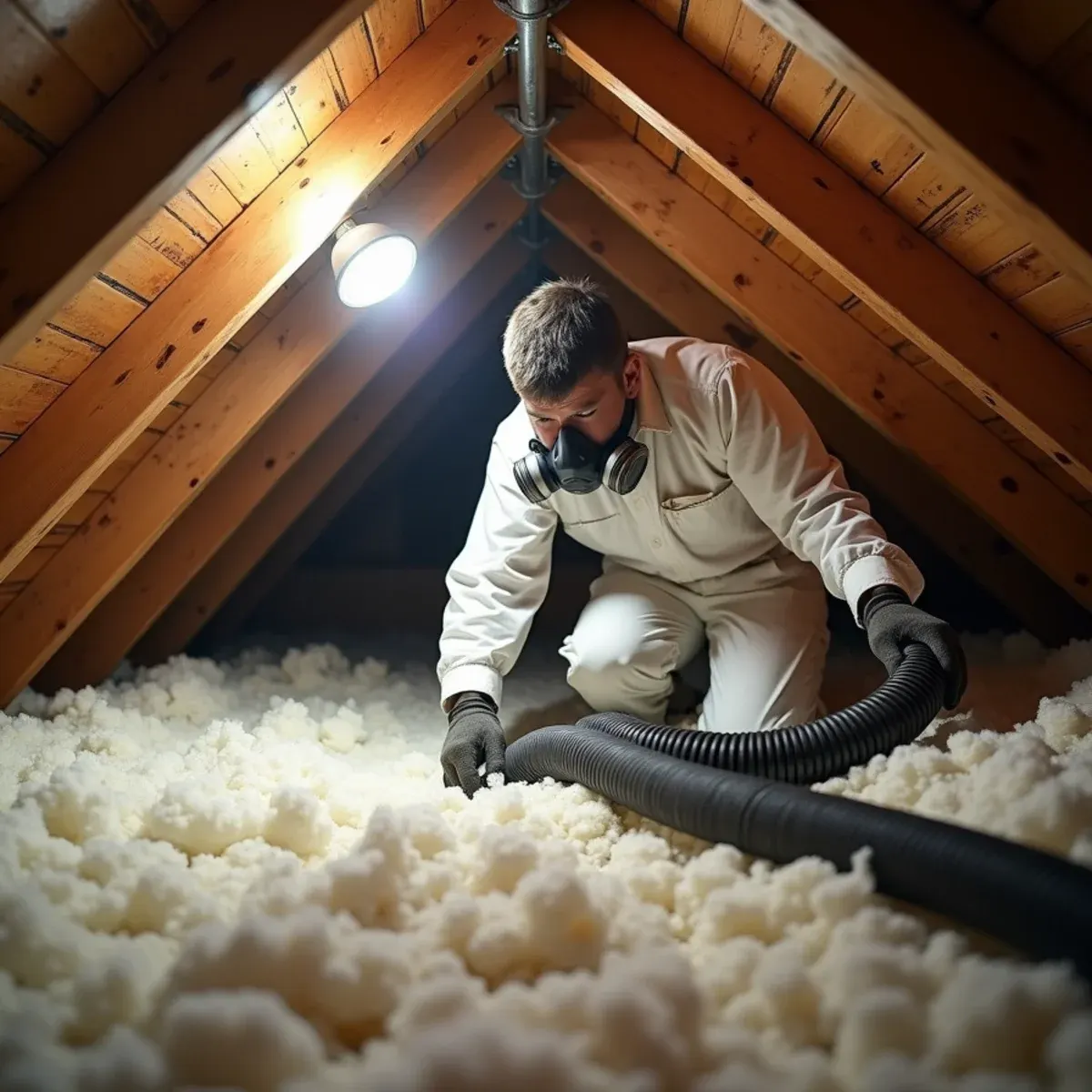
Los Alamitos sits four minutes east of our shop on Katella, and the attics here rarely hold one generation of insulation. Homes went up between 1950 and 1965, right through the changeover from raised floors to slab, and most have been re-insulated at least once since. You'll find original rock wool batts pushed to the eaves, a blanket of blown fiberglass over the top from a later energy retrofit, and cellulose added around the air handler. Water soaks all three at different rates.
The other Los Alamitos pattern is edge wetting. Mature parkway and yard trees drop needles and leaf litter into valleys and low-slope roof sections, water backs up under the first course, and it lands on the top plate where the attic is only inches tall. That's the hardest insulation to get out and the easiest to leave wet. Along Katella, the medical offices are a different animal, with packaged units on flat roofs over ceiling plenums and no vented attic at all.
What Los Alamitos Changes About Attic & Insulation
1Three vintages of insulation, one wet zone
Original batts, a blown retrofit and later add-ons all sit in the same attic here, and they don't hold water the same way. Fiberglass sheds some of it, cellulose and old rock wool hold it against the joists. We map the wet zone, remove what's saturated, and document each layer's depth and R-value so the reinstall matches what was actually there.
2Raised-floor houses give water two places to go
Los Alamitos was built through the changeover, so some blocks are slab and some are raised. On a raised-floor house, water that comes through the attic doesn't stop at the ceiling. It finds the wall cavity and ends up under the floor. When we see a raised foundation we check the crawl space the same visit, because drying an attic over a wet subfloor gets you nowhere.
3Katella medical offices need after-hours work
The medical buildings along Katella don't have vented attics. They have flat roofs, rooftop packaged units and a ceiling plenum that shares air with exam rooms, which means containment, HEPA filtration and negative pressure before anything opens. We schedule those after patient hours and keep the corridor clean, because a clinic that can't see patients tomorrow has a bigger problem than wet insulation.
How the Work Runs
The method is the same one we use on every attic & insulation job, documented to the IICRC S500:2025 standard. Here it is in short — the full attic water damage & insulation replacement process explains each stage in detail.
- Map the wet area before touching it
- Contain the hatch and protect the path
- Vacuum out the saturated insulation
- HEPA vacuum and treat the plane
- Dry the deck, joists, and top plates
- Reinstall insulation and check the details
The Los Alamitos Background Worth Knowing
When a home has been standing since 1958, the plumbing question is not whether something will fail but which thing already has. We routinely find three generations of repair inside a single Los Alamitos wall: original galvanized, a copper section from a 1980s repair, and a PEX patch from last decade, all joined with whatever transition fitting was on the truck that day.
There is more on the housing stock, drainage and plumbing history of this city on our water damage restoration in Los Alamitos page.
Los Alamitos at a glance
- Dominant construction era
- 1950–1965
- Foundation type
- mixed on grade
- Supply piping found here
- galvanized steel, early copper, mixed-metal repair joints
- Drain line materials
- cast iron, clay
- Terrain and water table
- flat, moderate water table
- Most common local failure
- galvanic corrosion at mixed-metal joints where sixty years of piecemeal repairs meet
- Highest-value local prevention
- a camera inspection of the sewer lateral, which has never been scoped on most homes here
What It Costs in Los Alamitos
We do not quote a number over the phone before seeing the property — anyone who does is guessing. The variables that actually move the price on a attic & insulation job are how much of the attic got wet, clearance, access, and layout, the type of insulation up there, and they are broken down in full on the attic water damage & insulation replacement page. The assessment and the written estimate are free anywhere in Los Alamitos, day or night, with no obligation.
Attic & Insulation Questions from Los Alamitos Homeowners
It changes what we inspect, not the attic method. The insulation still comes out, the deck and joists still get dried. But on a raised-floor Los Alamitos house we also open the crawl space, because water that ran down a wall cavity is sitting on the subfloor and pier framing where nobody looks. Two wet cavities in one house need one drying plan, not two, or the humidity from below keeps feeding the attic.
Only the affected area plus a margin back to dry, lofted material. If the wet section covers a small part of the attic, that is all that comes out. Once it reaches roughly half the plane, replacing the whole field usually costs less than blending old and new to an even depth, and it leaves you with one consistent R-value instead of a patchwork ceiling that performs unevenly room to room.
Most attics take a few days once the wet insulation is out, but we will not promise a number on day one, and you should be careful with anyone who does. Plywood sheathing dries at a different rate than old plank decking, a sealed attic dries faster than a heavily vented one, and marine-layer mornings slow everything down. The daily readings decide when equipment leaves, not the calendar.
Usually fifteen to twenty-five minutes — Los Alamitos is our closest neighbor, straight east on Katella from where our trucks stage. The 60-minute response commitment applies here the same as in Cypress.