
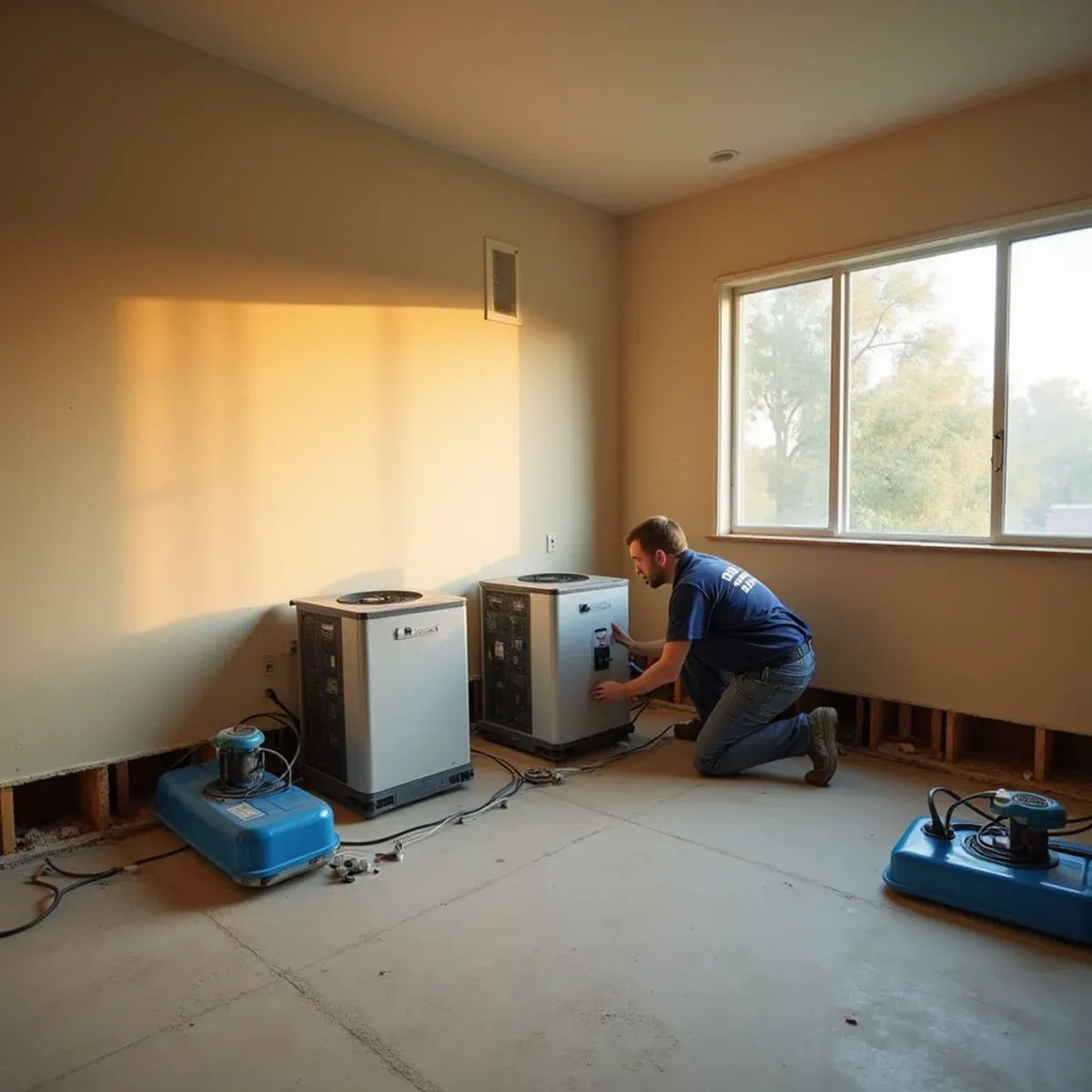
Open the windows and let it air out is bad advice within a mile of the pier. When the marine layer settles in, the outside air can hold more moisture than the air inside your wet house, so ventilating adds water rather than removing it. Drying in Seal Beach is a closed-system job. Seal the chamber, keep the dehumidifier working against a known volume, and let the equipment set the grain depression instead of the weather. Plan on more capacity and more days than the same loss would take a few miles inland.
Then there are the three Seal Beaches. Old Town's lots are tight and its houses are old, some sharing community mains. College Park sits inland and behaves like an ordinary tract. And Leisure World is roughly 9,000 attached units where water crosses a shared wall within the hour and suddenly involves two residents, a mutual and a management company. We document each affected unit separately from the first hour, each with a separate moisture map and a separate drying log, because that separation is what eventually sorts out who is responsible for what.
What Seal Beach Changes About Structural Drying
1Marine humidity stretches every schedule
A high outdoor dew point means the dehumidifier is fighting the air outside as well as the wet material inside. We size for that rather than pretending it away, seal the chamber properly, and expect a schedule a day or two longer than the same loss inland. Anyone promising an identical timeline three blocks from the water hasn't run equipment in that air.
2Attached units need separate documentation
In Leisure World a single failure can wet three units through shared walls, involving several policies plus the mutual. Every affected unit is metered, photographed and logged on its own from the start, with the shared wall read from both sides. That record establishes which unit's structure was actually affected, instead of leaving it to memory weeks later.
3Access and approvals inside a mutual
Getting equipment into an attached unit means coordinating with the resident, the mutual and management, sometimes at two in the morning. Cords crossing common corridors need routing that doesn't create a trip hazard for neighbors who are often not young. We handle that coordination as part of the job, because a drying plan nobody can get into a unit isn't a plan.
How the Work Runs
The method is the same one we use on every structural drying job, documented to the IICRC S500:2025 standard. Here it is in short — the full structural drying & dehumidification process explains each stage in detail.
- Establish the dry standard
- Calculate the load and build the chamber
- Place air movers for surface evaporation
- Run LGR dehumidification to capture the moisture
- Monitor and adjust daily
- Verify, document, and demobilize
The Seal Beach Background Worth Knowing
Structural drying works by creating a vapor pressure differential — dry air pulls moisture out of wet materials. When the surrounding air is already carrying a heavy moisture load, that differential shrinks and everything slows down.
There is more on the housing stock, drainage and plumbing history of this city on our water damage restoration in Seal Beach page.
Seal Beach at a glance
- Dominant construction era
- 1920–1965
- Foundation type
- mixed on grade
- Supply piping found here
- galvanized steel, copper, shared community mains
- Drain line materials
- cast iron, clay
- Terrain and water table
- coastal-flat, shallow water table
- Most common local failure
- losses that cross shared walls between attached units, involving several policies and a mutual at once
- Highest-value local prevention
- documenting each affected unit separately from the first hour
What It Costs in Seal Beach
We do not quote a number over the phone before seeing the property — anyone who does is guessing. The variables that actually move the price on a structural drying job are size of the drying chamber, class of water intrusion, material types involved, and they are broken down in full on the structural drying & dehumidification page. The assessment and the written estimate are free anywhere in Seal Beach, day or night, with no obligation.
Structural Drying Questions from Seal Beach Homeowners
We meter the shared wall from both sides, because the assembly between attached units is usually wet in both units even when only one shows damage. Each unit gets its own containment, its own equipment and its own log. That means coordinating access with your neighbor, the mutual and management before the wall can be dried properly. Starting that coordination in the first hour is the single biggest factor in how long the whole job takes.
Three to five days covers most residential losses. Saturated hardwood, plaster, or a concrete slab can run seven or more. We will give you an estimated window after the first readings and update you daily — and equipment comes out when the numbers say so, not on a fixed schedule.
We would rather you did not. Drying is a continuous process, and every hour off extends the total run — which usually costs more than the sleep is worth. If noise is genuinely unmanageable we can often reconfigure the chamber or reposition units to reduce it. Talk to us instead of unplugging them.
Coastal marine layer conditions keep ambient humidity high for extended periods, which reduces the vapor pressure differential that drives drying. Jobs near the water need sealed chambers and more dehumidification capacity than an equivalent loss inland, and the equipment stays on longer.