
If you own one of Jean Vandruff's Cinderella Homes, the advice is simple: fight to dry it from above. The turrets, pointed gables, gingerbread trim and detailed interior woodwork on those houses cannot be bought back at any price, and the fastest route to a dry ceiling, cutting it open from the living room, is the one that costs you the thing you actually own. Getting the wet insulation off the top of the drywall and drying the cavity from the attic side takes longer and more equipment. It also saves the room.
Under the detailing it is ordinary 1950s Downey construction: slab on grade, galvanized supply, and an attic reached through a small hall hatch. The rooflines are the complication. All those dormers, turrets and changes in pitch mean valleys and flashing joints on a house a plain hip roof would have covered with four planes, and every joint is a candidate. Between the 1953 McDonald's still standing and the aerospace history at the Columbia Memorial Space Center site, this city protects its 1950s character. The roofs just take more maintenance to hold up their end.
What Downey Changes About Attic & Insulation
1Cut-up rooflines multiply flashing joints
A plain hip roof has four planes. A Cinderella Home has turrets, dormers, changes in pitch and a set of valleys to match, and every one of those transitions is a flashing joint that can fail. When we find wet insulation in one of these attics, we walk the roof geometry above the wet field rather than assuming the nearest penetration is the culprit, because on these houses it usually is not.
2Removing from above saves the ceiling
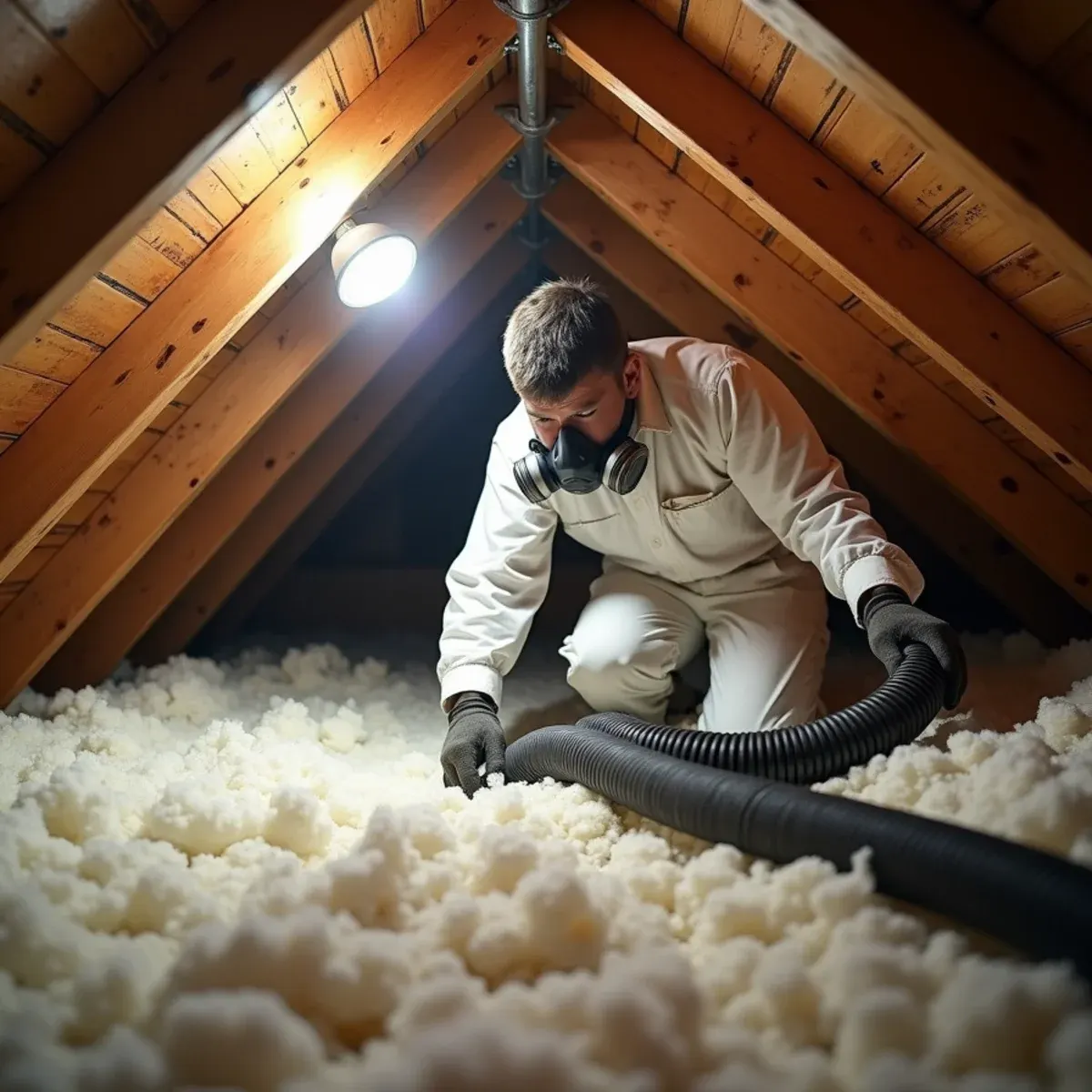
Pulling saturated insulation off the top of the drywall lets us dry the cavity from the attic side with the ceiling and its trim intact. It is slower, it needs containment and more drying equipment, and it is the right call in a house where the millwork is the reason anybody bought it. We will tell you honestly when a ceiling is too far gone to save, but we do not start there.
31950s attics started with little insulation
Under the detailing these are ordinary 1950s Downey houses, and 1950s attics were built with thin insulation or none at all, with blown-in added by later owners. That matters at claim time. Replacing to a correct modern R-value is often more than what was lost, so we document existing depth and type before removal and raise the difference with your adjuster up front rather than after the invoice.
How the Work Runs
The method is the same one we use on every attic & insulation job, documented to the IICRC S500:2025 standard. Here it is in short — the full attic water damage & insulation replacement process explains each stage in detail.
- Map the wet area before touching it
- Contain the hatch and protect the path
- Vacuum out the saturated insulation
- HEPA vacuum and treat the plane
- Dry the deck, joists, and top plates
- Reinstall insulation and check the details
The Downey Background Worth Knowing
The instinct on a wet wall is to open it, and sometimes that is correct. But IICRC S500:2025 is built around restoring rather than replacing wherever the drying goals can genuinely be met, and on a house with original arched casings and applied gingerbread, meeting those goals is worth some patience. We would rather spend three extra days with equipment running than pull a run of trim that would have to be milled from scratch to come back. The standard supports that choice and so does the arithmetic on the estimate, because custom millwork is not cheap and matching a fifties profile is not quick.
There is more on the housing stock, drainage and plumbing history of this city on our water damage restoration in Downey page.
Downey at a glance
- Dominant construction era
- 1950–1965
- Foundation type
- slab on grade
- Supply piping found here
- galvanized steel, under-slab copper
- Drain line materials
- cast iron
- Terrain and water table
- flat, moderate water table
- Most common local failure
- 1950s slab and galvanized failures in houses whose decorative woodwork makes careful, low-demolition drying worth paying for
- Highest-value local prevention
- drying in place wherever readings allow, because the trim and detailing on these houses cannot be bought
What It Costs in Downey
We do not quote a number over the phone before seeing the property — anyone who does is guessing. The variables that actually move the price on a attic & insulation job are how much of the attic got wet, clearance, access, and layout, the type of insulation up there, and they are broken down in full on the attic water damage & insulation replacement page. The assessment and the written estimate are free anywhere in Downey, day or night, with no obligation.
Attic & Insulation Questions from Downey Homeowners
Often, yes, if the ceiling is still structurally sound and we reach it before it has carried wet insulation for weeks. We remove the saturated material from above, dry the cavity and framing from the attic side with contained air movement and dehumidification, and monitor readings in the ceiling itself. If a section has already lost its bond or is sagging, it has to come down. On a Cinderella Home that is a last resort, not a first move.
Only the affected area plus a margin back to dry, lofted material. If the wet section covers a small part of the attic, that is all that comes out. Once it reaches roughly half the plane, replacing the whole field usually costs less than blending old and new to an even depth, and it leaves you with one consistent R-value instead of a patchwork ceiling that performs unevenly room to room.
Most attics take a few days once the wet insulation is out, but we will not promise a number on day one, and you should be careful with anyone who does. Plywood sheathing dries at a different rate than old plank decking, a sealed attic dries faster than a heavily vented one, and marine-layer mornings slow everything down. The daily readings decide when equipment leaves, not the calendar.
Usually, yes. We go into the wall cavity through small ports low on the wall, hidden behind shoe molding or inside a closet, and dry from the inside out rather than taking the finished face off. That takes longer and needs more equipment than gutting the wall would, which is exactly the trade we think is worth making on a house with millwork that cannot be bought. Where it will not work, we tell you early.