
Flood work runs on a hard rule: porous material that absorbed Category 3 water comes out. In most of the cities we serve that is an easy conversation. In Downey it is not. Jean Vandruff's Cinderella Homes gave ordinary 1950s tract housing turrets, pointed rooflines, arched doorways, scalloped bargeboard and interior millwork that no supplier makes anymore. When floodwater reaches the bottom of that trim, telling a homeowner it all goes is technically correct and practically wrong, so we work the decision material by material instead.
Underneath the detailing this is standard 1950s construction — slab on grade, galvanized supply lines, cast-iron drains, flat ground that spreads water evenly across a whole floor plan. The tracts around Orange Estates, Rancho Estates and northeast Downey were built in a short window, so when one house floods the ones around it usually share the same slab elevation and the same drainage assumptions. Flood water here rarely stands deep. It spreads wide and low, which is exactly the depth that reaches baseboard, casing and door bottoms.
What Downey Changes About Flood Cleanup
1Solid wood can often stay; sheet goods cannot
Old-growth solid trim, dimensional framing and hardwood door stiles can frequently be cleaned, disinfected and dried in place when the readings support it. Paper-faced drywall, particleboard, carpet pad and any laminated core cannot, however good they look. We meter each element, mark what stays and what goes before demolition begins, and photograph the profiles we remove so a millworker can match them later.
2Controlled removal beats fast removal
The quickest path through a flooded Downey house is to cut two feet of wall and pull every piece of trim in an afternoon. On these homes that destroys value nobody can rebuy. We remove trim carefully with the intent of reinstalling it, label each piece, and store it dry off site while the structure dries. It costs more labor hours. It is also the reason people call us for these particular houses.
3Wide, shallow water reaches every baseboard
Flood water on this flat ground rarely stands deep, and that is the problem. Two or three inches across a whole floor plan touches the bottom of every baseboard, door casing and cabinet kick in the house rather than wrecking one room. Scope on a Downey job is usually wide and low, and the material list runs long even when the loss looks minor from the doorway.
How the Work Runs
The method is the same one we use on every flood cleanup job, documented to the IICRC S500:2025 standard. Here it is in short — the full flood damage cleanup process explains each stage in detail.
- Safety assessment and utility check
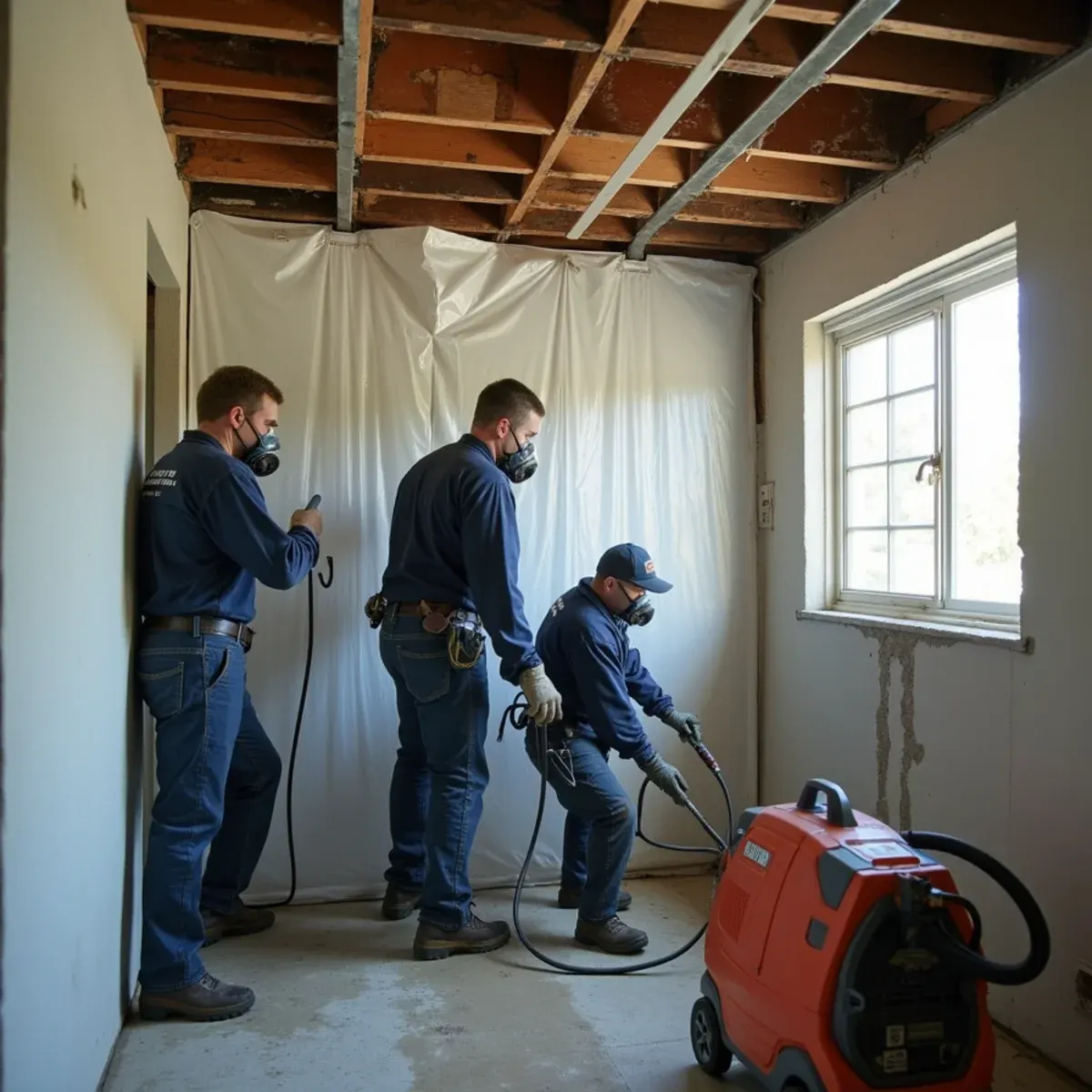
- Containment and negative air
- Documentation and contents triage
- Extraction and controlled demolition
- Cleaning and disinfection
- Structural drying and clearance
The Downey Background Worth Knowing
The instinct on a wet wall is to open it, and sometimes that is correct. But IICRC S500:2025 is built around restoring rather than replacing wherever the drying goals can genuinely be met, and on a house with original arched casings and applied gingerbread, meeting those goals is worth some patience. We would rather spend three extra days with equipment running than pull a run of trim that would have to be milled from scratch to come back. The standard supports that choice and so does the arithmetic on the estimate, because custom millwork is not cheap and matching a fifties profile is not quick.
There is more on the housing stock, drainage and plumbing history of this city on our water damage restoration in Downey page.
Downey at a glance
- Dominant construction era
- 1950–1965
- Foundation type
- slab on grade
- Supply piping found here
- galvanized steel, under-slab copper
- Drain line materials
- cast iron
- Terrain and water table
- flat, moderate water table
- Most common local failure
- 1950s slab and galvanized failures in houses whose decorative woodwork makes careful, low-demolition drying worth paying for
- Highest-value local prevention
- drying in place wherever readings allow, because the trim and detailing on these houses cannot be bought
What It Costs in Downey
We do not quote a number over the phone before seeing the property — anyone who does is guessing. The variables that actually move the price on a flood cleanup job are how high the water reached, how long it sat before extraction, contents volume in the flooded area, and they are broken down in full on the flood damage cleanup page. The assessment and the written estimate are free anywhere in Downey, day or night, with no obligation.
Flood Cleanup Questions from Downey Homeowners
Not automatically. Category 3 rules require removing porous materials that absorbed contaminated water, and solid old-growth wood is far less porous than the drywall behind it. If moisture readings show a piece can be cleaned, disinfected and dried to a normal dry standard, it stays. If it delaminated, swelled or sat submerged for days, it goes — and we photograph the profile first so it can be milled to match. You will hear each call before anything comes off the wall.
Yes. Water that crossed soil, pavement, or a storm drain is Category 3 by IICRC classification regardless of appearance — it carries bacteria, fuel and oil residue, lawn chemicals, and whatever else was on the ground. Do not walk through it in open shoes, and keep children and pets out of the area entirely.
If the water came from outside across the ground, almost certainly not — that requires separate flood insurance. If it came from a failed water heater, a burst pipe, or a supply line inside the garage, it is usually covered. We document the source carefully because that distinction determines everything.
Usually, yes. We go into the wall cavity through small ports low on the wall, hidden behind shoe molding or inside a closet, and dry from the inside out rather than taking the finished face off. That takes longer and needs more equipment than gutting the wall would, which is exactly the trade we think is worth making on a house with millwork that cannot be bought. Where it will not work, we tell you early.