
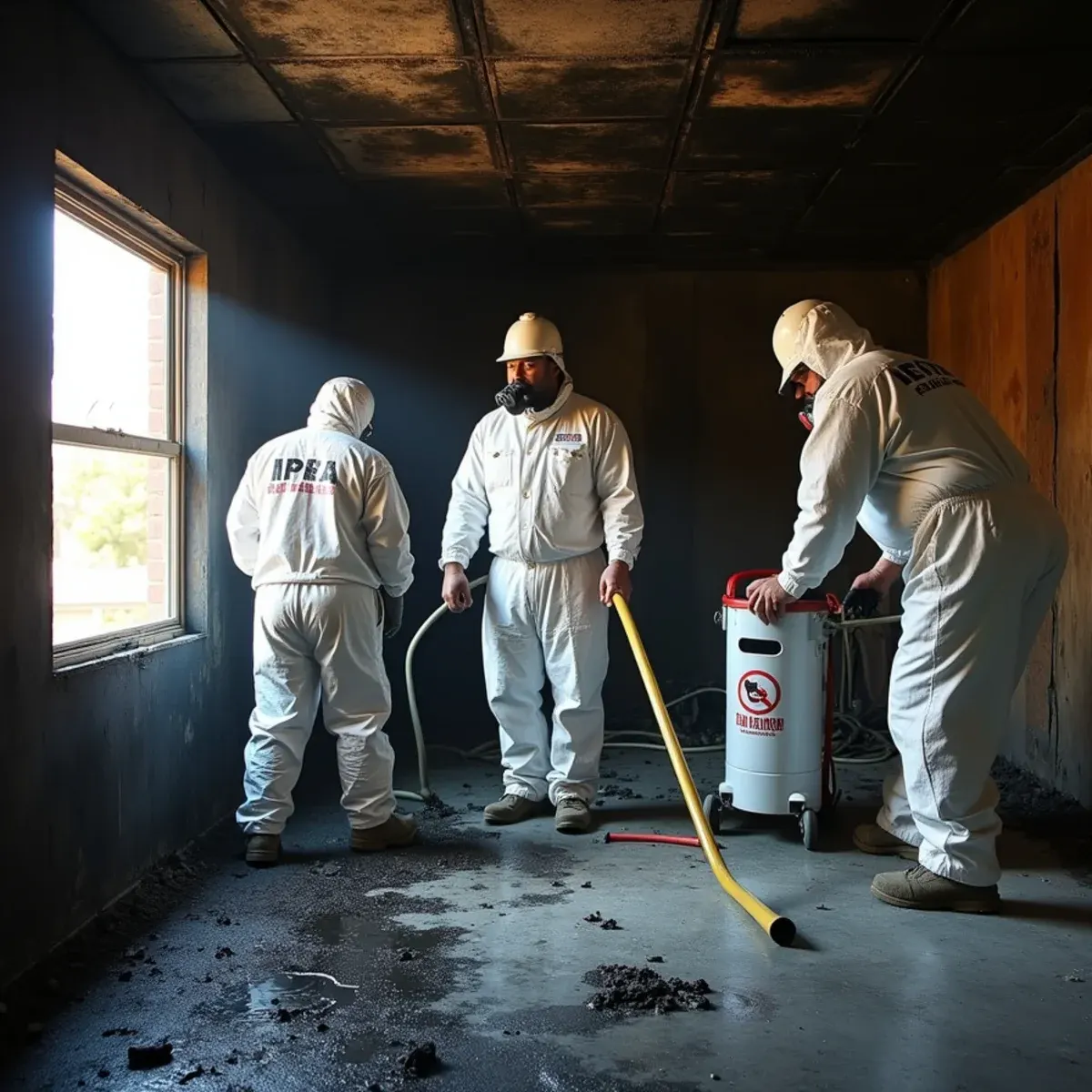
Most of our fire work in Santa Fe Springs happens under a very high ceiling. The warehouse, manufacturing and distribution base along Telegraph Road and the Norwalk Boulevard industrial district dwarfs the residential footprint, and a fire in a building like that is two losses at once: smoke through the entire air volume, coating racking, product and the underside of the deck, plus everything the sprinkler system discharged while it ran. A suppression system moves an enormous amount of water, and it does not stop when the fire does. It stops when somebody finds the riser.
The residential pockets in Los Nietos and off Florence Avenue sit close to that industry, and homeowners there get a version of the same problem without the fire. Smoke from a nearby commercial building settles on and inside a house, and what is in it depends entirely on what was stored or manufactured in that building. We do not guess about that. What burned determines the cleaning method, the protective equipment we use, and whether anything needs testing before a crew starts wiping surfaces.
What Santa Fe Springs Changes About Fire & Smoke Damage
1Sprinkler discharge across an open floor
On a large open-plan floor there are no walls to slow water down. It spreads across the slab, under pallet racking and into offices and tenant improvements at the perimeter, often reaching areas with no smoke damage at all. Extraction has to start immediately and at scale. Documented drying under IICRC S500:2025 matters here because a wet warehouse slab under racking is easy to declare dry and hard to actually dry.
2Racked inventory and soot documentation
Product on racking gets coated from above and from the aisle side, and the carrier will want to know what is salvageable before anything moves. We photograph and inventory by rack position, separate cleanable from non-salvageable, and note packaging contamination where product itself may be fine but the labeling is not. That record is what keeps a large inventory claim from turning into a dispute.
3Access, shutoffs and getting back running
These are after-hours losses more often than not, and the difference between a fast start and a lost night is whether we can reach the building, the riser and the main disconnect. We ask commercial clients to keep current access and shutoff information on file with us before anything happens. During the work we phase cleaning so undamaged bays can operate while the affected end is still being handled.
How the Work Runs
The method is the same one we use on every fire & smoke damage job, documented to the IICRC S500:2025 standard. Here it is in short — the full fire & smoke damage restoration process explains each stage in detail.
- Secure the structure
- Water extraction and drying first
- Assess residue type room by room
- Remove non-salvageable material and clean the rest
- Deodorize at the source
- Contents restoration and rebuild
The Santa Fe Springs Background Worth Knowing
The water sitting in a wet-pipe sprinkler system has been there for years. It is stagnant, it has been in contact with black steel and scale that whole time, and some systems carry corrosion inhibitors or antifreeze as well. When a head discharges, that is what lands on your floor and soaks into your product. Under IICRC S500:2025 water gets categorized on the evidence in front of us, and sprinkler discharge that has run across a warehouse floor almost never stays in Category 1. That decision drives what we dry in place, what comes out, and how the crew works.
There is more on the housing stock, drainage and plumbing history of this city on our water damage restoration in Santa Fe Springs page.
Santa Fe Springs at a glance
- Dominant construction era
- 1950–1975
- Foundation type
- slab on grade
- Supply piping found here
- galvanized steel, copper, commercial-grade systems
- Drain line materials
- cast iron, commercial waste lines
- Terrain and water table
- flat, moderate water table
- Most common local failure
- fire-sprinkler discharge and commercial supply failures across large open-plan warehouse and manufacturing floors
- Highest-value local prevention
- keeping current building access and shutoff information on file before an after-hours failure
What It Costs in Santa Fe Springs
We do not quote a number over the phone before seeing the property — anyone who does is guessing. The variables that actually move the price on a fire & smoke damage job are extent of structural burn, how far the smoke traveled, residue type, and they are broken down in full on the fire & smoke damage restoration page. The assessment and the written estimate are free anywhere in Santa Fe Springs, day or night, with no obligation.
Fire & Smoke Damage Questions from Santa Fe Springs Homeowners
You find out what was in the building, and until then you treat the residue as unknown. Fires at manufacturing and distribution sites can deposit burned plastics, coatings or process materials that behave nothing like household soot. Keep windows closed, avoid running the HVAC, do not dry-wipe anything, and photograph what you see. We inspect the exterior, attic and mechanical system, and arrange surface testing when what burned is unclear or the residue looks unusual.
Fire suppression uses enormous volumes of water in a short time — often thousands of gallons. That water saturates ceilings, insulation, walls, and floors well beyond the burned area, and it has to be extracted and dried like any other water loss, on top of the fire work.
Yes, when the residue is removed completely — including inside wall cavities, ductwork, attic insulation, and behind cabinetry. Odor that returns later always means residue was left somewhere. Masking agents and ozone alone do not solve it.
No. Water that has sat in a wet-pipe system for years picks up scale, rust and whatever inhibitors are in the system, and once it runs across a warehouse floor it collects everything on that floor too. We categorize on the evidence per IICRC S500:2025, and sprinkler discharge almost always lands past Category 1. That affects what gets dried in place, what gets removed, and what protective equipment the crew works in.