
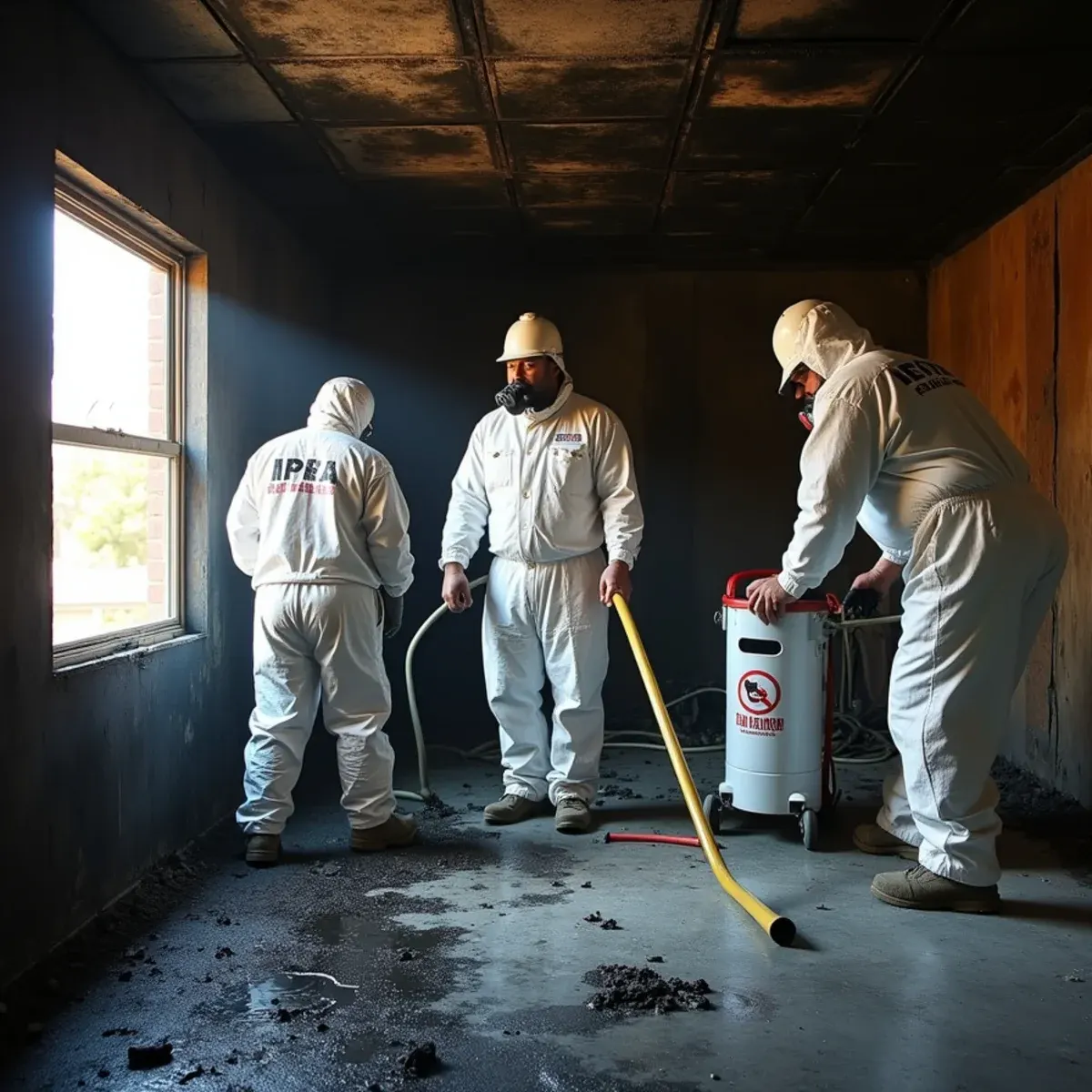
One unit burns. The fire department knocks it down in twenty minutes. Twelve other apartments never see a flame, and every one of them smells like the fire for months. That's the standard Buena Park fire loss, because this city carries far more multi-family stock than the tracts around it. Smoke moves through the common attic, the plumbing chases and the corridor, then settles into carpet, drapes and closet contents in units that look untouched. Suppression water goes the other direction, down through the floor into the apartments below.
The Beach Boulevard corridor adds a second kind of work entirely. Hotels near Knott's Berry Farm and the chain kitchens along the strip deal in greasy, protein-heavy residue that doesn't behave like the dry soot from a bedroom fire — it films every surface, resists dry cleaning methods, and comes back as odor the first warm week if any of it stays in a hood run or a return duct. Then there are the 1950s and 60s single-family tracts near Ralph B. Clark Regional Park, which are a different job again.
What Buena Park Changes About Fire & Smoke Damage
1One fire becomes several separate claims
In a multi-family building the fire unit, the units beside it, the units below and the building itself are usually four different insurance conversations. Photograph and document your own unit before anything is moved, and don't rely on the building's adjuster to capture your contents. We can produce separate documentation per unit and per party without duplicating the work on site.
2Common attics move smoke between apartments
Older apartment buildings here run continuous attic space and shared plumbing chases above the unit ceilings. Smoke uses them. An apartment three doors from the fire can hold as much odor as the one next door, which is why we test and treat according to where the smoke actually went rather than how far the flames traveled.
3Hotel and restaurant kitchens leave protein residue
Along Beach Boulevard, most commercial fires are cooking fires, and the residue is wet and greasy rather than dry and powdery. It films glass, stainless and painted surfaces and it resists dry sponges completely — it needs degreasing chemistry and hot water. Skip the hood run and the return duct and the odor comes back the first busy weekend after you reopen.
How the Work Runs
The method is the same one we use on every fire & smoke damage job, documented to the IICRC S500:2025 standard. Here it is in short — the full fire & smoke damage restoration process explains each stage in detail.
- Secure the structure
- Water extraction and drying first
- Assess residue type room by room
- Remove non-salvageable material and clean the rest
- Deodorize at the source
- Contents restoration and rebuild
The Buena Park Background Worth Knowing
Buena Park has a large apartment and condominium stock, and multi-unit water losses are a meaningful share of our work here. A supply line failure in a second-floor unit reaches the unit below within minutes and frequently affects three or four units before anyone finds the shutoff.
There is more on the housing stock, drainage and plumbing history of this city on our water damage restoration in Buena Park page.
Buena Park at a glance
- Dominant construction era
- 1950–1975
- Foundation type
- slab on grade
- Supply piping found here
- galvanized steel, under-slab copper
- Drain line materials
- cast iron
- Terrain and water table
- flat, moderate water table
- Most common local failure
- multi-unit escalation, where one riser or supply failure reaches three or four units before anyone finds the shutoff
- Highest-value local prevention
- posting the main shutoff location and an emergency contact where tenants will actually see it
What It Costs in Buena Park
We do not quote a number over the phone before seeing the property — anyone who does is guessing. The variables that actually move the price on a fire & smoke damage job are extent of structural burn, how far the smoke traveled, residue type, and they are broken down in full on the fire & smoke damage restoration page. The assessment and the written estimate are free anywhere in Buena Park, day or night, with no obligation.
Fire & Smoke Damage Questions from Buena Park Homeowners
Not on its own. What you're smelling is residue that traveled through the common attic and the plumbing chases and settled into carpet, drapes, closet contents and cabinet interiors. Airing the place out moves the air, not the residue, and the odor comes back the first warm week. The apartment needs cleaning surface by surface, and porous contents need treating or replacing. Document your own belongings before anything is moved — the building's policy doesn't cover them.
Fire suppression uses enormous volumes of water in a short time — often thousands of gallons. That water saturates ceilings, insulation, walls, and floors well beyond the burned area, and it has to be extracted and dried like any other water loss, on top of the fire work.
Yes, when the residue is removed completely — including inside wall cavities, ductwork, attic insulation, and behind cabinetry. Odor that returns later always means residue was left somewhere. Masking agents and ozone alone do not solve it.
Regularly. Multi-unit losses get documented unit by unit with separate photographs, moisture maps, and drying logs, which is what lets several owners, an HOA, and multiple carriers each resolve their portion without disputing a single blended invoice.