
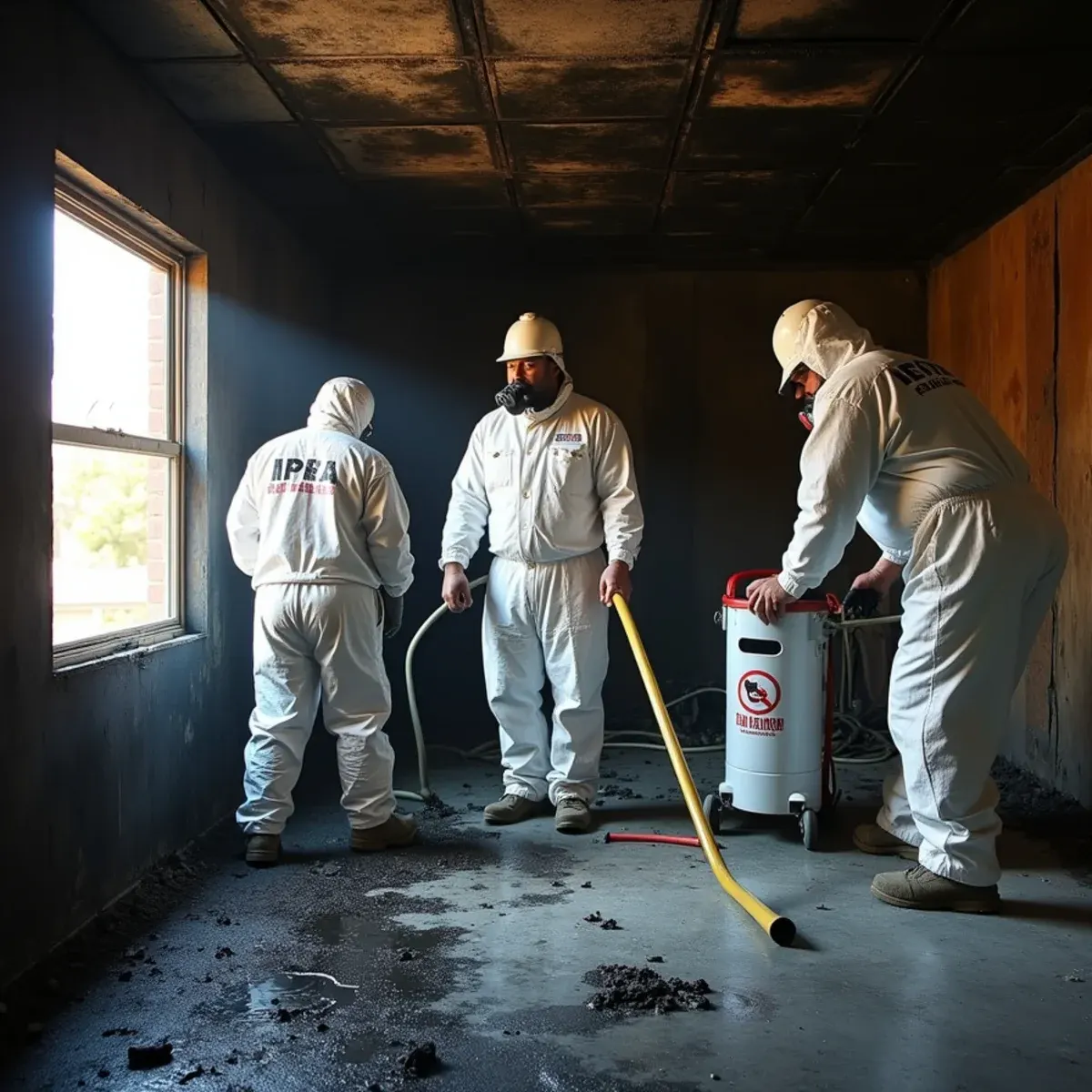
Cerritos was master-planned through the late 1960s and 1970s, and it shows in the housing — consistent, well maintained, and with a much higher share of two-story homes than the cities around it. Two stories change how a fire loss behaves. Heat and smoke stack at the upper ceiling and push into the attic, while the water used to put the fire out drops into the floor assembly between levels and travels sideways through the joist bays before it finds a spot to come through the ceiling below, often in a room well away from the fire.
The consistency helps us. When floor plans, duct layouts and wall assemblies repeat across a tract, we can predict where smoke went before we start opening ceilings, which means fewer exploratory cuts and less rebuilding at the end. What we won't do is guess. We meter the floor assembly from both sides and pull the ceiling where the numbers say to. Homes near Coyote Creek along the Cypress border are built much like our own city's, so the approach carries over almost exactly.
What Cerritos Changes About Fire & Smoke Damage
1Smoke stacks upstairs, water drops between floors
In a two-story home the heat and residue load the upper ceilings and attic hardest, while the water used to knock the fire down lands in the floor assembly between levels. It then runs along the joist bays and comes through the downstairs ceiling somewhere else entirely. Both halves get planned at the same time, because only one of them is visible from the start.
2Repeating floor plans predict the smoke path
Master-planned tracts repeat plans, duct layouts and wall assemblies across whole streets. That means we can usually say where smoke traveled before we open a ceiling, which means fewer exploratory cuts and less to rebuild at the end. We still meter to confirm — the plan tells us where to look, not what we'll actually find.
3Rooms built over the attached garage
A lot of these plans put a bedroom or bonus room directly above the garage, and garage fires are common. That assembly takes the heat from below, the smoke into the floor cavity and then the suppression water back down through the same space. It's the one place we open early rather than metering and waiting to see.
How the Work Runs
The method is the same one we use on every fire & smoke damage job, documented to the IICRC S500:2025 standard. Here it is in short — the full fire & smoke damage restoration process explains each stage in detail.
- Secure the structure
- Water extraction and drying first
- Assess residue type room by room
- Remove non-salvageable material and clean the rest
- Deodorize at the source
- Contents restoration and rebuild
The Cerritos Background Worth Knowing
Cerritos has a considerably higher proportion of two-story homes than the single-story tract cities around it, and that changes the geometry of every water loss. A failure on the second floor does not stay there — it goes through the floor assembly into the ceiling below and spreads laterally across the joists before it drops.
There is more on the housing stock, drainage and plumbing history of this city on our water damage restoration in Cerritos page.
Cerritos at a glance
- Dominant construction era
- 1965–1985
- Foundation type
- slab on grade
- Supply piping found here
- under-slab copper
- Drain line materials
- cast iron, ABS
- Terrain and water table
- flat, moderate water table
- Most common local failure
- upper-floor failures that spread laterally through the enclosed floor assembly before dropping through a ceiling well away from the source
- Highest-value local prevention
- the annual meter test, since 1970s under-slab copper is only now entering its failure window here
What It Costs in Cerritos
We do not quote a number over the phone before seeing the property — anyone who does is guessing. The variables that actually move the price on a fire & smoke damage job are extent of structural burn, how far the smoke traveled, residue type, and they are broken down in full on the fire & smoke damage restoration page. The assessment and the written estimate are free anywhere in Cerritos, day or night, with no obligation.
Fire & Smoke Damage Questions from Cerritos Homeowners
That assembly takes the worst of it. Heat and smoke push up into the floor cavity between the garage ceiling and the room above, and residue settles in insulation and joist bays you can't see from either side. Then suppression water comes back down through the same space. We open that assembly early rather than metering and waiting, because it's the one place in these plans where damage from both directions overlaps.
Fire suppression uses enormous volumes of water in a short time — often thousands of gallons. That water saturates ceilings, insulation, walls, and floors well beyond the burned area, and it has to be extracted and dried like any other water loss, on top of the fire work.
Yes, when the residue is removed completely — including inside wall cavities, ductwork, attic insulation, and behind cabinetry. Odor that returns later always means residue was left somewhere. Masking agents and ozone alone do not solve it.
Usually fifteen to twenty minutes. Cerritos borders Cypress across Coyote Creek, so it is one of our closest service areas and the 60-minute commitment applies fully.