
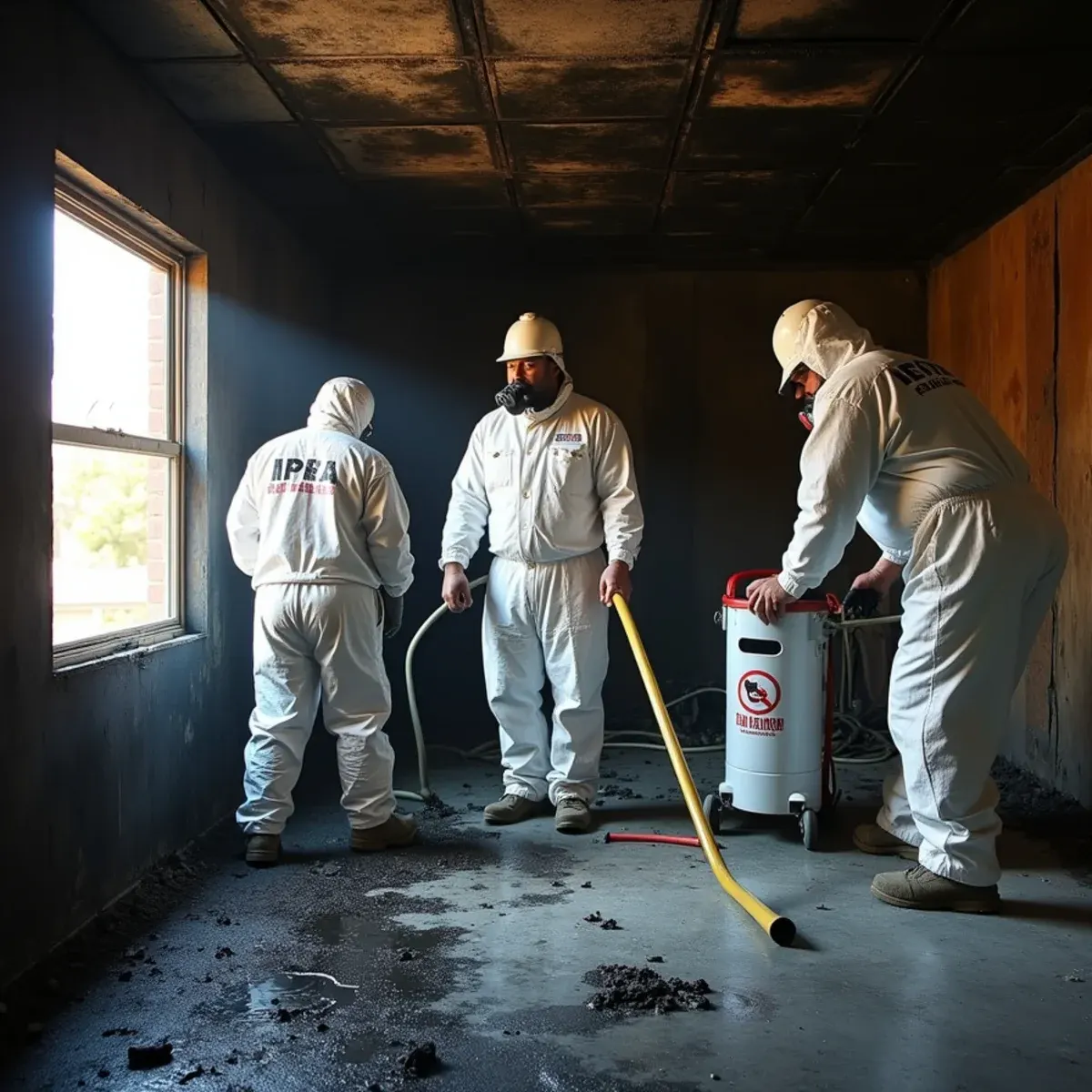
Roughly seventeen and a half thousand Lakewood houses went up between 1950 and 1953, some days at a rate of a hundred, to a short list of plans. That's unusual, and after a fire it's useful. We walk in already knowing where the attic access is, how the low-pitch roof frames over the whole footprint with nothing to stop smoke crossing it, and where the kitchen, bath and laundry stack against a shared plumbing wall. Fires in these houses concentrate around that wet core more often than anywhere else in the plan.
The plumbing is original galvanized steel in a lot of these homes, and heat does it no favors — seventy-year-old pipe that's already scaled and thinned inside will let go at a fitting when the room around it gets hot, so water keeps arriving after the fire is out. It also means that if walls are open anyway, this is the moment to repipe rather than doing it as a separate project two years later. Lots here are tight, so a neighbor's fire near Mayfair or Bolivar Park can put smoke and radiant heat on your house too.
What Lakewood Changes About Fire & Smoke Damage
1Galvanized supply lines fail under heat
Seventy-year-old galvanized pipe is already scaled, thinned and stressed at the fittings. Heat from a room fire finishes the job, so water keeps arriving after the flames are out and the water loss ends up larger than the fire loss. Finding and closing the main early is part of the first ten minutes on a Lakewood job.
2Low open attics carry smoke across the plan
The roof frames across the whole footprint with nothing dividing the attic, so a fire in the kitchen loads the insulation and framing over the bedrooms. Whether or not the attic gets properly addressed is the single biggest predictor of whether odor comes back in six months. If it took smoke, the affected insulation comes out.
3Repipe while the walls are open
If a fire has already opened the wet-core walls where kitchen, bath and laundry share plumbing, that's the cheapest moment this house will ever offer to replace the original galvanized. Doing it later means opening finished walls again and paying for the same drywall twice. It's worth raising with your adjuster while the scope is still being written.
How the Work Runs
The method is the same one we use on every fire & smoke damage job, documented to the IICRC S500:2025 standard. Here it is in short — the full fire & smoke damage restoration process explains each stage in detail.
- Secure the structure
- Water extraction and drying first
- Assess residue type room by room
- Remove non-salvageable material and clean the rest
- Deodorize at the source
- Contents restoration and rebuild
The Lakewood Background Worth Knowing
Galvanized steel supply piping was standard when Lakewood was built, and it fails in a specific and predictable way. The zinc coating protecting the steel wears through from the inside, the steel corrodes, and scale builds up on the interior wall — narrowing the pipe over decades. As the diameter shrinks, water velocity and turbulence increase, which accelerates the erosion at elbows and fittings until a thin spot lets go.
There is more on the housing stock, drainage and plumbing history of this city on our water damage restoration in Lakewood page.
Lakewood at a glance
- Dominant construction era
- 1950–1953
- Foundation type
- slab on grade
- Supply piping found here
- original galvanized steel
- Drain line materials
- cast iron
- Terrain and water table
- flat, moderate water table
- Most common local failure
- seventy-year-old galvanized supply lines letting go at a scaled, eroded fitting
- Highest-value local prevention
- repiping while walls are already open for a repair, rather than as a separate project later
What It Costs in Lakewood
We do not quote a number over the phone before seeing the property — anyone who does is guessing. The variables that actually move the price on a fire & smoke damage job are extent of structural burn, how far the smoke traveled, residue type, and they are broken down in full on the fire & smoke damage restoration page. The assessment and the written estimate are free anywhere in Lakewood, day or night, with no obligation.
Fire & Smoke Damage Questions from Lakewood Homeowners
More than you'd think. When seventeen thousand homes go up in three years to a few plans, we already know where the attic access is, that the attic runs open across the whole footprint, and where the kitchen, bath and laundry share a plumbing wall. That means less exploratory cutting and a faster start on the attic, which is where the odor problem usually lives. We still meter everything — the plan only tells us where to look.
Fire suppression uses enormous volumes of water in a short time — often thousands of gallons. That water saturates ceilings, insulation, walls, and floors well beyond the burned area, and it has to be extracted and dried like any other water loss, on top of the fire work.
Yes, when the residue is removed completely — including inside wall cavities, ductwork, attic insulation, and behind cabinetry. Odor that returns later always means residue was left somewhere. Masking agents and ozone alone do not solve it.
Have it assessed. Seventy-year-old galvanized has exceeded any reasonable service life, and declining pressure or rust-colored water means it is well along. If a repair is already opening walls, that is the cheapest moment you will ever get to repipe — the demolition and patching are already in the scope.