
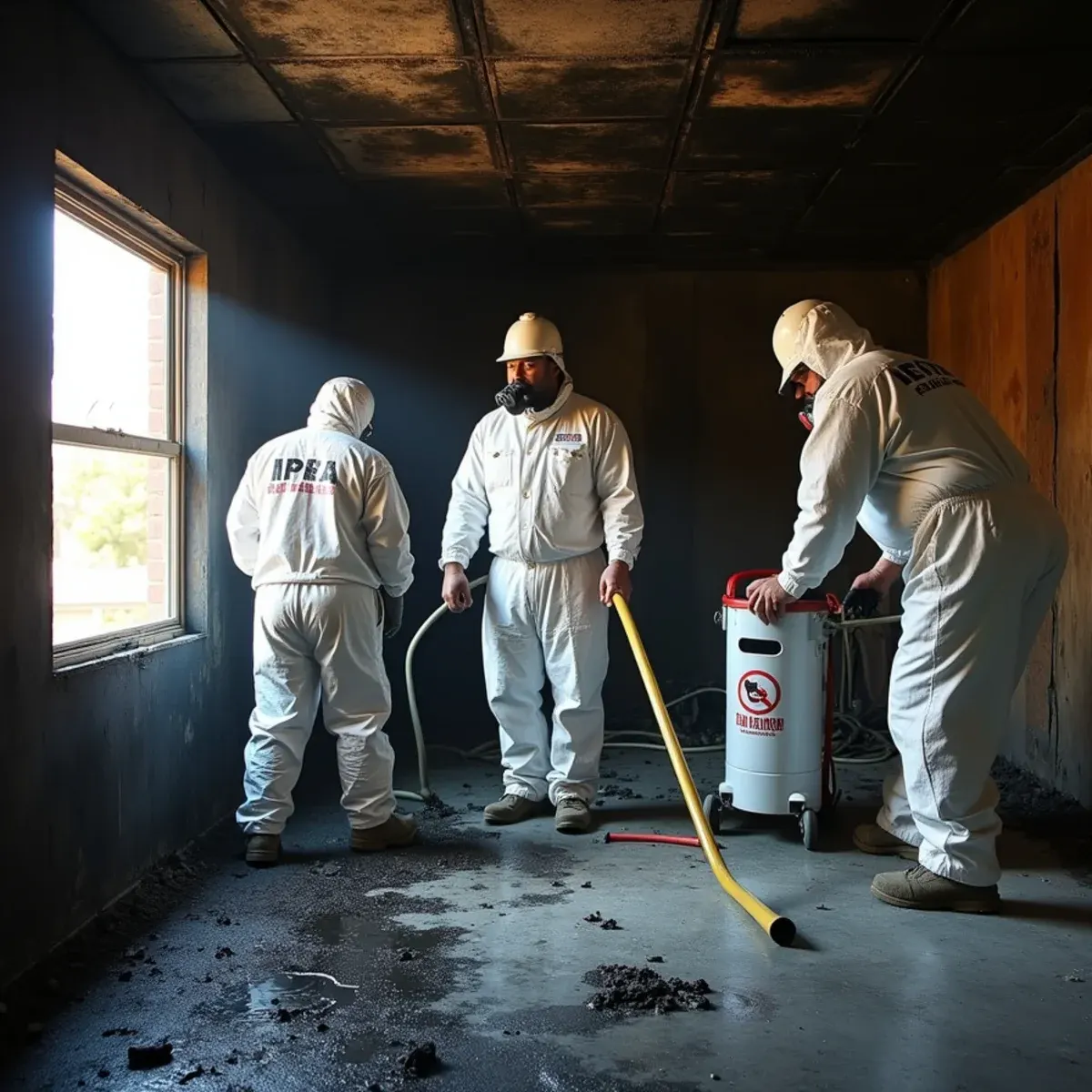
Bellflower houses sit close. The postwar build-out of the old dairy and orchard land put small homes on small lots, sometimes with barely a side yard between them, and that spacing decides what a fire does. The flame stays in one structure. Radiant heat melts the neighbor's siding, scorches eaves and cracks window glass. Smoke gets drawn into the house next door through soffit and gable vents. A good share of our Bellflower calls come from the people beside the fire rather than the people who had it.
The buildings themselves are eighty years old in places, older than most of what we work on across the county line. Original galvanized supply lines, cast iron waste and mid-century electrical are still in service through the Somerset and Mayfair areas. When a fire triggers a rebuild, the permit brings current code along with it, and homeowners are regularly surprised how far that reaches into a house that was never touched by flame. We would rather you hear that from us in week one than from a plan checker in week six.
What Bellflower Changes About Fire & Smoke Damage
1Exposure damage next door to the fire
Melted vinyl, blistered paint, scorched fascia, heat-cracked glazing and smoke in the attic are all damage even though nothing on your property burned. Adjusters treat it as a separate claim, and it gets missed constantly because the dramatic pictures are all next door. We inspect and document the exposed elevation, the attic on that side and the interior, so you have something concrete to submit.
2Apartment stacks along the boulevard
The multi-family added along Bellflower Boulevard and the Rosecrans corridor puts many households in one building, and a fire in a lower unit sends smoke up through stairwells and shared attic space. Displacement becomes the urgent problem, not cleaning. We sequence work so the least affected units are returned first and coordinate with management to keep families out of hotels longer than necessary.
3Rebuilding an eighty-year-old house
Once walls are open on a house of this vintage, what is behind them is original galvanized supply, cast iron waste and old branch wiring. Restoring a fire-damaged wall to its prior condition and bringing exposed systems to current code are two different scopes with two different funding sources. We flag that split at the estimate stage so it does not surprise you mid-project.
How the Work Runs
The method is the same one we use on every fire & smoke damage job, documented to the IICRC S500:2025 standard. Here it is in short — the full fire & smoke damage restoration process explains each stage in detail.
- Secure the structure
- Water extraction and drying first
- Assess residue type room by room
- Remove non-salvageable material and clean the rest
- Deodorize at the source
- Contents restoration and rebuild
The Bellflower Background Worth Knowing
Galvanized steel was the standard supply pipe when Bellflower was being built, and it fails from the inside out. The zinc lining wears through, the steel underneath corrodes, and scale builds on the interior wall until the pipe is a fraction of its original diameter. Narrower pipe means faster, more turbulent water, which chews at elbows and threaded fittings until one of them lets go. Hot lines corrode faster than cold, which is why hot water pressure is usually the first thing to drop. Eighty years is well past any service life anyone intended when this was installed.
There is more on the housing stock, drainage and plumbing history of this city on our water damage restoration in Bellflower page.
Bellflower at a glance
- Dominant construction era
- 1940–1960
- Foundation type
- slab on grade
- Supply piping found here
- original galvanized steel, early copper
- Drain line materials
- cast iron
- Terrain and water table
- flat, moderate water table
- Most common local failure
- original galvanized supply lines and cast-iron laterals failing together in the same decade
- Highest-value local prevention
- scoping the sewer lateral, which on a house this age has usually never been looked at
What It Costs in Bellflower
We do not quote a number over the phone before seeing the property — anyone who does is guessing. The variables that actually move the price on a fire & smoke damage job are extent of structural burn, how far the smoke traveled, residue type, and they are broken down in full on the fire & smoke damage restoration page. The assessment and the written estimate are free anywhere in Bellflower, day or night, with no obligation.
Fire & Smoke Damage Questions from Bellflower Homeowners
In most cases you file with your own carrier first, and they decide whether to pursue the neighbor's insurer afterward. Do not wait on that question to start documenting. Heat damage to siding and eaves, cracked glass and smoke residue in the attic are all recorded better within days than weeks later. We produce a standalone report for your property with photographs and surface testing so your claim stands on its own rather than riding along with the fire address.
Fire suppression uses enormous volumes of water in a short time — often thousands of gallons. That water saturates ceilings, insulation, walls, and floors well beyond the burned area, and it has to be extracted and dried like any other water loss, on top of the fire work.
Yes, when the residue is removed completely — including inside wall cavities, ductwork, attic insulation, and behind cabinetry. Odor that returns later always means residue was left somewhere. Masking agents and ozone alone do not solve it.
It is the most common gap we see here. A cast iron lateral that age has corroded along the bottom, the joints have shifted, and the parkway trees on most Bellflower streets have had seventy years to find them. A camera inspection costs a small fraction of a sewage remediation, and on a line that has never been scoped it usually finds something worth knowing about before it finds you at two in the morning.