
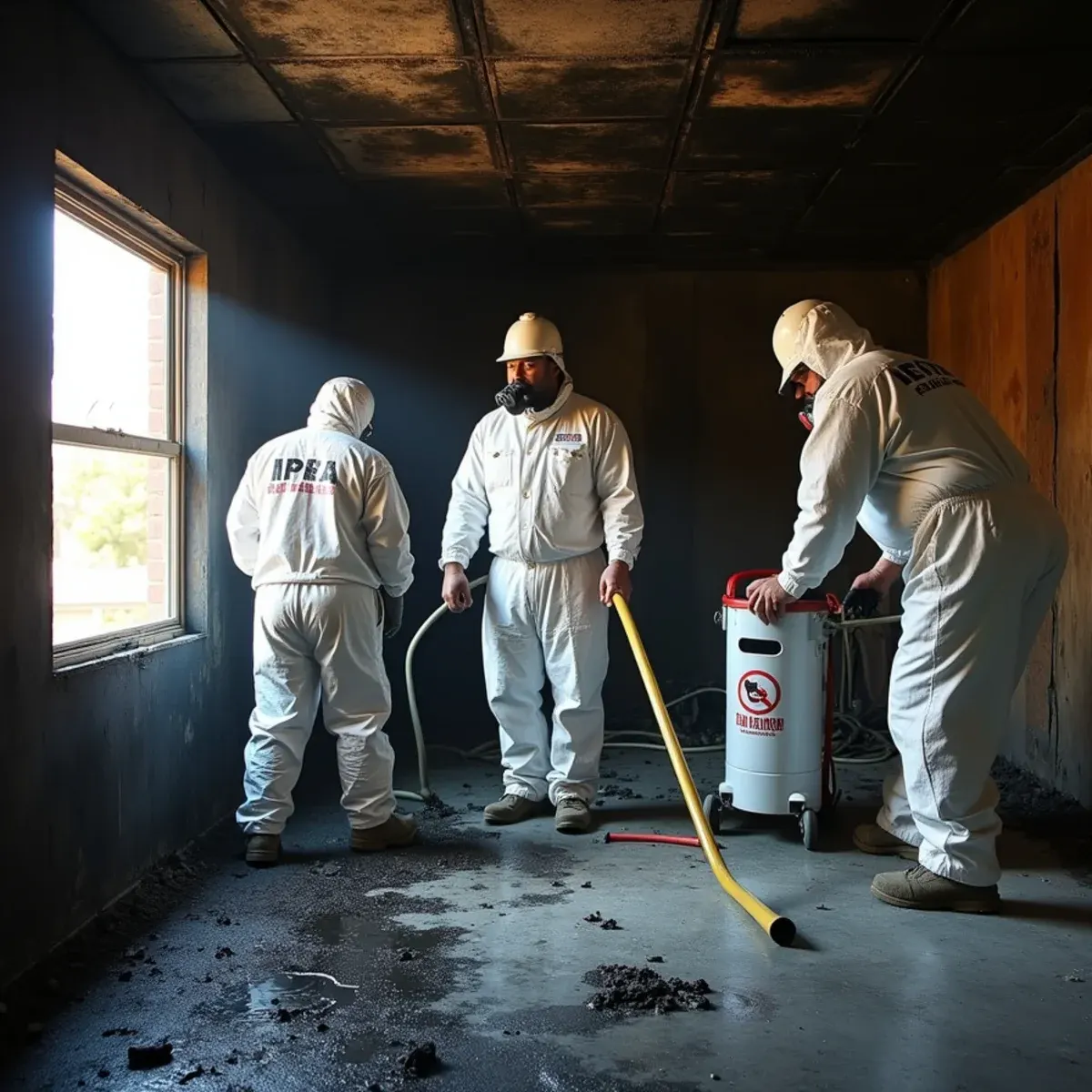
For a Pioneer Boulevard restaurant, the fire is the smaller of two problems. The bigger one is every day the doors stay shut. Little India runs on independent owners with no corporate reserve behind them, and a three-week closure can end a business that survived the fire itself just fine. So we sequence the work around reopening: kitchen and hood system first, health-department-critical surfaces next, dining room finishes after. We'll tell you honestly what can be phased and what can't, and we won't promise a reopening date we can't hold.
These are 1950s buildings that were never designed to hold commercial kitchens. Ventilation runs were added later, hoods vent through assemblies built as residential-scale roofs, and decades of grease have loaded both the duct and the cast-iron waste line underneath. That grease is fuel, and it's also what makes the smell come back — clean the visible kitchen and leave the hood run, and the odor returns the first hot service. Shared walls with the shop next door mean the neighbor usually needs looking at too.
What Artesia Changes About Fire & Smoke Damage
1The hood run holds the fuel and the odor
Decades of grease live in the hood, the duct and the roof penetration above a Pioneer Boulevard kitchen. That's what fed the fire, and it's what keeps releasing odor into the dining room after the visible cleaning is finished. Cleaning the kitchen and skipping the run is the most common reason a restaurant reopens and still smells like the fire.
2Shared walls in older commercial rows
These 1950s buildings put several tenancies under one roof with common attic space and shared walls that were never built for commercial kitchens. Smoke and suppression chemical cross into the shop next door routinely. The neighbor's loss is usually real even when it looks like nothing, and it's better identified on night one than argued about weeks later.
3Homes behind and above the shops
Artesia's modest postwar houses and older multi-family sit right up against the commercial strip. A restaurant fire can put smoke into residences that have no connection to the business, and those residents are often renters whose contents aren't covered by anyone else's policy. We document those separately rather than folding them into the commercial claim.
How the Work Runs
The method is the same one we use on every fire & smoke damage job, documented to the IICRC S500:2025 standard. Here it is in short — the full fire & smoke damage restoration process explains each stage in detail.
- Secure the structure
- Water extraction and drying first
- Assess residue type room by room
- Remove non-salvageable material and clean the rest
- Deodorize at the source
- Contents restoration and rebuild
The Artesia Background Worth Knowing
A commercial kitchen is one of the hardest things you can ask a building to accommodate. High water use, continuous drainage, grease loading, floor drains, and equipment connections that get added and modified over the years. When that kitchen is in a building from the 1950s with original cast-iron waste lines, the failure is a matter of time.
There is more on the housing stock, drainage and plumbing history of this city on our water damage restoration in Artesia page.
Artesia at a glance
- Dominant construction era
- 1950–1970
- Foundation type
- slab on grade
- Supply piping found here
- galvanized steel, copper
- Drain line materials
- cast iron
- Terrain and water table
- flat, moderate water table
- Most common local failure
- grease-loaded cast-iron waste lines restricting until a commercial kitchen backs up
- Highest-value local prevention
- hydro-jetting the waste line rather than snaking it, so the pipe wall actually gets cleaned
What It Costs in Artesia
We do not quote a number over the phone before seeing the property — anyone who does is guessing. The variables that actually move the price on a fire & smoke damage job are extent of structural burn, how far the smoke traveled, residue type, and they are broken down in full on the fire & smoke damage restoration page. The assessment and the written estimate are free anywhere in Artesia, day or night, with no obligation.
Fire & Smoke Damage Questions from Artesia Homeowners
Sometimes, and it's worth asking rather than assuming. It depends on where the fire was, whether containment can separate the areas, and what the health department will accept — that last part isn't ours to decide. What we can do is sequence for reopening: suppression chemical off the equipment first, then the hood and duct run, then food-contact surfaces, then dining finishes. We'll give you an honest read on what can be phased on Pioneer.
Fire suppression uses enormous volumes of water in a short time — often thousands of gallons. That water saturates ceilings, insulation, walls, and floors well beyond the burned area, and it has to be extracted and dried like any other water loss, on top of the fire work.
Yes, when the residue is removed completely — including inside wall cavities, ductwork, attic insulation, and behind cabinetry. Odor that returns later always means residue was left somewhere. Masking agents and ozone alone do not solve it.
Yes, and on Pioneer Boulevard that is usually how we schedule it. Overnight crews cost somewhat more in labor and almost always cost dramatically less than lost revenue from closing during operating hours.