
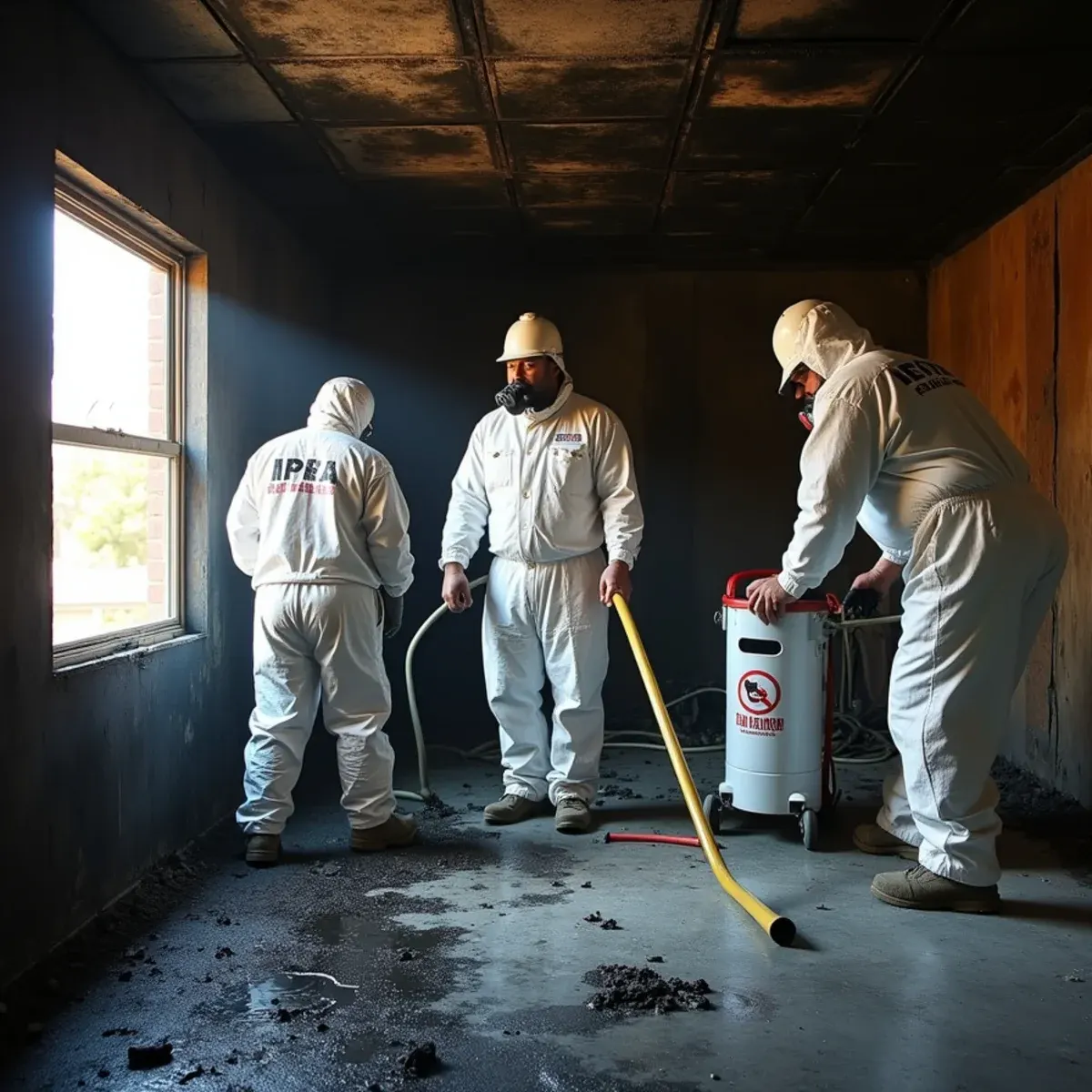
Norwalk went from farmland to a full city between about 1945 and 1960, and the homes went up fast, modestly, and close together on small lots. That spacing matters after a fire. Radiant heat scorches the neighbor's siding and eaves, smoke pushes into their attic vents, and two or three households end up with damage from one incident. We've had calls from people who never had a flame on their property and still needed the attic insulation taken out. If the house next door burned, get yours looked at rather than assuming you're clear.
Inside, these houses are still running seventy-year-old original systems in many cases — galvanized supply lines that are scaled and thin, cast iron waste lines, and wiring that was never meant to sit under soot. Galvanized that's already near the end tends to let go when a room gets hot, so water keeps arriving after the fire is out. Outside, the San Gabriel River channel on the west edge carries a big share of regional runoff and those neighborhoods saturate quickly, and a small lot leaves almost no ground to absorb suppression water.
What Norwalk Changes About Fire & Smoke Damage
1A neighbor's fire reaches your attic
Small lots put these houses close together, so radiant heat and smoke from a fire next door get into your eaves, attic vents and siding without a flame ever touching your property. Insulation absorbs the odor and gives it back on warm days. If the house beside yours burned, have your attic checked instead of waiting to see whether the smell fades.
2Original galvanized fails when it gets hot
A lot of Norwalk homes still run their 1940s and 50s galvanized supply lines, already scaled thin and eroded at the fittings. Heat pushes them over the edge, and water keeps feeding the structure after the fire is knocked down. Knowing where your main shutoff is, and that it still turns, changes the eventual size of the loss.
3Soot on original panels and wiring
Seventy-year-old service panels and branch circuits were never meant to sit under acidic residue, which is conductive when it's damp and corrosive as it dries. Nothing gets re-energized in a fire-damaged Norwalk house until an electrician has looked at the panel and the affected circuits. We'd rather tell you that on night one than have you find out later.
How the Work Runs
The method is the same one we use on every fire & smoke damage job, documented to the IICRC S500:2025 standard. Here it is in short — the full fire & smoke damage restoration process explains each stage in detail.
- Secure the structure
- Water extraction and drying first
- Assess residue type room by room
- Remove non-salvageable material and clean the rest
- Deodorize at the source
- Contents restoration and rebuild
The Norwalk Background Worth Knowing
The homes built in Norwalk during the postwar surge were built to be affordable and built fast, which was exactly the right priority at the time. Seventy years later, some of those choices have consequences.
There is more on the housing stock, drainage and plumbing history of this city on our water damage restoration in Norwalk page.
Norwalk at a glance
- Dominant construction era
- 1945–1960
- Foundation type
- slab on grade
- Supply piping found here
- original galvanized steel
- Drain line materials
- cast iron
- Terrain and water table
- flat, moderate water table
- Most common local failure
- original galvanized supply lines failing after decades of internal scaling and erosion at fittings
- Highest-value local prevention
- clearing yard and area drains before the season, since small lots leave little ground between the street and the house
What It Costs in Norwalk
We do not quote a number over the phone before seeing the property — anyone who does is guessing. The variables that actually move the price on a fire & smoke damage job are extent of structural burn, how far the smoke traveled, residue type, and they are broken down in full on the fire & smoke damage restoration page. The assessment and the written estimate are free anywhere in Norwalk, day or night, with no obligation.
Fire & Smoke Damage Questions from Norwalk Homeowners
Yes. On Norwalk's small lots the houses sit close enough that heat and smoke get into your eaves and attic vents without a flame touching your property. Blown insulation absorbs the odor and releases it on warm days, and it can't be cleaned in place. An inspection tells you whether it's surface odor that will clear or residue in the insulation that has to come out. It's a much cheaper question to answer now.
Fire suppression uses enormous volumes of water in a short time — often thousands of gallons. That water saturates ceilings, insulation, walls, and floors well beyond the burned area, and it has to be extracted and dried like any other water loss, on top of the fire work.
Yes, when the residue is removed completely — including inside wall cavities, ductwork, attic insulation, and behind cabinetry. Odor that returns later always means residue was left somewhere. Masking agents and ozone alone do not solve it.
If it is original galvanized from the postwar build-out, it has exceeded any reasonable service life. If you have had one failure, a second is a matter of when. The cheapest moment to repipe is while walls are already open for a repair — the demolition and patching are already in the scope.