
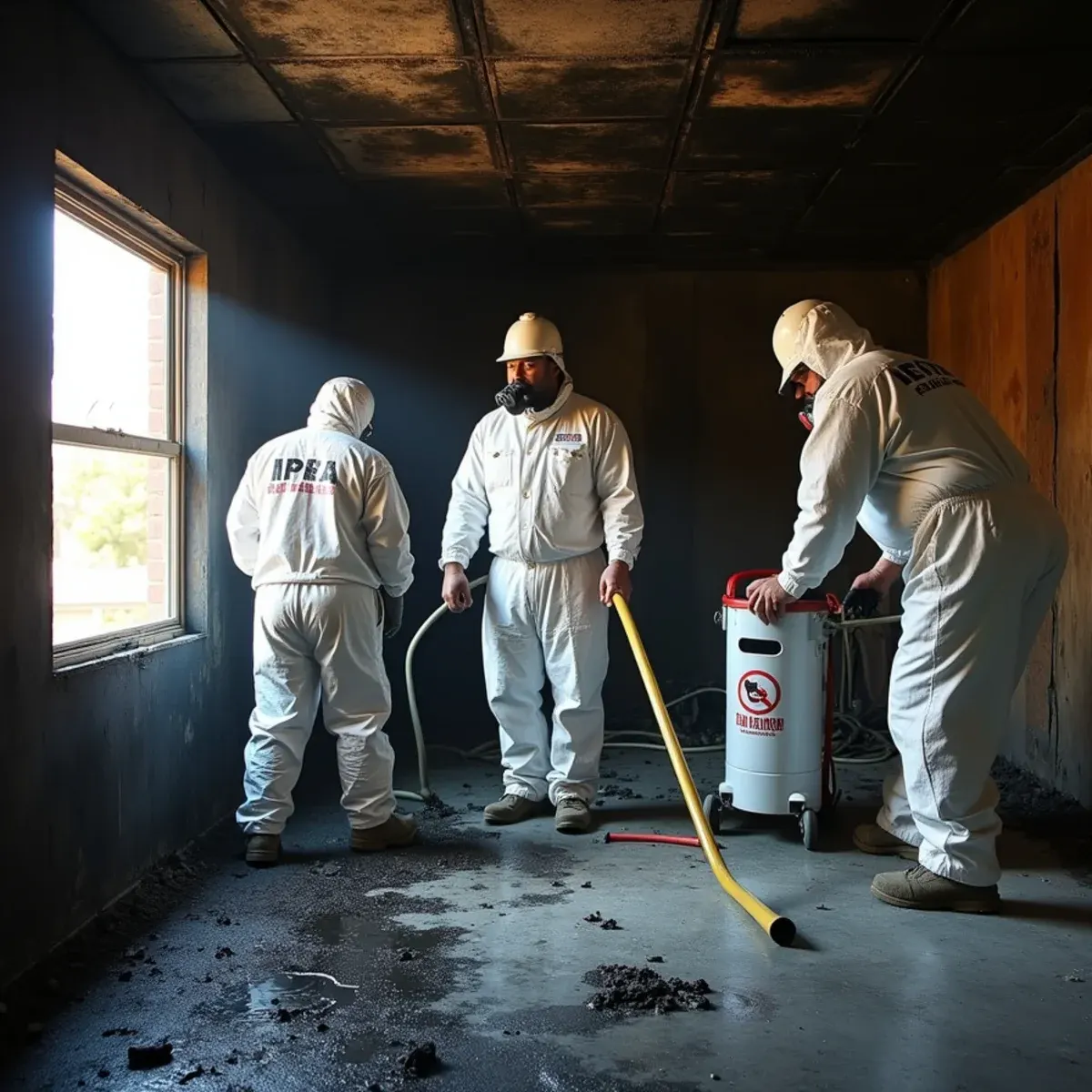
A manufactured home is not just a small house, and treating it like one after a fire wastes everybody's time. Carson has an unusually large mobile home park population, and those coaches are built from vinyl-faced gypsum panels, particleboard decking and a belly wrap beneath the floor, all porous materials that absorb odor and hold suppression water where you cannot see it. Coaches also sit only feet apart. Heat damage to the units on either side is routine, and park management, not the homeowner, controls the pedestal, the shutoffs and site access.
The conventional side of the city, the 1950s to 1970s slab tract through Scottsdale, Carson Park and Victoria, is ordinary residential fire work made harder by a shallow water table that slows drying and by refinery and logistics industry immediately adjacent. When something industrial burns nearby, homes downwind take on residue whose chemistry depends entirely on what was in the building or the tank. We identify what we are cleaning before anyone starts scrubbing, because the wrong method on the wrong residue sets it into the finish permanently.
What Carson Changes About Fire & Smoke Damage
1Belly wrap traps water under the floor
The plastic membrane under a manufactured home holds suppression water against the particleboard decking and the insulation, and none of it shows from inside. Left alone it stays wet for months and the floor goes soft. We open and drain the belly, dry from underneath and verify with meters. Any soft spot in the floor gets treated as moisture until an instrument proves otherwise.
2Coach spacing and neighbor exposure
Spacing in the parks is tight enough that radiant heat warps siding, melts skirting and windows and damages awnings on both neighboring coaches. Those owners have real losses and are often told they do not. We document each affected coach on its own, and we work with park management on utility shutoffs and access, since the site rules govern what we can stage and where.
3Refinery and industrial neighbors
With refineries and logistics operations immediately adjacent to housing, a nearby industrial fire can deposit residue on homes that is nothing like household soot. Cleaning it with ordinary methods can smear it or set it. Where the source is unclear, we test before we treat, use appropriate protection, and tell you honestly which porous materials are better removed than cleaned.
How the Work Runs
The method is the same one we use on every fire & smoke damage job, documented to the IICRC S500:2025 standard. Here it is in short — the full fire & smoke damage restoration process explains each stage in detail.
- Secure the structure
- Water extraction and drying first
- Assess residue type room by room
- Remove non-salvageable material and clean the rest
- Deodorize at the source
- Contents restoration and rebuild
The Carson Background Worth Knowing
Manufactured homes are built with the floor deck, usually particleboard or OSB, sitting on a steel frame, with batt insulation below it and a vapor barrier belly wrap stapled underneath to hold everything in place. Supply lines run through that cavity. When one leaks, the water does not run out onto the ground where you would see it. The belly wrap catches and holds it, the insulation soaks it up, and you now have a sealed reservoir under your floor with no path to evaporate. It can sit there for months before anything shows upstairs.
There is more on the housing stock, drainage and plumbing history of this city on our water damage restoration in Carson page.
Carson at a glance
- Dominant construction era
- 1950–1975
- Foundation type
- slab on grade
- Supply piping found here
- galvanized steel, under-slab copper, manufactured-home supply lines
- Drain line materials
- cast iron
- Terrain and water table
- flat, shallow water table
- Most common local failure
- manufactured-home underfloor leaks trapped in the belly wrap, alongside conventional 1960s slab failures
- Highest-value local prevention
- treating any soft spot in a manufactured-home floor as moisture until a meter proves otherwise
What It Costs in Carson
We do not quote a number over the phone before seeing the property — anyone who does is guessing. The variables that actually move the price on a fire & smoke damage job are extent of structural burn, how far the smoke traveled, residue type, and they are broken down in full on the fire & smoke damage restoration page. The assessment and the written estimate are free anywhere in Carson, day or night, with no obligation.
Fire & Smoke Damage Questions from Carson Homeowners
Both happen, and the deciding factors are how much of the interior is porous and how much water went into the floor system. Hard surfaces, cabinets and framing often clean up well. Vinyl-faced panels, carpet and the belly insulation absorb odor and frequently need replacing. We give you an honest scope with those items separated so you and your adjuster can see where the cost sits, rather than pushing a full cleaning that will not hold up.
Fire suppression uses enormous volumes of water in a short time — often thousands of gallons. That water saturates ceilings, insulation, walls, and floors well beyond the burned area, and it has to be extracted and dried like any other water loss, on top of the fire work.
Yes, when the residue is removed completely — including inside wall cavities, ductwork, attic insulation, and behind cabinetry. Odor that returns later always means residue was left somewhere. Masking agents and ozone alone do not solve it.
By locating it rather than arguing about it. The dividing line is the connection point where the park's service meets your home. Upstream of that is the park's responsibility, downstream is yours. We open the belly wrap where water is pooling, trace the wet path back to its source, and photograph what we find with the connection in frame. That documentation settles the question. Guessing from where the wet spot showed up inside is unreliable, because water travels along the frame first.