
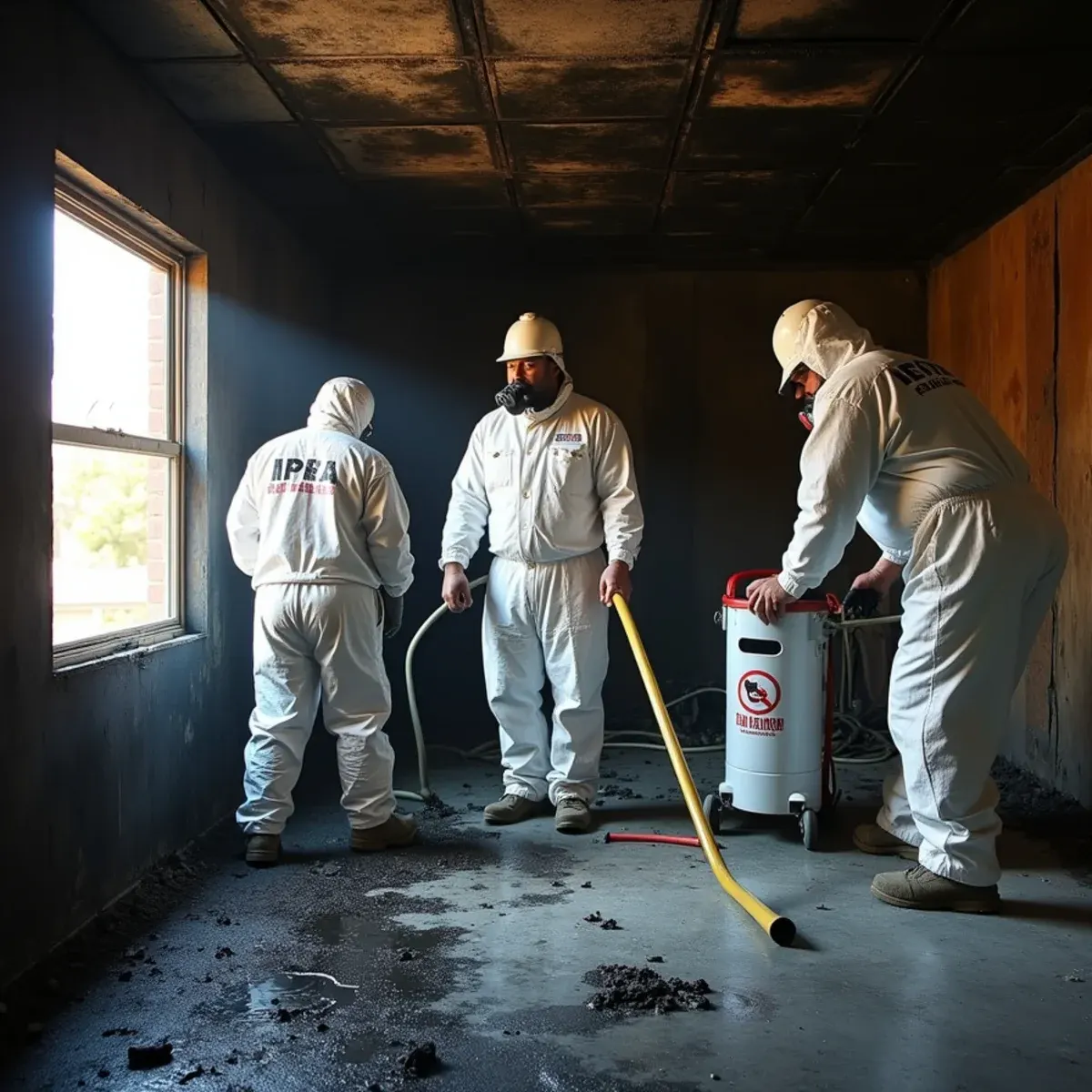
Before anyone cuts anything in a Long Beach house, we work out what it's made of. This city covers more construction history than anywhere else we serve, and the correct fire and smoke approach flips completely between neighborhoods. A 1926 Craftsman in Bluff Park or California Heights is lath and plaster over old-growth framing — smoke gets into the key cavity behind the lath, plaster holds several times the water drywall does, and fast drying is what saves it. A 1955 house in Los Altos is drywall, and drywall that wet gets removed.
Then there's access and ground. Naples sits on filled land with canal water right there and a shallow table, so drying runs long. Belmont Shore lots are narrow with almost no street parking, so equipment staging gets planned before the truck leaves rather than on arrival. East Long Beach near the Cypress border — El Dorado Park Estates, Los Altos — is slab-on-grade tract built in the same era as our home city and draining toward the San Gabriel River, so it behaves almost exactly like the work we do a few blocks away every day.
What Long Beach Changes About Fire & Smoke Damage
1Identify the wall before opening it
Lath and plaster and drywall respond to fire and water in opposite ways, and this city has both on adjacent streets. Plaster gets dried hard and fast and usually gets kept; saturated drywall gets removed. Guessing wrong in either direction costs money — a gutted 1926 wall you could have saved, or a plaster wall left wet until the keys fail.
2Belmont Shore and Naples access problems
Belmont Shore lots are narrow with almost no street parking, and Naples sits on filled land ringed by canals with a shallow water table. One is a staging problem and the other is a drying-time problem. We plan for both before arrival, because working either out on the curb at midnight costs hours you don't have on a fire loss.
3East Long Beach behaves like our home city
El Dorado Park Estates and Los Altos are slab-on-grade tract from the same era as Cypress, draining toward the San Gabriel River. The construction, the duct layouts and the way suppression water moves are all familiar to us from work a few blocks over. It's the part of Long Beach where we need the fewest assumptions checked.
How the Work Runs
The method is the same one we use on every fire & smoke damage job, documented to the IICRC S500:2025 standard. Here it is in short — the full fire & smoke damage restoration process explains each stage in detail.
- Secure the structure
- Water extraction and drying first
- Assess residue type room by room
- Remove non-salvageable material and clean the rest
- Deodorize at the source
- Contents restoration and rebuild
The Long Beach Background Worth Knowing
The postwar tracts around El Dorado Park, Los Altos, and the neighborhoods near the Cypress border were built in the same era and largely the same way as the housing in our home city. Single-story slab construction, plumbing routed under the concrete, and a fifty-to-seventy-year age on the supply lines.
There is more on the housing stock, drainage and plumbing history of this city on our water damage restoration in Long Beach page.
Long Beach at a glance
- Dominant construction era
- 1920–1980
- Foundation type
- mixed on grade
- Supply piping found here
- original 1920s piping, galvanized steel, under-slab copper
- Drain line materials
- cast iron, clay
- Terrain and water table
- coastal-flat, shallow water table
- Most common local failure
- the approach changing entirely by neighborhood — a 1926 plaster wall and a 1955 drywall wall are different restoration problems
- Highest-value local prevention
- identifying the construction type before anyone starts cutting
What It Costs in Long Beach
We do not quote a number over the phone before seeing the property — anyone who does is guessing. The variables that actually move the price on a fire & smoke damage job are extent of structural burn, how far the smoke traveled, residue type, and they are broken down in full on the fire & smoke damage restoration page. The assessment and the written estimate are free anywhere in Long Beach, day or night, with no obligation.
Fire & Smoke Damage Questions from Long Beach Homeowners
No, and that's the point of identifying construction before anyone cuts. Your neighbor's drywall was saturated, and saturated drywall gets removed. Plaster is a different material — it holds far more water, gives it up slowly, and can usually be saved if drying starts fast and hard. What can't be saved is plaster left wet until the keys behind the lath soften and release. So the urgency is higher and the demolition is lower.
Fire suppression uses enormous volumes of water in a short time — often thousands of gallons. That water saturates ceilings, insulation, walls, and floors well beyond the burned area, and it has to be extracted and dried like any other water loss, on top of the fire work.
Yes, when the residue is removed completely — including inside wall cavities, ductwork, attic insulation, and behind cabinetry. Odor that returns later always means residue was left somewhere. Masking agents and ozone alone do not solve it.
All of it, with the fastest response to East Long Beach — El Dorado Park Estates, Los Altos, and the neighborhoods near the Cypress border, which are typically twenty to twenty-five minutes. Coastal and downtown areas run a little longer, and we will give you a realistic ETA when you call.