
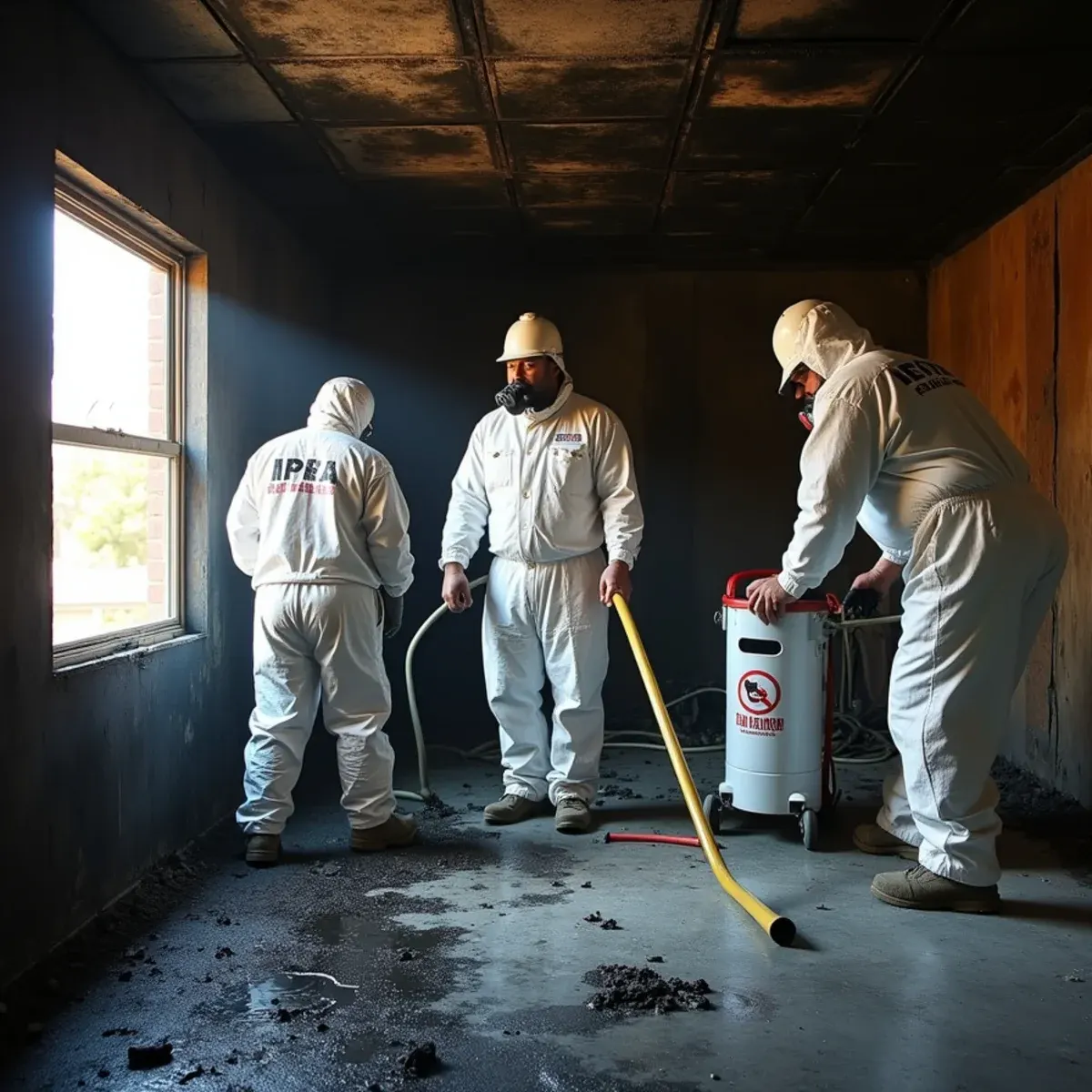
A fire in Leisure World is never one household's problem. The units are attached, built in the early 1960s, and they share walls, attic space and a management structure — so within an hour you have several residents displaced, a mutual, a management company and more than one insurance policy involved. Smoke crosses into neighboring units that never saw a flame, and older residents are often the last to notice odor at low concentrations. We document each unit separately from the first hour, because that's what keeps the claims from turning into an argument later.
The rest of the city is different again. Old Town lots off Main Street are dense and narrow, with houses close enough that a neighbor's fire puts smoke and radiant heat on your siding, and equipment has to be staged on the street. And everywhere within a mile of the pier, the marine layer keeps ambient humidity high for long stretches. That matters after a fire in a way people don't expect: humid air pulls the odor back out of residue that was never fully removed. Drying and deodorizing both take longer here.
What Seal Beach Changes About Fire & Smoke Damage
1Attached units create parallel claims immediately
A Leisure World fire involves the resident, the neighbors on both sides, the mutual, the management company and several policies at once. If your unit isn't documented separately in the first hours, it tends to get folded into someone else's claim and the details that matter to you go missing. We document unit by unit from the very start.
2Marine humidity brings the odor back
Ambient humidity stays high here for long stretches, and humid air pulls smoke odor back out of any residue that wasn't fully removed. A home can read and smell clean in dry weather and then turn again when the marine layer settles in. That's a cleaning problem, not a deodorizing problem, and sealing over it only delays the day you deal with it.
3Salt and soot corrode together near the pier
Within about a mile of the water, exterior flashings, fasteners and hardware are already working against salt. Add acidic soot and corrosion moves in days rather than weeks — on hinges, appliance finishes, fixture plating and anything chrome. Metal cleaning gets prioritized early on Old Town losses rather than left to the end of the schedule.
How the Work Runs
The method is the same one we use on every fire & smoke damage job, documented to the IICRC S500:2025 standard. Here it is in short — the full fire & smoke damage restoration process explains each stage in detail.
- Secure the structure
- Water extraction and drying first
- Assess residue type room by room
- Remove non-salvageable material and clean the rest
- Deodorize at the source
- Contents restoration and rebuild
The Seal Beach Background Worth Knowing
Structural drying works by creating a vapor pressure differential — dry air pulls moisture out of wet materials. When the surrounding air is already carrying a heavy moisture load, that differential shrinks and everything slows down.
There is more on the housing stock, drainage and plumbing history of this city on our water damage restoration in Seal Beach page.
Seal Beach at a glance
- Dominant construction era
- 1920–1965
- Foundation type
- mixed on grade
- Supply piping found here
- galvanized steel, copper, shared community mains
- Drain line materials
- cast iron, clay
- Terrain and water table
- coastal-flat, shallow water table
- Most common local failure
- losses that cross shared walls between attached units, involving several policies and a mutual at once
- Highest-value local prevention
- documenting each affected unit separately from the first hour
What It Costs in Seal Beach
We do not quote a number over the phone before seeing the property — anyone who does is guessing. The variables that actually move the price on a fire & smoke damage job are extent of structural burn, how far the smoke traveled, residue type, and they are broken down in full on the fire & smoke damage restoration page. The assessment and the written estimate are free anywhere in Seal Beach, day or night, with no obligation.
Fire & Smoke Damage Questions from Seal Beach Homeowners
That depends on your mutual's documents and the policies involved, and we won't guess at it for you. What we can do is make sure your unit is documented as its own loss from the first visit, with its own photographs, readings and scope, rather than being folded into the neighbor's claim. That documentation is what the mutual, the management company and the carriers all end up working from. Get it created early — it's much harder to reconstruct a week later.
Fire suppression uses enormous volumes of water in a short time — often thousands of gallons. That water saturates ceilings, insulation, walls, and floors well beyond the burned area, and it has to be extracted and dried like any other water loss, on top of the fire work.
Yes, when the residue is removed completely — including inside wall cavities, ductwork, attic insulation, and behind cabinetry. Odor that returns later always means residue was left somewhere. Masking agents and ozone alone do not solve it.
Coastal marine layer conditions keep ambient humidity high for extended periods, which reduces the vapor pressure differential that drives drying. Jobs near the water need sealed chambers and more dehumidification capacity than an equivalent loss inland, and the equipment stays on longer.