
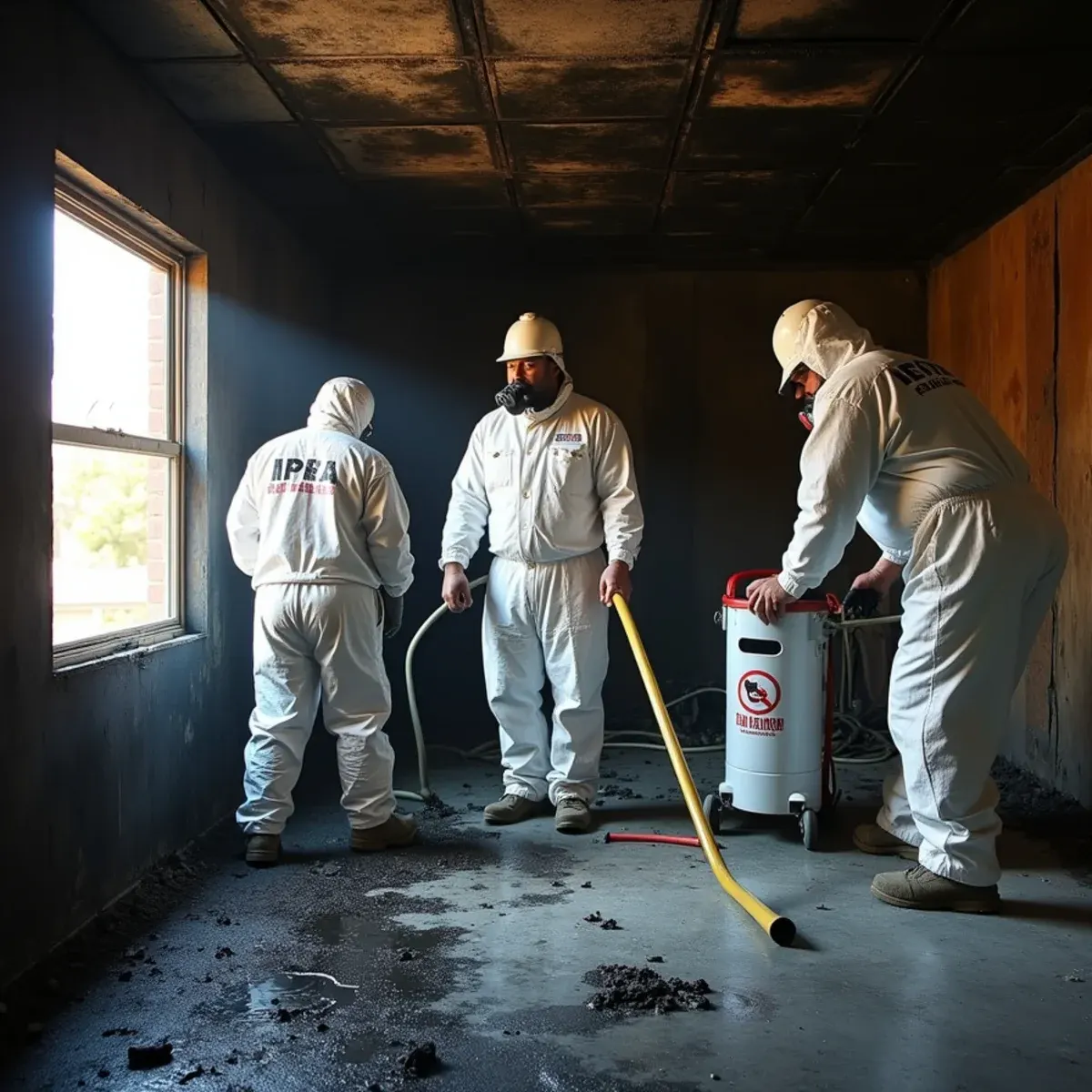
Fire calls in Los Alamitos split about evenly between houses and businesses, which is unusual for a city this small. The Katella corridor and the blocks around Los Alamitos Medical Center are full of medical suites, dental offices, labs and small commercial tenants sharing demising walls and a common attic or ceiling plenum. When one suite burns, the suites beside it usually get the smoke — sensitive equipment, patient records, ceiling tile that holds odor like a sponge. Sorting out whose loss is whose starts on the first walkthrough, not at the end.
On the residential side, the housing here runs a full construction generation older than the tracts around it, and the foundations are mixed. That matters more after a fire than most people expect. On a raised floor, thousands of gallons of suppression water drop straight into the crawl space and sit under the joists, carrying soot with them. On a slab, the same water spreads sideways beneath the flooring instead. We look under the house before we plan the drying, because guessing wrong costs you the whole floor system.
What Los Alamitos Changes About Fire & Smoke Damage
1Commercial tenants share more than a wall
Medical suites, dental offices and small commercial spaces along Katella often share a demising wall, a common attic or a ceiling plenum with the tenant next door. Smoke moves through all three. We document each tenancy separately from the start, because one building fire usually becomes several policies, several deductibles and several very different conversations about what was actually damaged.
2Mixed foundations decide the drying plan
Houses here sit on both slabs and raised floors, sometimes on the same street. On a raised floor, suppression water drops into the crawl space and sits under the joists, out of sight and out of airflow. On a slab it spreads laterally beneath the flooring. We look before we plan, because the equipment layout and the drying targets under IICRC S500:2025 are not the same for the two.
3After-hours work in occupied buildings
A medical office or a lab can't have technicians and air scrubbers in the corridor during patient hours, and a fire in one suite doesn't shut the whole building down. We schedule containment, cleaning and equipment moves around your operating hours wherever the work allows it, and we'll say plainly when a phase has to happen during the day instead.
How the Work Runs
The method is the same one we use on every fire & smoke damage job, documented to the IICRC S500:2025 standard. Here it is in short — the full fire & smoke damage restoration process explains each stage in detail.
- Secure the structure
- Water extraction and drying first
- Assess residue type room by room
- Remove non-salvageable material and clean the rest
- Deodorize at the source
- Contents restoration and rebuild
The Los Alamitos Background Worth Knowing
When a home has been standing since 1958, the plumbing question is not whether something will fail but which thing already has. We routinely find three generations of repair inside a single Los Alamitos wall: original galvanized, a copper section from a 1980s repair, and a PEX patch from last decade, all joined with whatever transition fitting was on the truck that day.
There is more on the housing stock, drainage and plumbing history of this city on our water damage restoration in Los Alamitos page.
Los Alamitos at a glance
- Dominant construction era
- 1950–1965
- Foundation type
- mixed on grade
- Supply piping found here
- galvanized steel, early copper, mixed-metal repair joints
- Drain line materials
- cast iron, clay
- Terrain and water table
- flat, moderate water table
- Most common local failure
- galvanic corrosion at mixed-metal joints where sixty years of piecemeal repairs meet
- Highest-value local prevention
- a camera inspection of the sewer lateral, which has never been scoped on most homes here
What It Costs in Los Alamitos
We do not quote a number over the phone before seeing the property — anyone who does is guessing. The variables that actually move the price on a fire & smoke damage job are extent of structural burn, how far the smoke traveled, residue type, and they are broken down in full on the fire & smoke damage restoration page. The assessment and the written estimate are free anywhere in Los Alamitos, day or night, with no obligation.
Fire & Smoke Damage Questions from Los Alamitos Homeowners
Almost certainly yes, at least an inspection. Suites along that corridor usually share a demising wall, an attic or a ceiling plenum, and smoke moves through all three. Soot is acidic, so instrument finishes, equipment housings and electrical contacts start corroding within days even at concentrations you can barely smell. Ceiling tile and carpet hold odor indefinitely. We'll test and document your suite as its own loss, separate from the building's claim, so your policy conversation stays yours.
Fire suppression uses enormous volumes of water in a short time — often thousands of gallons. That water saturates ceilings, insulation, walls, and floors well beyond the burned area, and it has to be extracted and dried like any other water loss, on top of the fire work.
Yes, when the residue is removed completely — including inside wall cavities, ductwork, attic insulation, and behind cabinetry. Odor that returns later always means residue was left somewhere. Masking agents and ozone alone do not solve it.
Usually fifteen to twenty-five minutes — Los Alamitos is our closest neighbor, straight east on Katella from where our trucks stage. The 60-minute response commitment applies here the same as in Cypress.