
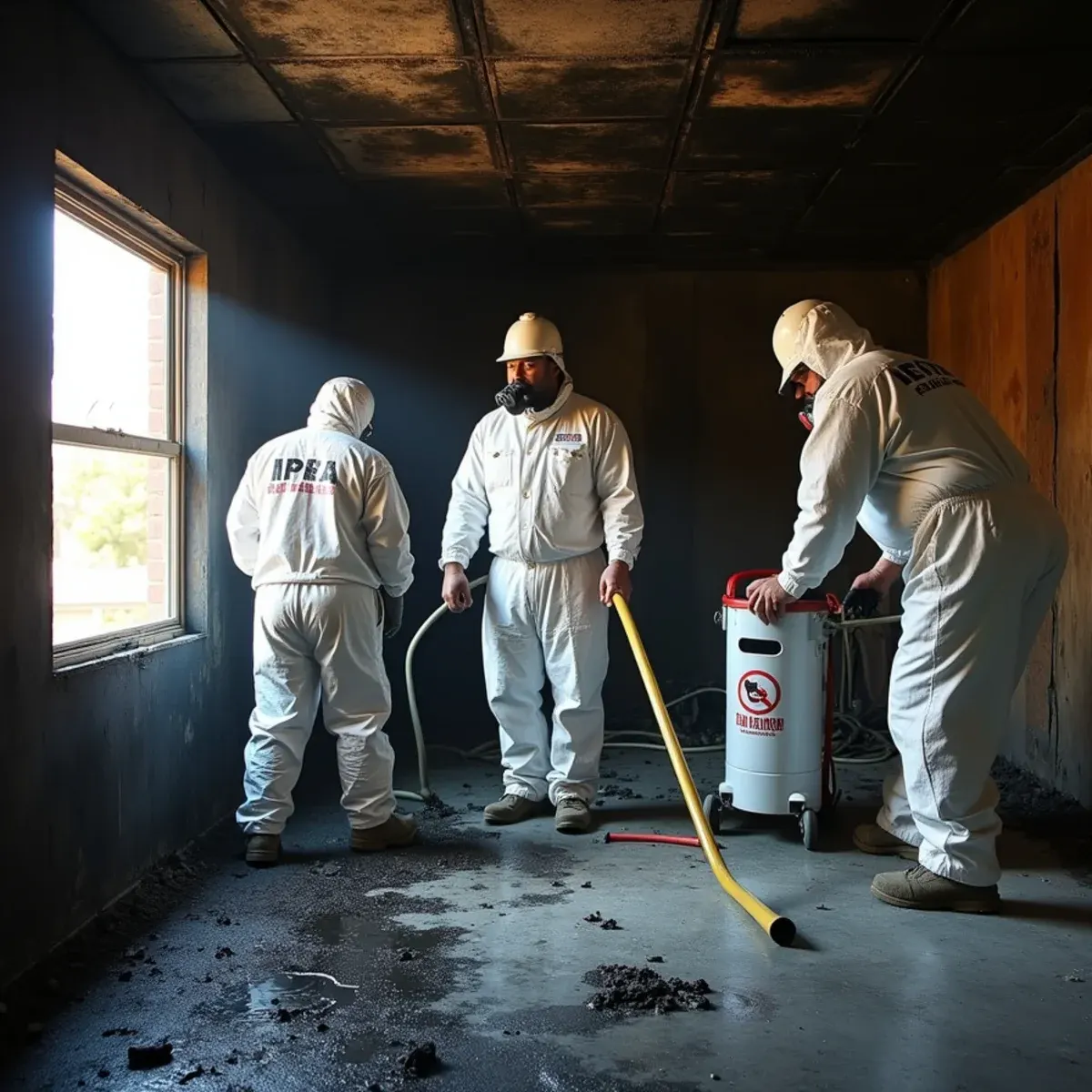
The room that burned is rarely the biggest problem in a Rossmoor house. These are single-story ranches on a slab, built by Ross Cortese in about four years to a handful of plans, and the attic runs uninterrupted over the entire footprint. Smoke that leaves a kitchen or a garage doesn't stay in that room — it goes up into a low, open attic and spreads across the whole house, into blown insulation, over the top plates and back down into rooms two doors away from the fire.
The second thing worth knowing is what's under your carpet. Many of these homes still have their original oak strip flooring, covered decades ago and forgotten about. It's worth saving, and after a fire it's usually the suppression water rather than the flames that decides whether you keep it. Oak over a slab has nowhere to release moisture downward, so it cups fast. On streets like Montecito Road, where the houses came out of the same plan book, we know where the wet spots will be before we pull anything up.
What Rossmoor Changes About Fire & Smoke Damage
1One open attic over the whole house
These ranches have a low-pitch roof framed across the full footprint with nothing to stop smoke crossing it. Residue from a kitchen or garage fire ends up over bedrooms at the far end of the house, in the blown insulation and on the top plates. Cleaning the room that burned and leaving the attic alone is the most common reason odor comes back here.
2Original oak flooring under later carpet
A lot of these homes still have their 1950s oak strip flooring hidden under carpet. It is worth saving and it is also the most water-sensitive thing in the house. Oak laid over a slab can only dry upward, so it cups quickly once suppression water gets under the pad. We pull carpet early and get air under the wood rather than waiting.
3Attic ductwork feeds soot to every room
Because these are single-story homes on slabs, the ducts run through the attic — the same attic the smoke just filled. Turn the system on to clear the air and you push residue into rooms that were clean. We seal the registers before anything else, and the duct run gets cleaned before the system comes back into service.
How the Work Runs
The method is the same one we use on every fire & smoke damage job, documented to the IICRC S500:2025 standard. Here it is in short — the full fire & smoke damage restoration process explains each stage in detail.
- Secure the structure
- Water extraction and drying first
- Assess residue type room by room
- Remove non-salvageable material and clean the rest
- Deodorize at the source
- Contents restoration and rebuild
The Rossmoor Background Worth Knowing
Plumbing failure is largely a function of time, water chemistry, and installation method — and in Rossmoor all three are effectively identical from house to house. That is why leak calls here tend to arrive in clusters, and why a neighbor's slab leak is genuinely relevant information about your own home.
There is more on the housing stock, drainage and plumbing history of this city on our water damage restoration in Rossmoor page.
Rossmoor at a glance
- Dominant construction era
- 1957–1961
- Foundation type
- slab on grade
- Supply piping found here
- under-slab copper, some galvanized
- Drain line materials
- cast iron
- Terrain and water table
- flat, moderate water table
- Most common local failure
- clustered slab leaks, where one failure on a street reliably predicts the neighbors
- Highest-value local prevention
- treating a neighbor's slab leak as information about your own house and running the meter test
What It Costs in Rossmoor
We do not quote a number over the phone before seeing the property — anyone who does is guessing. The variables that actually move the price on a fire & smoke damage job are extent of structural burn, how far the smoke traveled, residue type, and they are broken down in full on the fire & smoke damage restoration page. The assessment and the written estimate are free anywhere in Rossmoor, day or night, with no obligation.
Fire & Smoke Damage Questions from Rossmoor Homeowners
There is. These are single-story ranches built to a handful of plans, with a low attic running uninterrupted over the whole footprint and the ductwork sitting inside it. Smoke doesn't stay in the room that burned — it fills that attic and comes back down through registers into rooms at the far end of the house. So the work here almost always includes the attic and the duct run, not just the fire room. Your neighbor's job probably looked much the same.
Fire suppression uses enormous volumes of water in a short time — often thousands of gallons. That water saturates ceilings, insulation, walls, and floors well beyond the burned area, and it has to be extracted and dried like any other water loss, on top of the fire work.
Yes, when the residue is removed completely — including inside wall cavities, ductwork, attic insulation, and behind cabinetry. Odor that returns later always means residue was left somewhere. Masking agents and ozone alone do not solve it.
Because they were all built between 1957 and 1961 with the same materials and methods. Copper routed through a slab fails from internal erosion and external soil corrosion on a fairly predictable timeline, and when an entire community shares one construction date, it shares one failure window too.