
Signal Hill is a 365-foot hill completely surrounded by Long Beach, and within a couple of blocks you can stand between a 1920s bungalow from the boom years, a 2000s hillside townhome built on former oil land, and a working pumping unit. Those neighbors burn differently and they clean differently. The bungalows have original framing and original systems with cavities that carry smoke everywhere. The newer townhomes are attached, stacked and tightly sealed, so one unit's fire is several units' smoke and the modern envelope holds odor instead of releasing it.
Grade is the other constant. Hilltop, Panorama and the Crescent Heights lots are terraced with retaining walls and drainage engineered to move water off fast, which it does, straight down to whatever sits below. Hose-line water from a fire uphill arrives at the units downslope with speed rather than pooling politely in a yard. Add marine air coming off the harbor and you get long drying times and odor that reasserts itself on damp mornings unless the residue itself is genuinely removed rather than sealed over.
What Signal Hill Changes About Fire & Smoke Damage
1Attached townhomes and association boundaries
In the hillside condo and townhome product, the association usually insures the building shell while your policy covers the interior, and the dividing line is written in the CC&Rs rather than assumed. We document your unit separately, coordinate with the association's carrier on shared attic, chase and party-wall work, and keep containment up so cleaning in the fire unit does not push residue into yours.
2Oil-field neighbors change the residue
The field is still moderately productive and active wells and equipment sit intermixed with housing. A fire involving oilfield infrastructure or stored hydrocarbons leaves an oily, tenacious residue that smears under dry cleaning methods and needs solvent-based work instead. Knowing what burned before we start is not a formality here. It changes the products, the sequence and the protective equipment.
3Water arrives from uphill with speed
On terraced lots with retaining walls and weep systems, suppression water from a structure above you crosses the pad and hits the lower building at the wall base rather than soaking in. Lower-level rooms and tuck-under garages take the brunt. We check downslope neighbors during our first walkthrough, because that water is soot-loaded and it does not evaporate out of an enclosed garage.
How the Work Runs
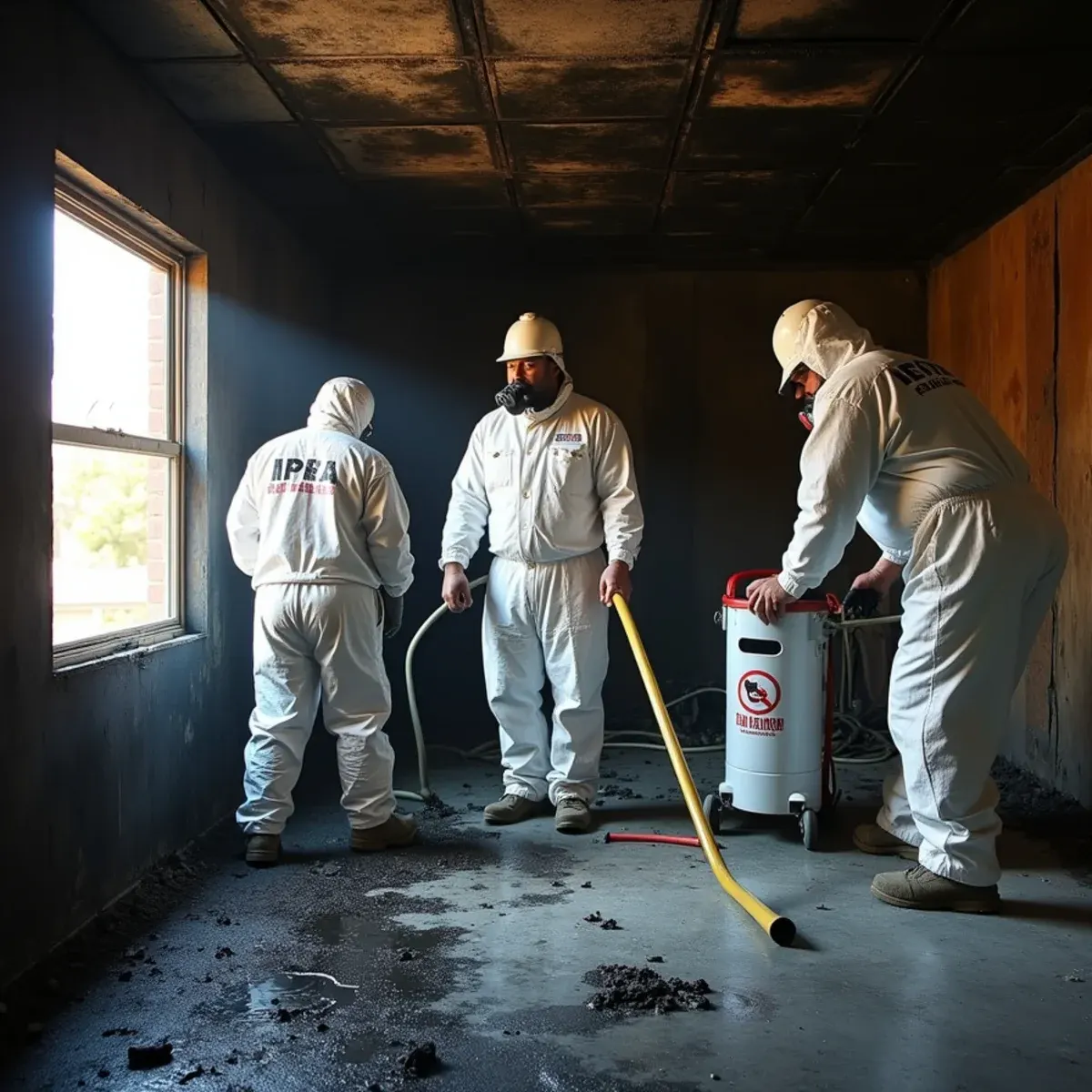
The method is the same one we use on every fire & smoke damage job, documented to the IICRC S500:2025 standard. Here it is in short — the full fire & smoke damage restoration process explains each stage in detail.
- Secure the structure
- Water extraction and drying first
- Assess residue type room by room
- Remove non-salvageable material and clean the rest
- Deodorize at the source
- Contents restoration and rebuild
The Signal Hill Background Worth Knowing
On these lots the drainage is engineered rather than natural. Terrace drains catch water partway down a slope, v-ditches carry it around a pad instead of across it, and retaining walls have weep holes with a gravel drain behind them so pressure never builds in the soil. All of that works until something clogs. Then a retaining wall stops being a wall and starts being a dam, and saturated soil pushes water through the joints and into whatever sits on the other side, which is usually a garage, a storage room, or the back of a lower level.
There is more on the housing stock, drainage and plumbing history of this city on our water damage restoration in Signal Hill page.
Signal Hill at a glance
- Dominant construction era
- 1920–2005
- Foundation type
- mixed on grade
- Supply piping found here
- original 1920s piping, galvanized steel, modern PEX in newer hillside builds
- Drain line materials
- cast iron, ABS
- Terrain and water table
- hillside-mixed, deep water table
- Most common local failure
- slope drainage and retaining-wall failures on steep lots, where water arrives with velocity rather than ponding
- Highest-value local prevention
- keeping terrace drains, v-ditches and retaining-wall weeps clear before the first storm
What It Costs in Signal Hill
We do not quote a number over the phone before seeing the property — anyone who does is guessing. The variables that actually move the price on a fire & smoke damage job are extent of structural burn, how far the smoke traveled, residue type, and they are broken down in full on the fire & smoke damage restoration page. The assessment and the written estimate are free anywhere in Signal Hill, day or night, with no obligation.
Fire & Smoke Damage Questions from Signal Hill Homeowners
It depends on where your CC&Rs draw the line between common area and unit interior, and that varies building to building on the hill. Generally the association's policy handles the structure and shared spaces while your policy handles the interior finishes and your belongings. Do not wait for that to be settled before documenting. We inspect and write your unit as its own scope, then work with both carriers so the shared attic and chase work happens alongside your interior.
Fire suppression uses enormous volumes of water in a short time — often thousands of gallons. That water saturates ceilings, insulation, walls, and floors well beyond the burned area, and it has to be extracted and dried like any other water loss, on top of the fire work.
Yes, when the residue is removed completely — including inside wall cavities, ductwork, attic insulation, and behind cabinetry. Odor that returns later always means residue was left somewhere. Masking agents and ozone alone do not solve it.
Start uphill. On this hill the cause is almost never at the place the water got in. Walk the slope above your pad and check the terrace drains, the v-ditch and the retaining wall weep holes. A weep that has been painted or stuccoed over is common and completely disables the drain behind the wall. Then look at where the uphill property discharges. Fixing the entry point without finding the redirect just moves the problem a few feet.