
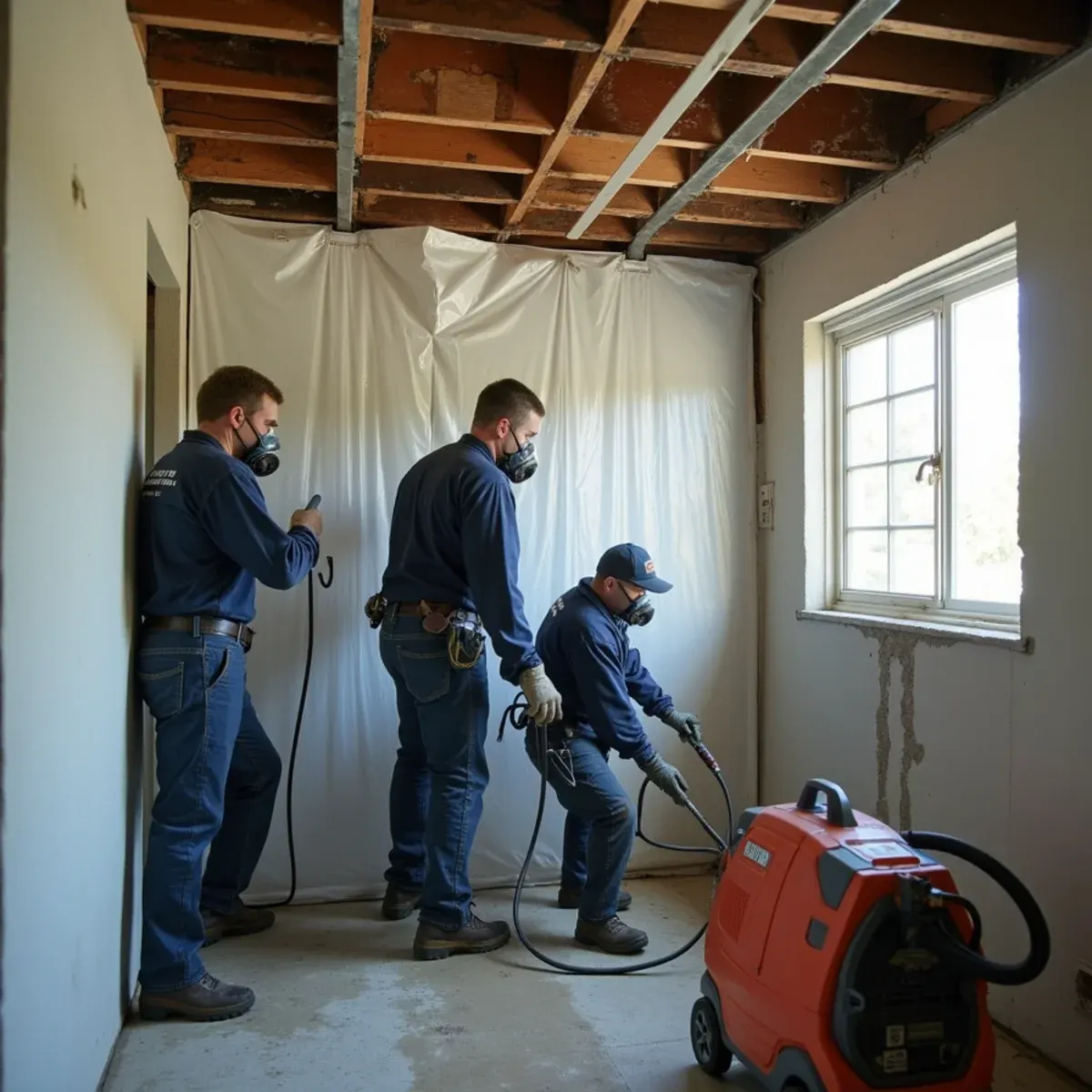
Signal Hill is a 365-foot hill entirely surrounded by Long Beach, and gravity runs every flood job here. Water does not gather and rise the way it does on flat ground. It picks up speed on the way down and enters buildings from the uphill side — through a garage at the low end of a sloped driveway, through weep screed at a stucco base, through a retaining-wall penetration, through a lightwell on a stepped lot. Velocity, not depth, does most of the damage, and it does it before anyone sees standing water.
The 1921 Alamitos No. 1 discovery well set off one of the most productive oil booms in American history, and the field still works — active wells and oilfield infrastructure sit intermixed with housing. Much of the newer development in Hilltop, Panorama and Crescent Heights went up on former oil land in the nineties and 2000s, on steep engineered pads with retaining walls and terrace drains. Older 1920s houses further down the slopes have original piping and mixed foundations. Strong marine influence slows drying across all of it.
What Signal Hill Changes About Flood Cleanup
1Terrace drains fail as a system
An engineered hillside only works while every part of the drainage does. One blocked terrace drain or plugged v-ditch sends the flow that section was carrying onto the next one down, which overtops in turn, and so on to the bottom. That is why Signal Hill floods hit the lowest home in a run hard while the ones above stay dry. We inspect the whole run, not only the affected property.
2Oil-field soils mean dirty sediment
Sediment washed off former and active oil-field ground is not garden soil. It can carry petroleum residue alongside the usual bacterial load, which is why we bulk-remove solids and dispose of porous material that absorbed them rather than cleaning and reusing. If we see sheen or smell hydrocarbons in the water, we stop and bring in testing instead of drying over the top of it.
3Marine air on a hill still slows drying
Being up high does not put you above the marine layer. Signal Hill sits close enough to the water that ambient humidity stays high for days, and open-window drying accomplishes nothing useful. We run closed containment with sized dehumidification and daily readings. Hillside homes with large glass and open floor plans need more equipment than their square footage would suggest.
How the Work Runs
The method is the same one we use on every flood cleanup job, documented to the IICRC S500:2025 standard. Here it is in short — the full flood damage cleanup process explains each stage in detail.
- Safety assessment and utility check
- Containment and negative air
- Documentation and contents triage
- Extraction and controlled demolition
- Cleaning and disinfection
- Structural drying and clearance
The Signal Hill Background Worth Knowing
On these lots the drainage is engineered rather than natural. Terrace drains catch water partway down a slope, v-ditches carry it around a pad instead of across it, and retaining walls have weep holes with a gravel drain behind them so pressure never builds in the soil. All of that works until something clogs. Then a retaining wall stops being a wall and starts being a dam, and saturated soil pushes water through the joints and into whatever sits on the other side, which is usually a garage, a storage room, or the back of a lower level.
There is more on the housing stock, drainage and plumbing history of this city on our water damage restoration in Signal Hill page.
Signal Hill at a glance
- Dominant construction era
- 1920–2005
- Foundation type
- mixed on grade
- Supply piping found here
- original 1920s piping, galvanized steel, modern PEX in newer hillside builds
- Drain line materials
- cast iron, ABS
- Terrain and water table
- hillside-mixed, deep water table
- Most common local failure
- slope drainage and retaining-wall failures on steep lots, where water arrives with velocity rather than ponding
- Highest-value local prevention
- keeping terrace drains, v-ditches and retaining-wall weeps clear before the first storm
What It Costs in Signal Hill
We do not quote a number over the phone before seeing the property — anyone who does is guessing. The variables that actually move the price on a flood cleanup job are how high the water reached, how long it sat before extraction, contents volume in the flooded area, and they are broken down in full on the flood damage cleanup page. The assessment and the written estimate are free anywhere in Signal Hill, day or night, with no obligation.
Flood Cleanup Questions from Signal Hill Homeowners
On a steep lot, water running down the slope hits the back of the garage with pressure behind it and finds the weakest path — a cold joint at the stem wall, a conduit or hose bib penetration, or a retaining wall weep that stopped draining. It arrives at the wall rather than the threshold. That also means the wall cavity and the sill plate are wet before anything shows on the floor, so we open and meter the uphill wall instead of treating it as a floor loss.
Yes. Water that crossed soil, pavement, or a storm drain is Category 3 by IICRC classification regardless of appearance — it carries bacteria, fuel and oil residue, lawn chemicals, and whatever else was on the ground. Do not walk through it in open shoes, and keep children and pets out of the area entirely.
If the water came from outside across the ground, almost certainly not — that requires separate flood insurance. If it came from a failed water heater, a burst pipe, or a supply line inside the garage, it is usually covered. We document the source carefully because that distinction determines everything.
Start uphill. On this hill the cause is almost never at the place the water got in. Walk the slope above your pad and check the terrace drains, the v-ditch and the retaining wall weep holes. A weep that has been painted or stuccoed over is common and completely disables the drain behind the wall. Then look at where the uphill property discharges. Fixing the entry point without finding the redirect just moves the problem a few feet.